Wednesday, July 22, 2009

EFA - Global Monitoring Report 2009

Overcoming inequality: why governance matters

Despite much progress since 2000, millions of children, youth and adults still lack access to good quality education and the benefits it brings. This inequality of opportunity is undermining progress towards achieving Education for All by 2015.

Who are these individuals and groups? What are the obstacles they face? How can governance policies help break the cycle of disadvantage and poverty? What policies work? Is education reform integrated into the bigger picture? Is the international community making good on its commitments?

Go to the EFA Global Warning Report website!

Tuesday, July 21, 2009

Nicholas Burnett to leave UNESCO on October 31

Nicholas Burnett was appointed as Assistant Director-General for Education at UNESCO in September 2007. Mr Burnett was previously at the head of UNESCO’s flagship Education for All Global Monitoring Report.

Sunday, July 19, 2009

Cartilha

Os pássaros cantam todas as manhãs
Trazendo uma renovação ao dia que nasce.
Observe que quando os pássaros cantam
O Sol brilha uma vez mais na savana.
-Assim como as aves, os africanos insistem em fazer a manhã.
E mais uma manhã, depois outra, e outra...
O que é o atraso para uns, é a ponta do paraíso para os que sabem...

Ben Poem

Ben Poem

A fake real tale

There is a ray of light
In the darkest deep eyes
Behind the miserable face of that African boy.
There is an emptyness to fill
-With naughty and enigmatic smile.

After this uncertain scene
I'm still felling blue
Dogged closely by that little creature
I'm so worried, I'm so busy...
And this annoying baby is disturbing me:
-Hey boy, c'mon! Your halo is shying the Moon!

Ben Poem

Editor's note: These two poems were provided by the author as a form of support for Americans for UNESCO and its mission. JAD

"Writers, poets take part in book festival"

Source: RACHEL GALLEGOS • IOWA CITY PRESS-CITIZEN • JULY 19, 2009

Iowa City has been designated by UNESCO as a city of the book, and this month's book fair there is conducted in part in honor of that designation.

"Writers around the world know that Iowa City is a center for writing, Christopher Merrill said Saturday.

"Iowans throughout the state, however, might not think of the city in the same way, said Merrill, the director of the University of Iowa International Writing Program who led the efforts to designate Iowa City as a UNESCO City of Literature.

"Sharing Iowa City's literary qualities with the state and beyond is one of the goals as the city and supporters determine how to build upon the United Nations Educational, Scientific and Cultural Organization designation, Merrill said.

"Merrill was one of a number of writers and poets to participate in the first Iowa City Book Festival on Saturday, a daylong celebration of books, reading and writing presented by the University of Iowa Libraries."

Saturday, July 18, 2009

Venus Williams & UNESCO: A Program to Empower Women

Source: "There is more to Venus Williams than meets the eye," Helene Elliott, The Los Angeles Times, July 15, 2009.
What most fans don't know is that behind the scenes the world's third-ranked player is just as powerful as she is on the court.

Williams has successfully pushed for equal prize money for women, helped formulate a better-calibrated tour schedule and was a key figure in a joint program between the WTA and UNESCO -- the cultural arm of the United Nations -- that promotes gender equality and leadership opportunities for women.

The idea for the UNESCO program emerged from her experience at an ESPY awards ceremony in which two Afghan women were honored for starting a soccer program in their war-torn homeland. The UNESCO-WTA program uses tennis as a vehicle to educate women around the world, making the sport a steppingstone to a better and fuller life.


Student Success: A Published Paper

UNESCO is a world leader both in Early Childhood Care and Education (ECCE) and in recognition of local knowledge systems and their value. I want to point to a newly published paper by an American author which describes a UNESCO program that promotes the incorporation of local knowledge in early childhood education in Africa. I am especially pleased to do so because the author is a former student in our UNESCO seminar, and the paper was written as a project for that seminar.

Alicia Ranck Soudée
Current Issues in Comparative Education

Abstract: "Early Childhood Development (ECD) has emerged as a theme in international and African dialogue on education in recent years. UNESCO’s Division of Basic Education Early Childhood promotes an integrated approach to Early Childhood Care and Education (ECCE) policy development and review. The study examines how this is implemented in three West African countries, with similar cultural groups in their diverse populations: The Gambia, Mali and Senegal. In The Gambia there is thus far a proposal on how indigenous knowledge should be included in early childhood programs. The clos d’enfants [children’s groups], in Mali demonstrates similar ideas through an international partnership with a local initiative program, developed in Bamako using mothers, local materials and toys made by the participants. Senegal’s program combining local traditions and European pedagogical philosophies, the case des tout-petits [children’s huts], came from the President. Analysis of these three cases suggests that these programs and proposals may be a springboard for UNESCO and partners to further develop ECCE with indigenous knowledge and practice in Africa."

Thursday, July 16, 2009

For News and Views on UNESCO

I recommend the following two resources for people interested in UNESCO:

UNESCO Job: Senior Programme Specialist

Manager: Teacher Training Initiative for Sub-Saharan Africa)
Location: Dakar, Senega
Level: P5
Closing Date: 16 September 2009
For More Information: http://recrutweb.unesco.org/pdf/SENED0037.PDF
To Apply: http://bit.ly/IGwuV

Wednesday, July 15, 2009

To Admire and Preserve: World Heritage Site News

World Heritage Sites have long been places that both inspire us by their beauty and evoke our protective instincts as we strive to preserve our cultural histories. Since the 1972 Convention Concerning the Protection of the World Cultural and Natural Heritage international treaty, UNESCO has officially encouraged conservation of sites the World Heritage Committee has found to have outstanding universal value.

The list has grown over the years. Now at 890 sites that include 689 cultural, 176 natural, and 25 mixed properties, the World Heritage Site list is a burgeoning collection of some of the world's greatest treasures. Two recent pieces of news have drawn attention to these sites once more:

First, the convention met late last month to admit 13 more sites, remove one site, and place three on the danger list. More information can be found here.

Also, an exciting partnership between UNESCO and the NHK Japanese broadcasting corporation has produced documentaries on World Heritage Sites. Selected videos have been edited by UNESCO and are available on its World Heritage documentary site.

Summer often draws out feelings of admiration for natural beauty the world has to offer. With these sites and resources available, it is very easy to continue this admiration.


City of Bath, World Heritage Site

Thursday, July 09, 2009

Global Education Digest: new data

The 2009 Global Education Digest (GED) presents the latest education statistics from primary to tertiary education levels for more than 200 countries. Data are provided for the school year ending in 2007 or the latest year available, as well as for 2008 for a small number of countries. The wide range of education indicators presented in the report helps assess progress towards Education for All and Millennium Development Goals.

In 2007, over 2.8 million students were enrolled in higher educational institutions outside their country of origin, a 53% increase since 1999.

Microsoft Commits $50 Million in Higher Education Resources, Training and Certifications

Gates & Matsuura at 2004 signing

In an effort to help higher education institutions support economic stimulus efforts and work-force development strategies, Microsoft Corp. has committed up to $50 million through the Microsoft Education Alliance Program agreement. As part of the agreement, the company will provide resources and tools for short-term work-force training and higher education enhancements.

The announcement was made at the Education Leaders Forum, a one-day forum jointly organized by UNESCO and Microsoft, where more than 150 ministers of education, senior education officials and policy advisors discussed how governments and universities can take full advantage of e-technology's potential to address the current knowledge and skills challenges facing higher education.

Earlier this week, Microsoft and UNESCO announced a joint task force to help higher education institutions worldwide meet the growing challenge of supporting economic stimulus efforts and work-force development strategies. The UNESCO-Microsoft Task Force on Higher Education and ICT will develop a strategic plan of action to identify how ICT can be used by governments as a catalyst for change. Microsoft's $50 million commitment is supporting the mission of the new task force and enabling the implementation of critical UNESCO and Microsoft educational resources.

Wednesday, July 08, 2009

Biden at UNESCO's WCHE 2009

Source: Associated Press

"Jill Biden, the wife of the U.S. vice president and longtime educator, says American community colleges could be a pillar of economic recovery and a source of new skills after layoffs — and a model for poorer countries struggling to educate their citizens.

"The World Bank had a similar message in a report Monday that denounces the "hype" surrounding elite universities. The report says developing countries, especially in times of recession, would be better off meeting the educational needs of their local communities and economies than trying to build world-class schools.

"Community colleges are "a gateway in this economy, as people are losing jobs and going for new training," Biden told The Associated Press in a telephone interview late Sunday.

"Biden, who teaches English as a second language at Northern Virginia Community College, called on 28 years of education experience in a keynote speech at a UNESCO forum on higher education in Paris."

Read the full article!

Editorial comment: One would not want to underestimate the contributions made to this country by Harvard, Berkeley, MIT, Cal Tech or the University of Chicago. On the other hand, one should not underestimate the contributions of the other 4000 institutions of higher education. Dr. Biden's suggestion -- that community colleges are an important model that developing nations should study and perhaps utilize -- is clearly useful. Failure to recognize the value of world class research universities would be as dangerous as overvaluing them or assuming they were easier to develop than is in fact the case. JAD

Summer UNESCO intern learns about other cultures, people

Photo by Travis Pratt
Source: The Frederick News Post
As a sociology and anthropology major in college, Jessica Gillespie enjoys learning about the ways people interact, especially when they are from different cultures.

"I like learning about the interaction between people, to look at why people do what they do," she said.

The job she has as summer intern for Frederick 's UNESCO Center for Peace, then, is a perfect fit, she said.
Read more!

Editorial comment: Americans for UNESCO has a close relationship with Frederick's UNESCO Center for Peace and its director, Guy Djoken. JAD

The World Heritage Marine Program


The mission of the World Heritage Marine Program is to safeguard the world's marine cultural and natural heritage by assisting countries with the nomination of marine properties and with the effective management of these sites. The program seeks to ensure that these precious marine areas will be maintained and thrive for generations to come.

Marine areas of "outstanding universal value" will be inscribed as World Heritage sites thus leading to a better protection of marine biodiversity. All marine World Heritage sites are to be exemplary models of effective and results-based management benefiting coastal communities around the world.

Partners

Documents

Martha J. Kanter, New Under Secretary of Education, at a Unesco Conference in Paris


From The Chronicle of Higher Education:

Two days after being sworn in as under secretary of education, Martha J. Kanter was on her way here to attend the 2009 World Conference on Higher Education, held by Unesco, the United Nations education and science agency.
Editorial comment: This is a good sign that the Obama administration will take a serious interest in UNESCO. JAD

Tuesday, July 07, 2009

"Trends in Global Higher Education: Tracking an Academic Revolution"


This Report highlights key trends in higher education and provide a brief description of worldwide developments of these trends with supporting statistical or data illustrations and an analysis. The major trends are: massification in higher education; globalization and internationalization; distance education and new applications for information and communication technologies (ICTs); the privatization of higher education; the global flow of talent (globalization has exacerbated the worldwide movement of highly educated people); the academic profession at a crossroads for the student experience; research universities and the “world-class” phenomenon; financing higher education; quality assurance and university-industry linkages. The Report outlines some future trends in higher education.

The authors of the report (Philip G. Altbach
Liz Reisberg 
and Laura E. Rumbley) are from the Center for International Higher Education, Boston College. The report was prepared as an input to the World Conference on Higher Education 2009, and published by UNESCO.


Sunday, July 05, 2009

Background Documents WCHE 2009

UNESCO has made available a number of background documents for the World Conference on Higher Education 2009.

ICTs for Higher Education (ED.2009/Conf.402/INF.3)

A New Dynamic: Private Higher Education (ED.2009/Conf.402/INF.4)

Trends in Global Higher Education: Tracking an Academic Revolution (ED.2009/Conf.402/INF.5)

Trends in Global Higher Education: Tracking an Academic Revolution – Executive Summary (ED.2009/Conf.402/INF.6)

Student Affairs and Services in Higher Education : Global Foundations, Issues and Best Practices (ED.2009/Conf.402/INF.7)

Student Affairs and Services in Higher Education : Global Foundations, Issues and Best Practices – Executive Summary (
ED.2009/Conf.402/INF.8)

La nouvelle dynamique de l’enseignement supérieur du développement durable (réinventer le progrès) (ED.2009/Conf.402/INF.9) (Only available in French)

L’Aventure des savoirs dans la vie académique de ce siècle (ED.2009/Conf.402/INF.10) (Only available in French)

Public Responsibility for Higher Education (ED.2009/Conf.402/INF.11)

Brain Gain Initiative: A Digital Infrastructure Linking African and Arab Regional Universities to Global Knowledge
(ED.2009/Conf.402/INF.12)

Synthese des études thématique réalisées dans le cadre de la Task Force pour l’enseignement supérieur en Afrique / Thematic Studies Synthesis Realized in the Context of the Task Force for Higher Education in Africa (ED.2009/Conf.402/INF.13)

List of Documents (ED.2009/Conf.402/INF.14)

Saturday, July 04, 2009

UNESCO-Hamdan Bin Rashid Al-Maktoum Prize for outstanding practice and performance in enhancing the effectiveness of teachers


On 13 March 2009, the Director-General of UNESCO, Mr Koïchiro Matsuura, and Dr Hanif Hassan Ali, Minister of Education of the United Arab Emirates (UAE), signed a Memorandum of Understanding (MoU) establishing the “UNESCO-Hamdan Bin Rashid Al-Maktoum Prize for outstanding practice and performance in enhancing the effectiveness of teachers”.

Friday, July 03, 2009

Lula Wins UNESCO Peace Prize

The Félix Houphouët-Boigny Peace Prize is awarded this year to Luiz Inacio Lula Da Silva, President of the Federal Republic of Brazil. The prize includes a gold medal and $150,000. Henry Kissinger is the President of the Jury that selects the prize winner. The prize is to be awarded in a ceremony on July 7th.

Thursday, July 02, 2009

ICT Transforming Education

13th UNESCO-APEID International Conference on Education
and World Bank-KERIS High Level Seminar on ICT in Education

ICT Transforming Education
15-17 November 2009

Hangzhou, People's Republic of China


The 13th UNESCO-APEID International Conference, in conjunction with the World Bank-KERIS High Level Seminar on ICT in Education, emphasizes the powerful role ICT can play in changing the way we teach and learn. The conference will provide a forum to explore, identify and synergize innovative approaches for harnessing the potential of ICT to increase the reach and quality of education.

Tuesday, June 30, 2009

UNESCO to Investigate Threats to Waterton-Glacier International Peace Park on U.S.-Canadian Border


Source: EarthJustice Press Release, June 26, 2009.

The World Heritage Committee of the United Nations voted today to promptly send a mission to Canada to investigate threats to Glacier National Park (Montana) and Waterton Lakes National Park (Alberta) posed by coal mining and gas drilling proposals in British Columbia's adjacent Flathead River Valley.

Together these parks make up Waterton-Glacier International Peace Park, a U.N. World Heritage Site that spans the U.S.-Canadian border. Grizzlies, wolves, wolverines, lynx and many at-risk species depend on the pristine habitats and pure water of the two parks and surrounding wilderness. The Flathead River Valley, extending north from Glacier National Park into British Columbia, has the highest density of grizzly bears in North America's interior, and some of the purest water in the world.

The committee's action was in response to a petition written by Earthjustice on behalf of eleven environmental groups in the U.S. and Canada. Last week, over 53,000 people in the U.S. and Canada wrote in support of the petition to decision makers in both countries, asking them to protect the parks from the upstream mining and drilling.

"People on both sides of the border don't want mountain-top removal coal mines and gas flares belching polluted air and water into the cleanest natural areas in the Northern Rockies," said Jessica Lawrence of Earthjustice. "There are world class national parks on both sides of the border that would be polluted by energy and mining development in the Canadian Flathead.


Check out Vizerra

Vizerra's Macchu Picchu Visualization


Vizerra is a 3D educational portal which seeks to allow the user to visit the most beautiful places in the world, including World Heritage sites. It provides 3D videos of selected sites, together with audio guides, text descriptions provided by reputable Publishers and Museums, and a map service.

NAFSA APPLAUD NEWLY NOMINATED UNESCO AMBASSADOR

NAFSA: Association of International Educators have publicly championed President Obama’s announcement that he has nominated David T. Killion to be the next US Permanent Representative to the United Nations Educational, Scientific and Cultural Organization (UNESCO) to be the next ambassador, on their website.

Monday, June 29, 2009

Anecdote from UNESCO's History


Source: "South Africa: Zapiro - 'Zapping' for Democracy," Annar Cassam, Pambazuka News via AllAfrica.com, 4 June 2009.

In 1993, the Nobel Peace Prize was awarded jointly to Nelson Mandela and F.W. de Klerk.
The exact logic behind this type of tandem awarding is difficult to understand for such gestures place the aggressors and their victims on the same level. They also degrade the achievements and the sacrifices of the victims while glorifying their former oppressors for doing nothing more than bowing to the inevitable.

It was Roelf 'Pik' Botha, de Klerk's foreign minister, who in a BBC documentary about the end of apartheid shown in 1996, related the friendly advice given to his government by their erstwhile Western allies: 'You people stink! Get rid of that bad smell of apartheid and then we can associate with you.'

In the case of the Mandela/de Klerk prize, the joint award caused real confusion in the minds of many outside South Africa who were not privy to the intricacies of the political negotiations between the ANC and the white government which went on for four long years before the first democratic elections were held in April 1994.

Many members of the international community were led to imagine that Mandela and de Klerk had descended hand-in-hand from on high on a pink cloud which had landed in South Africa where, magically, the aged freedom-fighter was welcomed home by the big-hearted boer so that they could together live in peace, love and harmony for ever after.

In October 1993, six months before the uhuru elections of April 1994, a high-level ANC delegation, led by Nelson Mandela, came to UNESCO headquarters in Paris to address the executive board, the organisation's policy -making body. The delegation, which included Thabo Mbeki and Bantu Holomisa among others, was very warmly welcomed by the UNESCO audience - but all eyes were on Mandela. He was in excellent form, as elegant, dignified and courteous as ever, but now very much the president-to-be, bearing a palpable aura of calm authority.

In a speech of just 15 minutes, he put to rest the 'pink cloud ' theory in the first sentence and then went on to to explain the changes that were underway and in simple language described where the ANC had come from, the reasons for, and strategy behind its negotiating position and, above all, the ANC's priorities for a post-apartheid society in South Africa. This is what he said:
Editorial Comment: One of UNESCO's key functions is to provide a forum forum for discussion. Sometimes UNESCO's discussions deal with education, science, culture or communications and information, but sometimes, as in this case, UNESCO can provide an international forum for discussions focusing on the peaceful resolution of conflicts. JAD

Saturday, June 27, 2009

The 2009 World Conference on Higher Education


According to UNESCO:
There were 152.5 million tertiary students worldwide in 2007, a roughly 50% increase compared to 2000......

Globally, the percentage of university-aged young people enrolled in tertiary education increased from 19% in 2000 to 26% in 2007. Women now account for a slight majority of students and their predominance is expected to increase.

Yet the average rate masks stark regional differences. Participation was 71% in North America and Western Europe, 26% in the East Asia/Pacific region, 23% in the Arab States, 11% in South and West Asia and, despite rapid growth, only 6% in Africa. A child in sub-Saharan Africa today still has less chance of reaching the end of primary school than a European has of entering university.
It is against this backdrop that UNESCO will hold the 2009 World Conference on Higher Education in Paris, France from 5 to 8 July.

After the first World Conference on Higher Education was held in 1999, UNESCO created the Global University Network for Innovation, composed of UNESCO Chairs in Higher Education, research centers, universities, networks and other institutions highly committed to innovation in higher education. More than 100 institutions from around the world are GUNI members. The GUNI website is a good source for information on the global system of higher education.

Secretary Salazar Wants Everglades National Park to Return to Endangered List


Source: Kurt Repanshek, National Parks Traveler, June 24th, 2009.

"Righting what he calls a wrong of the Bush administration, Interior Secretary Ken Salazar wants Everglades National Park to once again be listed as a World Heritage Site in Danger......

"In a release Wednesday the Interior Department said that 'the Everglades was hastily removed from the list in 2007 at the request of the previous administration without adequate consultations with the National Park Service, the state of Florida and other stakeholders and without appropriate measures in place to evaluate the progress of on-going efforts to restore the South Florida ecosystem.'

“'The Everglades remains one of our world’s most treasured – and most threatened – places,' Secretary Salazar said at a meeting of the South Florida Ecosystem Restoration Task Force in the department’s Sydney Yates Auditorium. 'The federal government must once again stand up and meet its responsibilities to Everglades restoration so that one day, when we achieve restoration, we can remove the park from the list of sites that in danger. President Obama has already made a major commitment to Everglades restoration in the budget and through the Recovery Act; we will stay focused on this high priority for our nation and the world.'”

Editorial Comment: The request by the United States Government to reverse the 2007 action by the World Heritage Center suggests a serious problem in UNESCO's management. The implication is that UNESCO responded to pressure from the Bush administration to improperly certify that the Everglades were safe, when in fact they continue to be in danger.

If an intergovernmental organization can not stand up to the pressure of any government, even my own, and do the right thing then it sacrifices it most important asset -- credibility. I hope that David Killion, nominated to be U.S. Representative to UNESCO, will make a serious protest at his first opportunity to do so. JAD (The opinion expressed is my own, and does not necessarily represent that of Americans for UNESCO.)

Helene-Marie Gosselin: UNESCO's Liaison with the United Nations

While UNESCO has facilities in some 59 other countries, it does not have a country, cluster or regional office in the United States nor are any of its Category I Institutes located here. It does maintain an office in New York, tasked with liaison with other UN agencies and programs headquartered in that city. Helene-Marie Gosselin is the head of that office. While she is not charged specifically with liaison with U.S. educational, scientific, cultural nor communications communities, she has been a valuable friend,

Thursday, June 25, 2009

David Killion to be U.S. Ambassador to UNESCO

According to the Associated Press:

David Killion, a senior member of the professional staff of the House Foreign Affairs Committee, was picked to lead the U.S. mission at the U.N. Educational, Scientific and Cultural Organization, or UNESCO. As an adviser on U.N. issues to the late Rep. Tom Lantos, D-Calif., Killion worked on the legislation that was passed in 2001 authorizing U.S. re-entry to UNESCO.
Read:

OECD DAC Recognizes an Increase in UNESCO's Development Aid

The Director-General of UNESCO has been notified that a DAC Working Party has decided to raise the UNESCO ODA coefficient from 25% to 44%, with the change to take effect as from the current year reporting on ODA flows in 2008.

At its May 2009 meeting the Organization for Economic Cooperation and Development (OECD) Development Assistance Council (DAC) Working Party on Statistics reviewed and approved a general methodology for assessing official development assistance eligibility (ODA-eligibility) of international agencies and for deriving coefficients for international agencies. This coefficient is designed to assess the percentage of an organization’s activities which contribute to development according to OECD’s definitions.

Dr. Jill Biden to Give Keynote at UNESCO Conference

Dr. Biden, the wife of Vice President Joe Biden, will travel to Paris to deliver a keynote address at the Opening Ceremony of the United Nations Educational, Scientific and Cultural Organization ("UNESCO") 2009 World Conference on Higher Education on Sunday July 5th. Dr. Biden will serve as head of the U.S. delegation to the conference, and her remarks will highlight the Obama-Biden Administration’s commitment to higher education and the critical role of community colleges in the higher education system.

Dr. Biden taught English and reading in high schools for 13 years, and also taught emotionally disturbed adolescents at a psychiatric hospital. From 1993 to 2008 she was an English and writing instructor at Delaware Technical & Community College. As of 2009, she is an adjunct professor of English at Northern Virginia Community College, and she is thought to be the first Second Lady to hold a paying job while her husband is Vice President. She is the founder of the Biden Breast Health Initiative non-profit organization, co-founded the Book Buddies program, and is active in Delaware Boots on the Ground.

Tuesday, June 23, 2009

Editorial: Increase UNESCO's Budget

Click on the table to enlarge it.

The General Conference of UNESCO is to approve a program and budget for the next biennium when it meets in October. The table above provides the draft budget for the Organization.

It is difficult to understand budgets, and the UNESCO Draft Program and Budget for the biennium runs to 359 pages. Still, it is clear that the budget is tiny in comparison to the challenges facing the world in education, science, culture and communications, or indeed to the needs of an intergovernmental organization such as UNESCO.

For example:
Thus UNESCO's education program, budgetted at less than $100 million per year is less than five percent of the operational budget of a single US school system (the 16th largest in the United States in number of students). UNESCO's combined science program budgets are on the order of one fifth of the R&D budget of a single U.S. university. The budget of the culture program is on the order of six percent of the budget of the Smithsonian. The communication and information program budget is less than one percent of the budget of a single large software company.

Of course it does not make sense to put funding into programs where it will be used inefficiently, and the budget suggests that overhead may be high in UNESCO with respect to programmatic operations. Still, assuming that UNESCO can continue to improve its administration and the efficiency of its activities, it seems obvious that increased funding is appropriate for the organization.

John Daly
(The opinions expressed in this posting are the authors and do not necessarily represent those of Americans for UNESCO.)

UNESCO help sought for US-Canada cross-border parks


Source: SUSAN GALLAGHER, Associated Press via Taiwan News, 2009-06-22

"Two parks along the U.S.-Canada border in the Northern Rockies are up for consideration to receive special attention by a UNESCO committee meeting in Spain this week.

"The state of conservation at Glacier National Park in Montana and Waterton Lakes National Park in Alberta is on the agenda for the meeting of the UNESCO World Heritage Committee. That meeting in Seville, Spain, is scheduled to open on Monday and continue for a week.......

Eleven groups want it declared a World Heritage Site in Danger. The groups say Waterton-Glacier is at risk from potential coal mining in southeastern British Columbia. A provincial official, Bill Bennett, says there's no basis for concern.
Waterton Glacier International Peace Park

In 1932 Waterton Lakes National Park (Alberta, Canada) was combined with the Glacier National Park (Montana, United States) to form the world's first International Peace Park. Situated on the border between the two countries and offering outstanding scenery, the park is exceptionally rich in plant and mammal species as well as prairie, forest, and alpine and glacial features.

Monday, June 22, 2009

Editorial: Choosing a New Director General for UNESCO

The member nations are in the process of electing a new Director General for UNESCO. The Director General's term of office is four years, and the DG may be reelected once. Thus a successful DG may be expected to serve eight years.

A Long Term Historical Perspective

UNESCO's mission as I see it is to mobilize the intellectual communities of the world to promote peace, cultural understanding, education, science, and communications. By its very nature, UNESCO must take a very long term view. In that view, now (as always) is a divide between the past and the future.

A century ago the European nations dominated the world, unsuspecting that two world wars and a great depression were about to decimate their homelands and lead to the decolonization of their overseas empires. The last century saw an increase of life expectancy of several years per decade, a huge growth in world population, a radical increase in schooling, and a technological revolution, especially in information and communication technologies.

We don't know what will come in the next century, but it seems obvious that there will be major challenges. It is UNESCO's job to mobilize the global intellectual community to meet the coming challenges.

The Challenges of the Next Decade

There are a number of challenges for UNESCO that are clear for the coming decade.

Education: The Education for All campaign and the Millennium Development Goals have produced great progress in education, but will not achieve their stated objectives by 2015. UNESCO should play a major role in promoting continued educational progress, but also in defining new goals for future decades. As the global community defines its new goals over the next six years it is especially important that UNESCO's Director General provides credible leadership.

Science: UNESCO should provide critically important leadership in catalyzing global networks of environmental scientists as the global community mobilizes to meet increasing environmental challenges from climate change, desertification, deforestation, degradation of coastal zones, depletions of fisheries, and depletion of non-renewable resources. Again, the Director General should provide credible leadership.

Culture: There is a critical and immediate need to improve cultural understanding among peoples. While this need is most recognized in terms of Christian, Muslim and Jewish peoples, there are many other places where cultural diversity currently leads to conflict, often armed conflict. UNESCO's leadership in promoting a culture of peace, respect for cultural diversity, and cultural understanding remain central to the Organization's purpose, and require strong leadership from a credible Director General.

Communications and Information: The Information Revoluation is transforming global society, but the digital divide between rich and poor creates great problems. UNESCO's mission to assure freedom of information is increasing in importance, and UNESCO's leadership is sorely needed to mobilize the global intellectual community to assure that the benefits of the Information Revolution are fully realized and widely shared.

Poverty: Poverty is the most pressing global problem, and it is increasingly recognized that it is in knowledge and technology that the solution to poverty must be sought. Again, UNESCO should play a global leadership role, and tits Director General should provide a strong and credible voice promoting the creation and dissemination of knowledge to fight poverty.

Choosing a New Director General

UNESCO is a large and complex organization, with a budget of more than $500 million per year, thousands of employees, and offices in 58 countries so that the Director General must be capable of managing such an organization. However, such a description masks an important aspect of the Organization. UNESCO has the authority and power to convene global leaders and to create functioning global networks in its fields of competence. The influence of the Organization extends far beyond its formal organizational structure, and so too must the influence of its Director General.

The task of UNESCO's electors is to choose the nominee who can best lead and speak for the Organization as it faces the challenges outlined above. These challenges are too important to settle for less. The danger is that the election will devolve into politics as usual. UNESCO needs not the person whose backers can mobilize the most support among member nations by the traditional tools of diplomacy, but rather the person who combines the knowledge, experience, and charisma to do the best job.

John Daly
(The opinions stated above are those of the author alone, and do not necessarily reflect those of Americans for UNESCO.)

Job: ENGLISH PORTAL EDITOR

Level: P3
Work site:
Paris, France
Closing date:
19 August 2009
For more information: http://recrutweb.unesco.org/pdf/BPI036.PDF
To apply: http://tinyurl.com/mu2qmk

Tuesday, June 16, 2009

The New Issue of the UNESCO Courier


Diversity, a synonym for culture


2009 - Number 5

A voyage from China to Iran, using calligraphy as a compass; an exploration of Parisian melancholy, guided by a Japanese photographer; a return to the origins of Kung Fu, now an international art; a trip around the world along strands of Thai silk; a Turkish escapade with background music from Brittany… This month the UNESCO Courier dedicates its pages to cultural diversity. Read the editorial

Saturday, June 13, 2009

"Where Poverty and Culture Intersect: Embracing Local Traditions to Better Fight Poverty"


Ivonne A-Baki, currently President of the Andian Parliament and a candidate for the position of Director General of UNESCO has provided this stimulating article in The Huffington Post.
Fostering cultural expression can have a major positive impact on driving local as well as global well-being. Indigenous design, craft, and historical sites hold a wealth of potential in creating new jobs and improving incomes while preserving ages-old traditions. UNESCO (United Nations Educational, Scientific and Cultural Organization), for example, is improving the living standards of the poor in Latin America through projects aimed at generating employment by preserving and promoting the cultural heritage and traditional handicrafts of local communities.

You may also be interested in her article "Women Building a Culture of Peace" written several years ago when she was the Ambassador of Ecuador to the United States.

Editorial: The United States Should Support Associate Expert Posts at UNESCO

UNESCO's Associate Experts’ Scheme provides young professionals every year with the opportunity to contribute to international technical cooperation. The program is open only to the nationals designated by the nations which are supporting the program (with voluntary contributions). Currently they are: Belgium, Finland, Italy, France, Germany, Greece, Japan, Republic of Korea, Spain, Sweden and Switzerland. The United States is not a supporter of the program.

Associate Experts, usually under the age of 32 at acceptance, participate in the program for one year, with an option of a second year. During that time they receive preparatory instruction and in service training. The program is open to young professionals with university degrees in education, culture, science, social and human sciences or communication, or in a field of direct relevance to the management and administration of an international organization.

Of course, Americans are included in the Secretariat of UNESCO as regular, international civil service employees, but the U.S. is underrepresented in that workforce, largely due to the long absence from membership in UNESCO. Some Americans have been detailed to UNESCO by their U.S. government agencies, and the Fulbright Fellowship program has allowed some fellows to participate in UNESCO as part of their fellowship experience. Still, there are comparatively few opportunities for young American professionals to work in UNESCO, especially as compared with the interest expressed from our large population.

Were the United States to contribute to this program the effort could:
  • help to rectify the lack of professionals in this country who understand UNESCO,
  • help to add qualified Americans to the UNESCO staff,
  • build linkages between the American educational, scientific and cultural communities and their counterparts abroad,
  • provide much needed support to UNESCO's valuable programs in ways fully under the control of the United States, thus directing support to the programs we value most.
If properly negotiated, participation in the Associate Experts program could be for the United States, as it already is for eleven European nations, an inexpensive means of providing effective international assistance as well as an effective means of building U.S. capacity to deal with intergovernmental organizations.

Your comments are most welcome on this posting, and I would encourage you also to contact the Department of State's UNESCO watchers if you feel that the United States should participate in the Associate Experts program.

John Daly
The opinions expressed above are those of the author, and do not necessarily reflect those of Americans for UNESCO.

An Example of an Associate Expert

Patrick Montjourides is an Associate Expert who participated on the EFA Global Monitoring Report Team financed by the French government.
He holds a “Maitrise” in international economics from the University of Paris Dauphine and a Master’s degree in education economics from the University of Burgundy. He is now pursuing a PhD in association with IREDU, the Institute of Research in Education: Sociology and Economics of Education, based in Dijon.

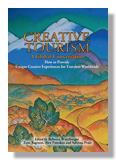
Creative Tourism: A Global Conversation


"How to Provide Unique Creative Experiences for Travelers Worldwide"
By Rebecca Wurzburger, Tom Aageson, Alex Pattakos, and Sabrina Pratt, Editors
Sunstone Press, 2009

This book was produced
in large part, through the efforts of members of UNESCO's Creative Cities Network, the conference upon which this book is based.

Thursday, June 11, 2009

Job: SENIOR PROGRAM SPECIALIST (Education Sector)

Level: P5
Post: Dakar, Senegal
Closing Date: 10 August 2009
For more information: http://recrutweb.unesco.org/pdf/SENED0041.PDF
To apply: http://tinyurl.com/nfn23x

Monday, June 08, 2009

Nine Candidates for the Post of Director General

The Chairman of UNESCO’s Executive Board, Ambassador Olabiyi Babalola Joseph Yaï (Benin), today made public the list of candidates to the post of Director-General of the Organization.

A total of nine candidatures were received by the Executive Board. They are (in chronological order of reception):

  • - Ms Ina MARČIULIONYTĖ (Lithuania)

Candidature proposed by: Lithuania, Estonia, Latvia

  • - Mr Mohammed BEDJAOUI (Algeria)

Candidature proposed by: Cambodia

  • - Ms Irina Gueorguieva BOKOVA (Bulgaria)

Candidature proposed by: Bulgaria

  • - Mr Farouk HOSNY (Egypt)

Candidature proposed by: Egypt, Kowait, Sudan, Libyan Arab Jamahiriya

  • - Mr Sospeter Mwijarubi MUHONGO (United Republic of Tanzania)

Candidature proposed by: United Republic of Tanzania

  • - Mr Alexander Vladimirovich YAKOVENKO (Russian Federation)

Candidature proposed by: Russian Federation

  • - Ms Ivonne JUEZ de A. BAKI (Ecuador)

Candidature proposed by: Ecuador

  • - Ms Benita FERRERO-WALDNER (Austria)

Candidature proposed by:Austria, Colombia

  • - Mr Nouréini TIDJANI-SERPOS (Benin)

Candidature proposed by:Benin

Sunday, June 07, 2009

Pharmacy Education Taskforce


UNESCO has joined with the International Pharmaceutical Federation and the World Health Organization to form a Pharmacy Education Taskforce as "a coordinating body of organisations, agencies, institutions, and individuals with the shared goal of catalysing actions to develop pharmacy education." The purpose of the Taskforce is to oversee the implementation of the Pharmacy Education Taskforce Action Plan 2008-2010*.
The Action Plan aims to enable the sustainability of a pharmacy workforce that is relevant to local needs. The Action Plan is dedicated to three domains of action: quality assurance, academic and institutional capacity, and competency and vision for pharmacy education.

Dive Olly Dive! educates through UNESCO (!!)

UNESCO has selected the animated series to teach about the Earth’s underwater importance. Olly and friends will appear on the website and in print outs, providing as much education as possible.

Saturday, June 06, 2009

Biographical Information for Sospeter Muhongo

Sospeter Muhongo has been nominated by Tanzania as a candidate for the post of Director General of UNESCO. Here is some biographical information about him:

He was born in Musoma town, Tanzania on 25.06.1954. He is married to Bertha, has a son Rukonge, and is guardian to three orphans.

He is currently based in Pretoria, South Africa, where he is the first and founding Regional Director of the International Council for Science Regional Office for Africa. Among other positions held, he is Chair of the Science Program Committee of the UN-proclaimed International Year of Planet Earth (IYPE), Vice President of the Commission of the Geological Map of the World, Immediate Past Chair of the UNESCO/IUGS/IGCP Scientific Board and member of the Southern African Regional Universities Association (SARUA) Science and Technology Advisory Group. He has been recently elected to Chair the Steering Committee of the EU-funded project, “African-European Georesources Observation System (AEGOS).”

Prof Muhongo is co-Editor-in-Chief of the Journal of African Earth Sciences (Elsevier), Associate Editor of the Precambrian Research Journal (Elsevier) and is also co-Editor of a book (2009, in press) entitled “Science, Technology and Innovation for Socio-Economic Development: Success Stories from Africa.”

He was Head of the Department of Geology at the University of Dar Es Salaam in Tanzania from 1997 to 2000 and is currently Honorary Professor of Geology at the University of Pretoria in South Africa. In the 1990s he was instrumental in raising the profile of the Geological Society of Africa (GSAf) and served as its President from 1995 to 2001. He was the first recipient (2004) of the Society’s Robert Shackleton Award for Outstanding Research on the Precambrian Geology of Africa and he was awarded Fellowship of the Society in 1998.

In 2006, Prof. Muhongo was presented with the National Award for Outstanding Research in Science and Technology (S&T) in Tanzania, and in 2007 The Geological Society of South Africa conferred upon him its “Honours Award”, for his contributions to the Earth Science profession.

Prof Muhongo has undertaken more than 100 contract scientific research projects and has rendered consultancy services in the mineral industry and on environmental issues and policy matters.

He graduated with a BSc Honours Degree in Geology from the University of Dar Es Salaam in 1979 where he founded and chaired the Geological Association of Students (1977). He then undertook postgraduate studies in Germany between 1980 and 1990 at the University of Göttingen (MSc research), and at the Technical University of Berlin (Dr.rer.nat.). He was awarded the Vice-Chancellor’s Prize (1977) and the Gondwana Prize (1979).

Since 1999 Prof Muhongo has been the Chairman of the Board of Directors of the Tanzanian State Mining Corporation (STAMICO) and in 2002 was Chairman of the Tanzanian Government Commission of Inquiry into the deadliest tanzanite mine accident.

He is the author or co-author of over 150 scientific articles and technical papers, and has co-authored the publication of the highly acknowledged geological and mineral maps of Africa, East Africa and Tanzania. Prof Muhongo has been invited to give more than 200 keynote speeches at international conferences in Africa, America, Asia and Europe. He has co-organized over 100 international scientific and policy conferences, including those of UNESCO and ICSU in Africa, Asia and Europe.

Biographical Information for Benita Ferrero-Waldner

Benita Ferrero-Waldner has been nominated by Austria as a candidate for the post of Director General of UNESCO. Here are some facts about her:

Born on 5 September, 1948 in Salzburg, Austria - married to Professor Francisco Ferrero Campos

November 2004
Member of the European Commission in charge of External Relations and European Neighbourhood Policy
February 2000 - November 2004
Federal Minister for Foreign Affairs of Austria
4 May 1995 - 3 February 2000
State Secretary for Foreign Affairs
1993 - 1995
UN Chief of Protocol
February 1993 - December 1993
Federal Ministry for Foreign Affairs Deputy Chief of Protocol
July 1990 - February 1993
Austrian Embassy, Paris
First Counsellor and Deputy Chief of Mission,
Chargé d'Affairs a.i.
May 1987 - July 1990
Austrian Embassy, Paris
Counsellor for Economic Affairs
June 1986 - May 1987 Federal Ministry for Foreign Affairs
Department for Development Co-operation
January - June 1986
Austrian Embassy, Dakar, Senegal
First Secretary
September 1984 - January 1986
Federal Ministry for Foreign Affairs
Department of Economic Affairs; Department of Political Affairs;
Department of Consular Affairs;
1 January 1984
Austrian Embassy, Madrid
Special Consultancy
1981 - 1983
Gerns and Gahler, Freilassing/Germany
Chief Management Assistant
1978 - 1981
P. Kaufmann Inc., New York
Sales Director for Europe
1971 - 1978
Paul Kiefel, Freilassing/Germany (1971-72), Export Department
Gerns and Gahler, Freilassing/Germany
Director for Export Promotion
1966 - 1970
University of Salzburg, study of law (Dr iuris)

World Conference on Higher Education eForum Now Open


From June 2 to 20, UNESCO is organizing an international discussion forum for participants in the 2009 World Conference on Higher Education (WCHE 2009). The Forum aims to raise awareness and promote informed discussion of Higher Education issues so as to generate positive input into the Conference.

A different theme will be highlighted each week; Internationalism, Regionalism and Globalization; Equity, Access and Quality and Learning, Research and Innovation.

Biographical Information for Ivonne Baki

Ivonne Baki is a candidate for Director General of UNESCO, nominated by Ecuador. Attached is her biography.

Personal Data

Name: Leila Ivonne Juez de Baki
Marital status: Married. Spouse: Sami Abd-El Baki
Place of residence: Quito

Studies

  • 1993 Doctorate in Public Administration. School Government John F. Kennedy - Harvard University (Editor's note: This seems to be an error as her website lists a Masters degreee in public administration.)
  • 1992 Master in Public Policy, School of Government John F. Kennedy - Harvard University
  • 1982 Master of Art University La Sorbonne in Paris (Editor's note: The candidates website does not list the degree.)
  • 1979 Architectural Studies at the University of Beirut

Positions

  • 2007 President of the Andean Parliament
  • Andean Parliamentary since 2006; Elected for a period of four years
  • 2003-2005 Minister of Trade Industry, Fisheries and Competitiveness
  • 2003-2004 President of the Commission of the Andean Community of Nations
  • 1998-2002 Ambassador of Ecuador to the United States of America
  • 1984-1990 Honorary Counsel of Ecuador in Lebanon
  • 1992-1998 Honorary Counsel of Ecuador in Boston, MA
  • 1998 Adviser to the President of Ecuador in the negotiations culminated in the signing of peace treaty with Peru
  • 1995 Member of the Foundation "Without Borders"; Dedicated to help depressed areas of the province of Esmeraldas
  • 1994-1996 Member of the Board of Directors of "Conflict Management Group ", a nonprofit organization dedicated to conflict resolution and the promotion of peace in many regions of the World, led by Professor Roger Fisher.

Decorations and Awards

  • "It merits of Excellence l'Européene"
  • Order of the Cedar of Lebanon
  • National Order of Merit of Ecuador
  • Decoration Resident Artist at Harvard University.
  • Award 1992 "Art for Peace", Princeton University
  • Honorato Vasquez Prize 1992, awarded by the Government of Ecuador.
  • The 1998 Order of The House of Representatives United States of America.
  • Designated 1999's "The five most powerful women Washington, "Embassy of Ecuador
  • "Excellency in Leadership Award" of the Economic International Order of Merit of Lebanon
  • The U.S. Women in Leadership Award
  • The Global Citizen Award. Patel Foundation
  • The Humanitarian Rose Award. Princess of Wales Foundation
Publications

  • "Forces of Change: Artists of the Arab World"
  • "A Life of Art: Searching for Peace"

Short Video (Spanish): Homenaje a la Dra. Ivonne Baki

Thursday, June 04, 2009

China, UNESCO, and Intangible Cultural Heritage

Ethnomusicology Colloquium lecture

by Helen Rees

Friday, June 05, 209
3:00 PM - 5:00 PM
B544 Schoenberg Music Building
Los Angeles, CA 90095

Helen Rees, Professor of Ethnomusicology at UCLA, has conducted extensive fieldwork on ritual and tourist music of Yunnan and Sichuan provinces in the southwest region of China, focusing on the Naxi ethnic minority and the Han ethnic majority.

A Canadian Initiative that the U.S. might emulate

Officials have announced that 1.2 million Canadian dollars are to be invested over three years in the project Réalisons Montréal Ville UNESCO de design ("Building Montréal, UNESCO City of Design"). This project, initiated by the Design Montréal Office and the UNESCO
Chair in Landscape and Environmental Design of Université de Montréal, aims to stimulate opportunities for creation and highlight initiatives by the design industry that give vital and tangible expression to Montréal's status as a UNESCO City of Design.

Is Greed for Tourist Dollars Undermining the World Heritage Program?

The Sydney Morning Herald (Australia) has a thought provoking article. In July last year, 27 new sites were inscribed on the list of World Heritage sites; there are now 878 World Heritage sites in 145 countries. There are also 1461 places earmarked as World Heritage-worthy awaiting formal nomination.
When the World Heritage List was conceived in 1972, its intention was not to spotlight potential tourist destinations. It was to preserve and protect places "of universal value to humanity".
The article points out that many of the sites are relatively unknown.

Of course, fame and importance are not equivalent, and as the previous two postings have pointed out, there are important cultural sites that are unrecognized even in their own countries. Global recognition of the importance of a site may help local people to value it more.

A government proposing a site for inclusion on the list is offering a guarantee that the site will be protected and maintained permanently if approved. That of course is a good thing, it the commitment can be fully honored.

Still, one wonders whether some kind of system might be useful which differentiates sites as transcendent as Yellowstone and the Grand Canyon from other (worthy) sites such as Serpent Mound.

Wednesday, June 03, 2009

Serpent Mound


Last week my wife and I visited Serpent Mound. The site has been added by the United States Government to the tentative lists of sites to be considered for UNESCO World Heritage status. The Great Serpent Mound is 1,330 feet in length along its coils and averages three feet in height. Excavation of Serpent Mound revealed wood charcoal that was radiocarbon dated to a time consistent with the Fort Ancient culture (AD 1000 to 1500). It is the largest documented surviving example of a prehistoric effigy mound in the world.

The coils of the snake appear to be chosen to point towards celestial sites, such as the the extreme points on the horizon for sunrise and sunset. The site chosen is a rock outcropping on the rim of an ancient meteor crater. Moreover, near the serpent mound on the site managed by the State of Ohio there are far mor ancient mounds.


After the visit I chatted with young people from nearby Indiana, discovering that they had never heard of Serpent Mound. Again, our schools seem not to do a very good job in acquainting their students with the pre-history of our region, even of globally significant artifacts that are near to them.

Hopewell Mound City

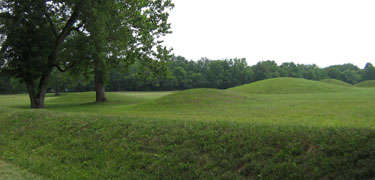
Last week I had the opportunity to visit Hopewell Mound City in southern Ohio. It is one of the nine archeological sites of monumental earthworks constructed by the Ohio Hopewell culture during the Woodland Period (1-1000 CE) which together have been added to the tentative list by the United States Government for consideration for World Heritage status.
The park protects the prehistoric remains of a dynamic social and ceremonial phenomenon that flourished in the woodlands of eastern North America between 200 B.C. and A.D. 500. The term Hopewell describes a broad network of economic, political, and spiritual beliefs and practices among different Native American groups. The culture is characterized by the construction of enclosures made of earthen walls, often built in geometric patterns and mounds of various shapes. The culture is known for a network of contacts with other groups, which stretched from the Atlantic coast to the Rocky Mountains. This network brought materials such as mica, shark's teeth, obsidian, copper, and shells to Ohio.
The visitor center includes a video presentation and a small museum which helped to understand the artifacts collected from the site as well as the historical importance of the Hopewell people. We were especially grateful for the attention of three National Park Service staff members who work in the visitors's center and who spent considerable time explaining the site and its history.

I was especially taken by the fact that the site included objects made of copper that came from Canada, Obsidian from deposits near Yellowstone, mica from the Carolinas, and shells from the Gulf coast. While this was a culture that lived on hunting and gathering, the Hopewell peoples also understood astronomy, could build large earthwork structures, and obtained materials that they valued from all over the North American continent.

World Heritage status for the sites preserving the monuments of the Hopewell culture may help Americans to recognize the accomplishments of the people who lived on the continent before 1492. I wish that all the school children in the United States would learn about the pre-Columbian cultures of the continent!

Images from the National Park Service.

Tuesday, June 02, 2009

More Candidates for Director General

Nominations are now closed for the post of Director General of UNESCO.

Yojana Sharma has published an update of her earlier article, identifying two new candidates, each of whom would add some luster to the list of Directors General of the Organization:
  • Benita Ferrero-Waldner, the European Union commissioner for foreign affairs and a former Austrian foreign minister
  • Alexander Yakovenko, Russia's deputy foreign minister and former Ambassador to the United Nations.