In the light of current changes in the Arab world, UNESCO organized a high level round-table on the theme "Democracy and Renewal in the Arab World: UNESCO in support of transitions to democracy" in Paris on 21 June 2011. About 20 internationally renowned personalities participated in a dynamic and interactive debate.
Showing posts with label Culture of Peace. Show all posts
Showing posts with label Culture of Peace. Show all posts
Sunday, September 18, 2011
Democracy and Renewal in the Arab World: UNESCO in support of transitions to democracy
In the light of current changes in the Arab world, UNESCO organized a high level round-table on the theme "Democracy and Renewal in the Arab World: UNESCO in support of transitions to democracy" in Paris on 21 June 2011. About 20 internationally renowned personalities participated in a dynamic and interactive debate.


Saturday, September 17, 2011
A roadmap for democracy and renewal in the Arab world

Education and respect for human rights underpin a “roadmap” aimed at supporting the Arab world’s transition to democracy, developed at an international round table organized by UNESCO at its Paris Headquarters on 21 June.
The “roadmap” defines the conditions necessary for the successful establishment of democratic states. Along with education and human rights, it focuses on issues of governance, democratic institutions, citizenship, the active involvement of women and young people, socio-economic development and freedom of expression.
UNESCO Director-General Irina Bokova opened the round table, in the presence of Abdou Diouf, Secretary-General of La Francophonie, Nickolay Mladenov, Minister of Foreign Affairs of Bulgaria, Boutros Boutros-Ghali, former Secretary-General of the United Nations, Nassif Hitti, Representative of the Secretary-General of the League of Arab States, and some 250 participants including experts, academics and civil society leaders specialized in, or from, the Arab region.
LINKS
- Democracy and renewal in the Arab World: roundtable at UNESCO in support of transition to democracy, 21 June
- Round Table 21 June - Video on demand: Morning session
- Round Table 21 June - Video on demand: Afternoon session
- Address by Irina Bokova, Director-General of UNESCO
- Address by Abdou Diouf, Secretary-General of La Francophonie (in French)
- Address by Boutros Boutros-Ghali, Former UN Secretary-General, President of the Egyptian National Council of Human Rights (in French)
- Address by Nickolay Mladenov, Minister of Foreign Affairs of Bulgaria
- Address by Nassif Hitti, Representative of the Secretary-General of the League of Arab States
- Download the roadmap [PDF]
- Videoclip - Democracy and Renewal in the Arab World: UNESCO in support of transitions to democracy
- Video - Presentation of participants
Monday, August 08, 2011
Profile: Dr. Amii Omara-Otunnu

Read:
- more about Professor Omara-Otunnu from the University of Connecticut website
- his featured profile from the Connecticut Public Broadcasting Network
To better understand the influence that Dr. Omara-Otunnu is having read this article about one of his former students, graphic poet/artist Sreyashi Ghosh, who has launched a project to achieve World Peace through art forms called ‘Peace Mode 365'
Tuesday, October 19, 2010
Building the Defenses of Peace in the Minds of Men
It has been said before, but it needs to be said again: “While UNESCO has several mandates, it has but one mission – that of constructing peace”. When discussing detailed questions relating to the programmes, activities and functioning of our Organization, it is right that we set aside a moment to reflect on UNESCO’s fundamental purposes so as to focus on the goal that must shape and inform our particular policies and projects.Irina Bokova
On the occasion of the 185th Session of the Executive Board Thematic Debate "Intercultural Dialogue in the 2010s: Revisiting policies within the context of culture of peace"
Sunday, January 03, 2010
2010, International Year for the Rapprochement of Cultures

The year 2010 will be celebrated as the International Year for the Rapprochement of Cultures (see Resolutions). The goal of the International Year is the rapprochement of cultures as the hallmark of all policy-making at local, national, regional and international levels. UNESCO is designated to play a leading role for the celebration of the Year within the United Nations system.
Wednesday, December 09, 2009
Christianity and Islam in the Context of Contemporary Culture
 This publication presents the results of a joint international research project with the aim of providing a systematic cross-cultural analysis of fundamental problems and actual perspectives of interfaith dialogue between Christianity and Islam, as seen from the perspectives of Russia and Lebanon.
Number of pages: 288p
Published by UNESCO
Publication date: December 2009
Saturday, June 13, 2009
"Where Poverty and Culture Intersect: Embracing Local Traditions to Better Fight Poverty"

Ivonne A-Baki, currently President of the Andian Parliament and a candidate for the position of Director General of UNESCO has provided this stimulating article in The Huffington Post.
Fostering cultural expression can have a major positive impact on driving local as well as global well-being. Indigenous design, craft, and historical sites hold a wealth of potential in creating new jobs and improving incomes while preserving ages-old traditions. UNESCO (United Nations Educational, Scientific and Cultural Organization), for example, is improving the living standards of the poor in Latin America through projects aimed at generating employment by preserving and promoting the cultural heritage and traditional handicrafts of local communities.
You may also be interested in her article "Women Building a Culture of Peace" written several years ago when she was the Ambassador of Ecuador to the United States.
Tuesday, March 31, 2009
The Second Forum of the Alliance of Civilizations

On 6-7 April 2009, the second Forum of the United Nations Alliance of Civilizations will be held in Istanbul, Turkey. In addition to high-level plenary debates, the event is intended to feature:
- An international platform for participants to develop joint initiatives and launch new programs.
- A range of project-specific working sessions, which will provide an interactive, inclusive convening space for policy-makers, international organizations and civil society groups to share lessons on best practices and develop joint work platforms.
- A unique 'Marketplace of Ideas' that will showcase some of the most innovative and successful grassroots projects with the purpose of transcending cultural divides and building peace.
The Alliance of Civilizations (AoC) was established in 2005, at the initiative of the Governments of Spain and Turkey, under the auspices of the United Nations. The AoC Secretariat, which is based in New York, works in partnership with States, international and regional organizations, civil society groups, foundations, and the private sector to mobilize concerted efforts to promote cross-cultural relations among diverse nations and communities, and in particular between "Muslim" and "Western" societies.
The Alliance works in four program areas to support such projects. These areas are: youth, media, education, and migration.
At a political level, mainly through role of our High Representative President Sampaio, former President of Portugal, the Alliance works to establish platforms for dialogue among political, religious, media and civil society personalities who are prepared to use their influence in advancing the Alliance of Civilizations’ objectives.
The Alliance has developed memoranda of understanding with a number of partner organizations, including UNESCO, the Arab Educational, Scientific and Cultural Organization (ALESCO) and the Islamic Educational, Scientific and Cultural Organization (ISESCO).
The Alliance of Civilizations Group of Friends community is vital to the AoC’s implementation process. The Group of Friends consists of representatives of States, UN agencies, and other international organizations and bodies that have demonstrated active interest in and support of the Alliance.
Surprisingly, there is no representative of the United States Government listed among the Group of Friends. Perhaps this is something that the Obama administration can rectify.The Alliance of Civilisations International Network of Foundations brings together foundations working to build trust and cooperation among religions, cultures and peoples. The Network includes U.S. foundationsL the Carnegie Corporation of New York and the Doris Duke Foundation for Islamic Art, as well as many of the most important foreign foundations.
Tuesday, December 16, 2008
Imams and rabbis working to build peace at UNESCO

Imams and rabbis from Israel and the Palestinian Territories as well as many other countries are meeting at UNESCO (15 to 17 December) to launch new initiatives to help build peace in the Middle East.
The meeting, the Third World Congress of Imams and Rabbis for Peace, is organized by the Swiss Foundation Hommes de Parole and placed under the patronage of UNESCO.
Friday, November 14, 2008
Editorial: The Obama administration should embrace UNESCO in its public diplomacy
Applying this successful Cold War “war of ideas” model to the present national security challenge in the Middle East could effectively drive out extremist ideology that may give rise to terrorist behavior while strengthening the United States’ stature in the international community.The quotations shown above are from a paper provided for the Obama administration as it takes office, published by a think tank with close ties to the Democratic party. The authors make a number of very good points and the paper is worth reading by anyone interested in public diplomacy. They stress the need to complement our military actions with a far more effective program of public diplomacy. They emphasize that the effort must be sincere, and that we must work to better implement our ideals at home and abroad if our representations are to be believed.
The U.S. Marine Corps Small Wars manual, which details tactics and strategies for operations combining military force and diplomatic pressure, and on which the “Global War on Terror” is based, famously notes that such “wars are battles of ideas and battles for the perceptions and attitudes of target populations."
Winning the war of ideas and creating better relations with the Muslim world require more than tired tactics, immobility, and budgetary pocket change (the current $50-million cost is less than 1/10,000th of our Iraq-related expenditures). The next president should designate this effort as a matter of the highest national security importance. The campaign as a whole should be self-critical, regularly evaluating its own performance and ready and willing to change in response to evaluation results.
Simply put, there is a glaring need for the United States to undertake a proactive strategy aimed at restoring long-term security through the presentation of our principles as part of U.S. foreign policy. The tools of public diplomacy and strategic communications are the most valuable weapons in America’s arsenal. It is not too late to wield them.
Hady Amr and Peter W. Singer
"Engaging the Muslim World: How to Win the War of Idea"
American Constitution Society for Law and Policy
The new administration should realize that UNESCO is an important venue in which the United States can wage "the war of ideas", and that UNESCO has considerable influence in Muslim countries. The Bush administration has helped reestablish U.S. prestige in the halls of UNESCO, and the new administration can build on that start.
- UNESCO's education programs can help to build understanding among cultures;
- Its social science programs can help develop valid information on which such understanding can be built;
- Its natural science programs not only provide means to encourage cooperation among scientists in Islamic countries and the United States, but can help to defuse potential conflict over natural resources;
- Its cultural programs can promote a peaceful dialog among cultures, and help people to learn to respect cultures other than their own;
- Its information and communications programs can help to improve the quality of media in the Muslim world.
John Daly
(The opinions expressed above are those of the author, and don't necessarily reflect those of Americans for UNESCO or other organizations.)
Sunday, October 05, 2008
Momaday Nominated UNESCO Artist for Peace
 Scott Momaday has been nominated as UNESCO Artist for Peace by Koichiro Matsuura, UNESCO's Director-General. Ambassador Louise Oliver looks on.
© Copyright Michel Ravassard
Friday, August 22, 2008
The International Day of Peace

The United Nations' International Day of Peace - marked every year on September 21 - is a global holiday when individuals, communities, nations and governments highlight efforts to end conflict and promote peace.
We the World, a non-governmental organization, provides a website with more than 700 associated events celebrating peace efforts during an eleven day period from September 11 to September 21, in support of the United Nations event.
“Since wars begin in the minds of men, it is in the minds of men
that the defences of peace must be constructed.”
The UNESCO Constitution
UNESCO was created in the aftermath of World War II as an integral part of the United Nations peace keeping system. UNESCO's function was the long-term effort to build the defenses of peace in the minds of men through the promotion of education, science and culture. The promotion of peace has always been central to its program.
Promotion of the Culture of Peace is one of UNESCO's special themes, cross cutting all of its sectoral programs. Among its actions are a number of prizes recognizing efforts to promote peace:
This prize, awarded biennially, supports activities designed to increase awareness and mobilize consciences in the cause of peace.
The Prize, established in 1989, is intended to honor living individuals, and active public or private bodies or institutions that have made a significant contribution to promoting, seeking, safeguarding or maintaining peace.
The UNESCO Cities for Peace Prize pays tribute to the initiatives of municipalities which have succeeded in strengthening social cohesion, improving living conditions in disadvantaged neighbourhoods and developing genuine urban harmony.
A New UNESCO Publication
The International Peace Commission, which grew out ot the Houphouet-Boigny Peace Prize process, held its first meeting in UNESCO Headquarters, hosted by the Secretary General. The International Commission for Peace Research also grew out of the Houphouet-Boigny Peace Prize.
The book Water and Peace for the People will be launched on 11 September at 6 p.m. at UNESCO Headquarters.
What if the countries in the Middle East had no choice but to get along in order to share the region’s meagre water resources? This is the starting premise of Jon Martin Trondalen’s book “Water and Peace for the People”, which will be launched on 11 September at UNESCO.
In an international climate of tension, conflicts related to water in the Middle East are more than ever in deadlock. “Water and Peace for the People”, released by UNESCO Publishing, offers a practical guide that suggests concrete ways to resolve these crises.
 © Jon Martin Trondalen
Culvert for an irrigation from the
Euphrates River, South of Bagdad
Wednesday, April 09, 2008
David Adams Website: Global Movement Towards a Culture of Peace
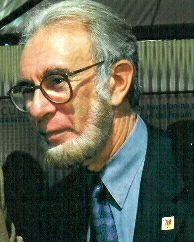
David Adams until his retirement from UNESCO in 2001 was responsible for UNESCO's commemoration of the International Year of the Culture of Peace and was the architect of many of the Culture of Peace programs. Following a career as Professor of Psychology for 23 years at Wesleyan University, he had come to UNESCO in 1992 to develop the Culture of Peace Program.
He currently maintains a website in support of the development of a global culture of peace.
Saturday, February 09, 2008
Federico Mayor on the Culture of Peace
Federico Mayor was the previous Director General of UNESCO. He is now Co-chair of the UN Alliance of Civilizations High-level Group and President of the Culture of Peace Foundation. In this short video he talks about the culture of peace.
Subscribe to:
Posts (Atom)