Showing posts with label Editorial. Show all posts

Saturday, April 13, 2013

UNESCO should get more emotional and less cerebral! -- the need for peace demands it do so.

Since wars begin in the minds of men, it is in the minds of men that the defences of peace must be constructed......
The States Parties to this Constitution, believing in full and equal opportunities for education for all, in the unrestricted pursuit of objective truth, and in the free exchange of ideas and knowledge, are agreed and determined to develop and to increase the means of communication between their peoples and to employ these means for the purposes of mutual understanding and a truer and more perfect knowledge of each other’s lives;
In consequence whereof they do hereby create the United Nations Educational, Scientific and Cultural Organization for the purpose of advancing, through the educational and scientific and cultural relations of the peoples of the world, the objectives of international peace and of the common welfare of mankind for which the United Nations Organization was established and which its Charter proclaims. 

The UNESCO Constitution
UNESCO, in keeping with its Constitution, takes a very cerebral approach to building the defenses of peace in the minds of men. How about people's emotions?

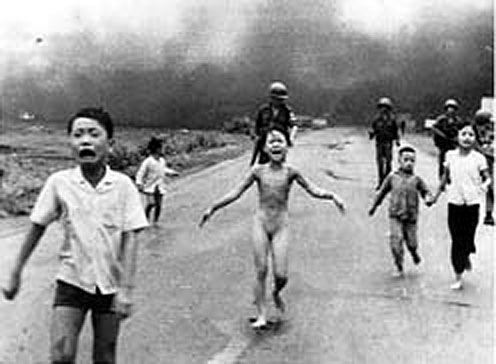
Huynh Cong "Nick" Ut photo via

THREE IMAGES: The Effects of Photojournalism on the Protest Movement during the Vietnam War


As I recall the U.S. public response to the war in Vietnam, it differed from that to previous 20th century wars because we saw it covered on television. Pictures, especially moving pictures affect the brain differently than do written words and statistics. If UNESCO wants to create defenses of peace in the brains of men, not just in their minds, then it must complement its cerebral approach with an approach that is also emotional.

Cognitive science has advanced a great deal since the time of the birth of UNESCO. We understand that people are not simply rational. We think with our brains and our thought is not just logical and rational, but also emotional. Some of our decisions are made slowly and based on analysis, others are made quickly and based on intuition. Some of our intuitions seem to be hard wired and others learned. UNESCO more than any other UN organization should understand the advances in science and their implications for how it is to go about its mission.

Indeed, we must recognize that learning has emotional aspects as well as cerebral and moral; science may be cerebral, but scientists are emotional. The sites and objects of our cultural heritage have not only aesthetic content, but affect us emotionally. Communications have emotional content. UNESCO should be emotional as well as cerebral.

There are fewer that 2000 people employed in UNESCO's secretariat. There are many, many more people who are affiliated with UNESCO's purpose though its National Commissions, associated schools, UNESCO clubs, world heritage sites, and other UNESCO networks. I hope and believe this larger network of people advance the defenses of peace in the brains of men (and women and children) using all the available means.

Sunday, December 04, 2011

Editorial: Repeal or Revise the anti-Palestine Legislation


The law which now requires U.S. funds to be withheld from UNESCO should be repealed or revised because it is outdated, ineffective, unnecessary, counterproductive, unclear, and potentially unenforceable. Its application to UNESCO has diminished U.S. diplomatic effectiveness, will in fact hurt the Israeli interests it was designed to protect, and -- most important -- will hurt a lot of innocent people. Readers are encouraged to contact their representatives in Congress and call for the law's repeal or revision.


The General Conference of UNESCO voted to invite Palestine to become a member state of the Organization on October 31, 2011. The actual membership is to take effect when Palestine submits its accession papers.

As the members of the General Conference had been warned, that action triggered two parts of U.S. law (US Code - Title 22: Foreign Relations and Intercourse / 22 USC 287 - Sec. 287e. Authorization of appropriations; payment of expenses):

  • Pub. L. 101-246, title IV, Sec. 414, Feb. 16, 1990, 104 Stat. 70, provided that: "(a) Prohibition. - No funds authorized to be appropriated by this Act or any other Act shall be available for the United Nations or any specialized agency thereof which accords the Palestine Liberation Organization the same standing as member states. "(b) Transfer or Reprogramming. - Funds subject to the prohibition contained in subsection (a) which would be available for the United Nations or any specialized agency thereof (but for that prohibition) are authorized to remain available until expended and may be reprogrammed or transferred to any other account of the Department of State or the Agency for International Development to carry out the general purposes for which such funds were authorized." 
  • Pub. L. 103-236, title IV, Sec. 410, Apr. 30, 1994, 108 Stat. 454, provided that: "The United States shall not make any voluntary or assessed contribution - "(1) to any affiliated organization of the United Nations which grants full membership as a state to any organization or group that does not have the internationally recognized attributes of statehood, or "(2) to the United Nations, if the United Nations grants full membership as a state in the United Nations to any organization or group that does not have the internationally recognized attributes of statehood, during any period in which such membership is effective."
The first provision is found in the Foreign Relations Authorization Act, Fiscal Years 1990 and 1991 and the second in the Foreign Relations Authorization Act, Fiscal Years 1994 and 1995. Those are unusual in that they do not provide the President the ability to wave the provisions if he determines doing so would be in the national interest.

The U.S. Government has announced that it is consequently withholding contributions to UNESCO. Both assessed contributions and voluntary contributions are being withheld. The United States remains a member state of UNESCO, and has in fact been newly elected to its Executive Board. If the United States continues to withhold all contributions until the next meeting of the UNESCO General Conference, it will not be allowed to vote in that conference.

Here are some reasons that the law should be revised or repealed.

The legislation is outdated: Since these provisions became law, the role of the Palestine Liberation Organization has changed, the Palestine National Authority has come into being, the Oslo accords and the Israeli-Palestinian Interim Agreement have been signed, and Palestine is reported to be recognized as a state by 127 UN member states. The United States and the other members of the Quartet are maintaining that a two state solution should be negotiated to settle the Israel-Palestine issues. 

The law is ineffective: It was intended to deny Palestinians membership in UN agencies until or unless a peace settlement was reached with Israel. UNESCO's General Conference voted membership for Palestine in full knowledge of the law. Several other UN agencies have constitutions that grant automatic membership on request from any national already a member of any UN agency. It seems likely that other UN agencies would also elect Palestine to membership if they received such a formal request.

The law is unnecessary: The Congress has the power of the purse and can vote to withhold funding from any UN agency as part of the annual appropriations legislation. Even without this law Congress has the power both to warn UN agencies of the consequences of admitting specific organizations or states to membership and withholding funds from agencies that do so in spite of the warnings. When the Palestinian membership was coming to the General Conference, letters were in fact sent from the House of Representatives to UNESCO informing the Secretariat and permanent representatives of member states to UNESCO that key committees would oppose funding UNESCO if it admitted Palestine. 

The law is counterproductiveAs Representative Keith Ellison has pointed out, UNESCO activities "include core U.S. interests like literacy education for the Afghan National Police, supporting a free press in countries like Iraq, Tunisia and Egypt, and promoting Holocaust education in the Middle East." Some of these activities will be stopped specifically because already promised voluntary contributions for their support must now be withheld. (See also "Cutting Off Unesco, U.S. May Endanger Programs in Iraq and Afghanistan")

The meaning of the law is unclear: Does the United States withhold contributions forever from UNESCO now that it has voted to accept Palestine as a member state? Does the United States continue to withhold funding from UNESCO even if a peace treaty is successfully concluded and Palestine is successful in meeting all of the internationally recognized standards of statehood. If existing member states of UN agencies for some reason no longer meet all of those standards but are not ejected from membership, must the United States withhold funding from those agencies.

The law may not be enforceable. The Congress ratified the accession document to UNESCO which I am told has the force of a treaty. In joining UNESCO, the United States agreed to abide by its Constitution (which was largely an American creation) and that Constitution requires member states to pay their assessed contributions; the obligation to pay overdue contributions does not go away even if a member state withdraws from the Organization. The United States is a signatory to other UNESCO Conventions which have been ratified by the Congress, such as the World Heritage Convention which also requires funding from member states. Thus, if the U.S. Government is taken to court it may have to stop withholding assessed contributions in spite of the law cited above. I have been informed that those concerns actually resulted in the United States not withholding contributions from UNESCO when it was proposed to do so during the 1970s.

Final Comments: As the law applies to UNESCO

The United States Government is forced by this law to act like the kid who takes his ball home when he is not elected captain of the football team. Diplomats of other countries see this "poison pill" of a law as a bullying tactic by the United States. They not only see it as anti-democratic but as politicizing UNESCO debates that should not be politicized. As a result, the influence of U.S. diplomats in UNESCO governance and other international forums is weakened.

Perhaps surprisingly, while the law was intended to protect Israel, Israel may suffer from its application. The United States has been the most important defender of Israel's interests in UNESCO as well as in other UN venues. U.S. influence is greater as the respect accorded to our diplomats and their tactics is greater. As the threat of withdrawing funding is disliked so our influence is decreased and thus our influence in protecting Israeli interests from unfair attacks by other member states.

In my mind, the most important reason for restoring funding to UNESCO is that if we do not do so, innocent people will suffer. Kids who would have gotten to school because of UNESCO's influence will remain uneducated. People who could have been saved from the threat of flood or tsunami by UNESCO programs will not be saved because UNESCO didn't have the resources we had promised. Reporters who might have been saved from coercive governments by the influence of UNESCO in favor of freedom of the press and freedom of speech will lose some of that protection; the public will lose information that those reporters could have provided. People who might have found work in UNESCO promoted cultural industries will lose that opportunity. People who might have been saved from the impact of unethical behavior by scientists will not receive the protection that might have been offered by the UNESCO ethics programs. People who might have been better served by their governments because of the influence of UNESCO's Management of Social Transitions (MOST) program will lose that opportunity. 

Indeed, those of us who enjoy the Olympics may enjoy them a little less as UNESCO has less money to support the international convention against doping in sport. Those of us who enjoy visiting museums may enjoy them a little less as UNESCO has less money to support conventions to protect museum-quality artifacts and to support museum quality. Those of us who enjoy visiting sites such as the pyramids of Egypt, the Taj Majal, or the rose red city at the end of time (Petra, Jordan) may enjoy them less as UNESCO has fewer resources to advocate for their preservation and their appropriate presentation to visitors.

Recommendation

I will refrain from recommending to the Congress and the State Department how to deal with these laws. Those bodies are well able to deal with the specific issues of legislative reform.

For the readers of this blog, I recommend that you contact your Representative and your Senators and ask that they work to restore U.S. funding to UNESCO and that they reform the law to deal with the problems raised in the paragraphs above.

Here is the message I sent to my Representative in the House and to my Senators:

Recently the General Conference of UNESCO voted to offer membership in the Organization to Palestine. In response to the possibility of Palestine joining the Organization, the purpose of which is to build the defenses of peace in the minds of men, the United States is withholding all contributions to UNESCO, apparently permanently. This is due to clauses in the Foreign Assistance Authorization Acts for Fiscal 1990 and 1991, 1994-1995. 
That action has cost the United States soft power in the United Nations system. It has created a financial crisis in UNESCO. It is threatening programs in Iraq and Afghanistan funded by U.S. voluntary contributions and implemented by UNESCO, programs important to our interests in those countries. In two years, that action will cost the United States its votes in the next General Conference. In the long run it will have a negative impact on programs promoting education, science, the preservation of cultural heritage, and freedom of the press. 
Perhaps even worse, if Palestine follows through on announced plans and obtains membership in other UN organizations, the old clause in the Authorization will require the United States to withhold funding from such agencies as the International Atomic Energy Agency, the World Intellectual Property Organization, the International Telecommunications Union, the World Health Organization, and the Food and Agriculture Organization. 
Ideally the clause should be repealed and decisions on the funding of these agencies made in the normal appropriations process. At a minimum, the clause should be amended to allow the President to waive the requirement to withhold funding when he determines that action is to the overall foreign policy advantage of the United States.
John Daly
The opinions expressed in this post are those of the author, and do not necessarily represent those of Americans for UNESCO.

Friday, May 21, 2010

Editorial: The U.S. Intellectual Community should be more involved in UNESCO.


Francesco Bandarin mentioned in his talk to the Board of Directors of Americans for UNESCO that the new administration of UNESCO will give high priority to strengthening the participation of the U.S. educational, scientific and cultural and communications and information communities in UNESCO's efforts and networks. That participation languished during the years in which the United States was not a member of UNESCO, and has not been fully restored since the United States reentered UNESCO in 2003.

From the point of view of the UNESCO Secretariat, the desire to strengthen U.S. participation in UNESCO is obvious. Not only does the United States contribute 22 percent to the regular budget of UNESCO, but:
  • The U.S. education community is very strong. Thus one study finds 55 of the top 100 universities in the world are in the United States.
  • The U.S. scientific community is very strong. According to the NSF the United States provides one-third of the world's funding for research and development and produces more scientific and technological journal articles per year than any other country.
  • The U.S. cultural community is very stron. According to the UNESCO Institute of Statistics, the United States leads the world in trade of cultural goods.
  • The United States is a leader in the development of the information society. U.S. innovations include the transistor, the semiconductor chip, the personal computer and the Internet.
The effort to strengthen the participation of the U.S. intellectual community in UNESCO's programs should be welcomed by the Government and those communities. Through participation in UNESCO's activities and networks Americans can promote understanding of the United States by others while improving our understanding of other cultures. UNESCO provides a neutral forum in which key issues can be discussed by representatives of many nations.
  • It can provide a venue for discussions of the ethics of climate change and the responsibilities of nations to reduce greenhouse gas emissions and to ameliorate the damages done by global warming.
  • It continues to be the place in which countries discuss and monitor global progress on education.
  • It not only has catalyzed a number of global networks tackling critical scientific problems, but it provides an umbrella under which nations (even nations with fundamental disagreements among themselves) can collaborate on mutually beneficial scientific projects.
  • It provides a forum in which countries can work to develop a global culture of peace, and provides fora for discussion to help bridge the gaps between U.S. and Islamic culture and between Christian and Islamic religions. It can help protect world heritage while promoting cultural changes needed to enhance economic development.
  • It provides a useful emphasis on the development of knowledge societies to balance the increasing global interest in development of information societies.
The United States participated fully in the creation of UNESCO after World War II, modifying its Constitution in ways designed to make it a better instrument in achieving the goal of building teh defenses of peace in the minds of men. The United States reentered UNESCO in 2003 based on a consensus that the perceived problems of the organization that led to our withdrawal had been overcome and that membership in the organization would advance U.S. global interests. This history would itself justify full participation in UNESCO's efforts. More importantly, the more fully the U.S. educational, scientific and cultural communities participate in UNESCO, the more fully UNESCO will meet our expectations and achieve that which we hope for it to achieve.

John Daly
The opinions expressed above are those of the author and do not necessarily reflect those of Americans for UNESCO.


Monday, September 07, 2009

Editorial: Intangible Cultural Heritage from the U.S. should be added to the list

UNESCO maintains a Representative List of the Intangible Cultural Heritage of Mankind. At this time there are no entries in the list from the United States. I suggest that the U.S. seek to add elements of America's contribution to the Intangible Cultural Heritage of Mankind to the list.

The first things that occurred to me for the list were jazz and American popular song.

It occurs to me that a better choice is the Internet. Certainly the Internet was invented in America. Fundamentally, it is the set of standards for interconnecting physical communication networks, and as such is intangible. The Internet is not only an important heritage of mankind, but it is in fact used directly by a billion people around the world, and indirectly affects us all. It may in fact be imperiled by its own success.

A useful point to be made by such a submission is that World Heritage items need not be old nor quaint.

John Daly
(The opinion expressed in this posting is the author's alone, and should not be considered to represent that of Americans for UNESCO.)

Monday, August 31, 2009

A Note on the History of the Concept of Culture in UNESCO

Julie Reeves points out in her book, Culture and international relations: narratives, natives, and tourists, that the concept of culture change from the humanist to the anthropological during the 20th century, and this shift had profound implications in international relations.

The Humanist Definition

Wikipedia provides the following that characterizes the humanist concept of culture:
When the concept first emerged in eighteenth- and nineteenth-century Europe, it connoted a process of cultivation or improvement, as in agriculture or horticulture. In the nineteenth century, it came to refer first to the betterment or refinement of the individual, especially through education, and then to the fulfillment of national aspirations or ideals.
To further emphasize the point, consider these two quotations from Mathew Arnold in the 18th century:
  • Culture is properly described as the love of perfection; it is a study of perfection.
  • Culture is to know the best that has been said and thought in the world.
In the creation of UNESCO, which came in the immediate aftermath of the first use of the atomic bomb, it was explicitly argued that it was important to have a forum in which science could be informed by the humanities, that is that Science and Culture should both be included in the charter of UNESCO.

The Constitution of UNESCO further adds to the evidence that this was the concept of "culture" used by is founders. Consider this declaration from the preamble:
That the wide diffusion of culture, and the education of humanity for justice and liberty and peace are indispensable to the dignity of man and constitute a sacred duty which all the nations must fulfil in a spirit of mutual assistance and concern;
Or this from Article I: Purposes and functions:
To realize this purpose the Organization will:......Give fresh impulse to popular education and to the spread of culture;
  • By collaborating with Members, at their request, in the development of educational activities;
  • By instituting collaboration among the nations to advance the ideal of equality of educational opportunity without regard to race, sex or any distinctions, economic or social;
  • By suggesting educational methods best suited to prepare the children of the world for the responsibilities of freedom.
The suggestion that culture be defused must be understood in terms of a diffusion of the best that has been said and thought in the world to the advantage of all peoples.

Thus in the early years of UNESCO the emphasis of the culture program included work on international copyright instruments, museums, the protection of tangible items of cultural heritage, and importantly the preservation of Abu Simbel.

The Anthropological Definition


In 1998, Don Adams in his report on UNESCO's World Conference on Cultural Policies for Development noted:
A continuing emphasis on broadening the scope of cultural policy to include "the whole complex of distinctive spiritual, material, intellectual and emotional features that characterize a society or social group.... not only the arts and letters, but also modes of life, the fundamental rights of the human being, value systems, traditions and beliefs"
Reflected in that broadening of the concept of "culture" was new emphasis on such topics as respect for cultural diversity, protection of the expression of that cultural diversity, protection of intangible cultural heritage from cultures once the subject of prejudice, and protection of endangered languages.

There were of course real world changes taking place during the past six decades in parallel with the changes in the meaning of "cultural". Globalization and the development of the global information infrastructure greatly increased the interaction of peoples with their differing cultures. Decolonization occurred and post colonial states grew in influence in the international scene, including in UNESCO's governing bodies. UNESCO ceased to be a club of a small number of countries, including colonial powers infused with the belief in the superiority of their own high cultures, and became a more egalitarian organization of states, the majority of which seeking to protect their national cultures. Indeed, the UNESCO founding nations saw and expansion of democracy and became more egalitarian.

In the 1990's UNESCO became involved in efforts focusing on culture and development. That work resulted in a new and important conceptualization of development. It recognized that culture is not simply a factor to be taken into account in planning for economic and social development, but the context in which all development takes place, and indeed the determinant of the values of a people which determine the directions that that people seeks from development.

Implications for the Future

As the concept of culture has expanded, UNESCO has added new aspects to its cultural program but has continued to recognize the importance of its key programs linked to the humanistic definition. It continues to expand its network of World Heritage sites, has just implemented a World Digital Library, and its standard setting instruments for the protection of tangible cultural heritage in times of war are especially important.

A new UNESCO Director General is to be elected soon, and that person will face the challenge of leading UNESCO's cultural program and integrating it with UNESCO's other programs. We can expect the concept of culture to continue it evolution, and we can expect UNESCO to continue to be constrained by both human and financial resources. One hopes that the selection process will assure that the new Director General fully understands the way that the concept of culture has expanded since the foundation of UNESCO, the way in which the UNESCO program had accommodated and indeed contributed to that evolution, and have the flexibility to lead in the continuing evolution of concept and program.

John Daly
(The ideas in this posting are those of the author alone, and do not necessarily represent those of Americans for UNESCO.)

Saturday, June 13, 2009

Editorial: The United States Should Support Associate Expert Posts at UNESCO

UNESCO's Associate Experts’ Scheme provides young professionals every year with the opportunity to contribute to international technical cooperation. The program is open only to the nationals designated by the nations which are supporting the program (with voluntary contributions). Currently they are: Belgium, Finland, Italy, France, Germany, Greece, Japan, Republic of Korea, Spain, Sweden and Switzerland. The United States is not a supporter of the program.

Associate Experts, usually under the age of 32 at acceptance, participate in the program for one year, with an option of a second year. During that time they receive preparatory instruction and in service training. The program is open to young professionals with university degrees in education, culture, science, social and human sciences or communication, or in a field of direct relevance to the management and administration of an international organization.

Of course, Americans are included in the Secretariat of UNESCO as regular, international civil service employees, but the U.S. is underrepresented in that workforce, largely due to the long absence from membership in UNESCO. Some Americans have been detailed to UNESCO by their U.S. government agencies, and the Fulbright Fellowship program has allowed some fellows to participate in UNESCO as part of their fellowship experience. Still, there are comparatively few opportunities for young American professionals to work in UNESCO, especially as compared with the interest expressed from our large population.

Were the United States to contribute to this program the effort could:
  • help to rectify the lack of professionals in this country who understand UNESCO,
  • help to add qualified Americans to the UNESCO staff,
  • build linkages between the American educational, scientific and cultural communities and their counterparts abroad,
  • provide much needed support to UNESCO's valuable programs in ways fully under the control of the United States, thus directing support to the programs we value most.
If properly negotiated, participation in the Associate Experts program could be for the United States, as it already is for eleven European nations, an inexpensive means of providing effective international assistance as well as an effective means of building U.S. capacity to deal with intergovernmental organizations.

Your comments are most welcome on this posting, and I would encourage you also to contact the Department of State's UNESCO watchers if you feel that the United States should participate in the Associate Experts program.

John Daly
The opinions expressed above are those of the author, and do not necessarily reflect those of Americans for UNESCO.

An Example of an Associate Expert

Patrick Montjourides is an Associate Expert who participated on the EFA Global Monitoring Report Team financed by the French government.
He holds a “Maitrise” in international economics from the University of Paris Dauphine and a Master’s degree in education economics from the University of Burgundy. He is now pursuing a PhD in association with IREDU, the Institute of Research in Education: Sociology and Economics of Education, based in Dijon.

Saturday, March 14, 2009

Editorial: Response to Ambassador Oliver

Louise Oliver, the former U.S. Permanent Representative to UNESCO, has published a "commentary" in the Washington Times. For those of you who don't know, the paper (according to Wikipedia)
was founded in 1982 by Unification Church founder Sun Myung Moon. The Times is known for its conservative stance on political and social issues.
Ambassador Oliver was a political appointee of the Bush (43) administration, given the rank of ambassador. She is widely considered to have won the respect of the UNESCO Secretariat and of other diplomats representing their governments at UNESCO, and to have been an effective advocate for the issues on which she chose to focus. The Interpress Service reported in 2005:
Two years ago, Bush appointed the former head of an aggressive Republican fund-raising and lobby group, Louise Oliver, as U.S. ambassador to the U.N. Educational, Scientific, and Cultural Organization (UNESCO), which had been boycotted by Washington for almost 20 years before.

Oliver had also been a founding director of the right-wing Independent Women's Forum along with Lynne Cheney, the wife of Vice President Dick Cheney. Oliver's daughter, Anna Louise Oliver, was appointed special assistant to the State Department's PRM Bureau in 2001 primarily to work on population issues, particularly with respect to reproductive services and abortion.
I agree wholeheartedly with what I take to be Mrs. Olivers key points in the piece:
  • "This October, the United Nations Educational, Cultural, and Scientific Organization (UNESCO) will elect a new director general to a six-year term. It is critical that the Obama administration focus its attention on that election."
  • "President Obama has stated his intention to promote multilateralism and the use of 'soft power' as the hallmarks of his foreign policy. What the administration does with regard to UNESCO - and when - will send a clear signal about the seriousness of his commitment to use international organizations to advance U.S. national interests and the global good."
On the other hand, I have some problems with the piece. Mrs. Oliver states:
When I arrived at the UNESCO headquarters in Paris in March 2004, I was the first U.S. ambassador to the organization in 20 years. Given UNESCO's name, I expected to find my new colleagues focused on schools, scientific research and the arts. Instead, they were busy developing three new "normative instruments." each of which would have important legal implications: a declaration on bioethics, and two treaties, known at UNESCO as "conventions," on anti-doping in sports and "cultural diversity."
There are a couple of thousand employees of UNESCO, many more people who participate in the international forums of UNESCO, and a large diplomatic community around UNESCO. All of these people might have been considered her colleagues. In my experience, the large majority of them are indeed focused on improving education, promoting science, and protecting culture. If as Ambassador, Mrs. Oliver missed that point it was probably because she chose to devote her time and effort to those three normative instruments.

Of course, it is not surprising that a diplomat focuses her attention on the negotiation of treaties; that is an important part of the job. What may be more surprising is that the Bush administration appointed someone to the UNESCO post who did not know the organization well before assuming her duties as the Permanent Delegate to that six-decade-old organization.

Mrs. Oliver states:
On the U.N. Security Council, the United States has a veto. At UNESCO, it does not. Effective U.S. diplomacy and strong personal relationships with the secretariat and representatives of UNESCO's 192 other member states are the only means the United States has to generate support for its ideas and policies, and to thwart the efforts of those who seek to harm U.S. interests.
The United States and the other great powers emerging victorious from World War II indeed created the Security Council's veto system to assure that they could block any U.N. action that threatened their security. UNESCO was created, with the United States taking a lead role, for the exchange of ideas -- an open forum. While diplomacy and personal relations count in a forum of ideas, another critically important means to winning debates is to have good ideas to promote and strong arguments with which to promote them. UNESCO was created to build the defenses of peace in the minds of men, and that is best done by reasoned discussion rather than force.

Mrs. Oliver states that she and her staff "successfully negotiated the Declaration on Bioethics and Human Rights". The Declaration had been under negotiation prior to the U.S. reentry into UNESCO, and after reentry an American was added to the drafting committee. That person, an eldely physician with a distinguished history as a medical academic, was also known for his strong "right to life advocacy"; he served on the very controversial Presidential Committee on Bioethics.

Was it appropriate for UNESCO to consider bioethics and human rights? UNESCO's concern for human rights goes back to the request from the United Nations to investigate whether there were indeed rights that were so widely shared among cultures of the world as to be "universal". Similarly, it has always focused on ethics and indeed has been termed "the conscience of the United Nations system."

Was the negotiation successful? A declaration is the weakest of the international instruments, and the bioethics declaration might not affect country behavior much in any case. Still, the Universal Declaration of Human Rights, negotiated under the guidance of Eleanor Roosevelt, has been hugely influential over the past six decades, and there may well have been useful things that a new declaration on bioethics could have done. In point of fact, the declaration was widely criticized by philosophers and human rights experts.

Mrs. Oliver seems concerned that other nations disagree with us about some aspects of human rights and use UNESCO as a forum to seek to convince the majority of nations of the superiority of their beliefs. The very purpose of UNESCO was to allow peaceful discussions of issues so important that if unresolved they might lead to war.

The debate on the abolition of slavery was conducted over many years before the right to freedom from involuntary servitude was acknowledged by the community of nations, So too, there has been a debate in the last couple of years over the use of torture on prisoners for which the majority of Americans appear to disagree with the position of the Bush administration. People do go to war over such issues!

There is another UNESCO decision before the Obama administration -- the appointment of a new U.S. Permanent Representative to UNESCO. I hope that the administration will find a skilled diplomat, devoted to advancing education, science and culture, who will be an effective advocates for the best of American ideals, and who will fully understand the UNESCO milieu in which that advocacy is to take place. I would also hope that the new representative emphasizes efforts to make UNESCO more efficient and effective in improving education, promoting science and protecting culture globally.

John Daly
(The opinions expressed in this editorial are those of the author, and do not necessarily represent those of Americans for UNESCO or any other organization.)

Sunday, February 15, 2009

"Risk-Based Evaluation of UNESCO’s Capacity to Deliver"

The Evaluation Section of UNESCO's Internal Oversight Service has just published an analysis of the risks perceived by the Organizations leaders as they face the organization's future. The top ten risks that were identified are:
1) The gap between expected and available resources;
2) Uncertainty about future regular budget and reliance on extrabudgetary funding;
3) Complex structure which does not promote intersectoral collaboration;
4) Lack of responsiveness to our clients;
5) Inadequate information and network systems;
6) Insufficient accountability;
7) Incomplete performance-based monitoring;
8) Untimely succession plan;
9) Imbalance between process control and program delivery;
10) Predominance of central services over programs.

Editorial Comment: These risks seem rather bureaucratic to me.
"SINCE WARS BEGIN IN THE MINDS OF MEN, it is in the minds of men that the defences of peace must be constructed."
From the preamble of UNESCO's Constitution
UNESCO was created after World War II. The United Nations, and especially the UN Security Council were created to allow the community of nations to take political action to prevent or limit wars. UNESCO was created simultaneously, with the primary mission of building the defenses of peace in the minds of men. The job of building those defenses is far from complete, and indeed the worsening global financial crisis may bring with it greater likelihood of intra and international wars. Perhaps the greatest risk faced by UNESCO is that it will not be able to make sufficient progress in the current crisis in building the defenses of peace in the minds of men.

I understand the charter of UNESCO, with the inclusion of education, science, culture and communications in its programmatic responsibilities, to include services to help develop the intellectual capacities of the world's societies. While the genesis of UNESCO was in the concerns of the allies to rebuild the educational and scientific institutions destroyed by World War II, decolonization has led to a major emphasis on helping developing nations to build towards "information societies" and indeed toward "knowledge societies".

UNESCO's flagship program in this respect is the Organization's support for Education for All, and that global initiative is surely going to fail to meet its goals set for 2015. Even those ambitious goals fall far short of what is needed to achieve a global community of knowledge societies. Thus there is a great risk that UNESCO will not adequately play the role envisioned by its founders and its member nations in helping to develop the intellectual capacities of the societies of its member nations.

John Daly
(The opinions expressed are those of the author, and do not necessarily represent those of Americans for UNESCO.)

Saturday, November 15, 2008

Tell the Obama Transition Team About UNESCO

The Office of Barack Obama as President Elect has created a website, Change.gov, with news, information on the Transition Team, and information on the transition process. It also provides a site for anyone to share a vision of America.

UNESCO was created to build the defenses of peace in the minds of men by improving the global dissemination of education, promoting social and natural science, promoting cultural understanding, and helping to assure an adequate communication. For six decades it has sought to do so with considerable success. Since the Bush administration led the United States to rejoin the organization, our representatives in Paris have done much to reestablish American prestige and influence with respect to UNESCO.

Many have suggested that we will not win the "war on terror" if we fail to "win the war of ideas". They have suggested that the United States must improve its soft diplomacy and its public diplomacy. If you agree that UNESCO should play an active role as a venue for soft and public diplomacy, and that the new administration should facilitate greater involvement of the U.S. educational, scientific and cultural communities in UNESCO and its global networks, let the transition team know your ideas.

Friday, November 14, 2008

Editorial: The Obama administration should embrace UNESCO in its public diplomacy

Applying this successful Cold War “war of ideas” model to the present national security challenge in the Middle East could effectively drive out extremist ideology that may give rise to terrorist behavior while strengthening the United States’ stature in the international community.

The U.S. Marine Corps Small Wars manual, which details tactics and strategies for operations combining military force and diplomatic pressure, and on which the “Global War on Terror” is based, famously notes that such “wars are battles of ideas and battles for the perceptions and attitudes of target populations."

Winning the war of ideas and creating better relations with the Muslim world require more than tired tactics, immobility, and budgetary pocket change (the current $50-million cost is less than 1/10,000th of our Iraq-related expenditures). The next president should designate this effort as a matter of the highest national security importance. The campaign as a whole should be self-critical, regularly evaluating its own performance and ready and willing to change in response to evaluation results.

Simply put, there is a glaring need for the United States to undertake a proactive strategy aimed at restoring long-term security through the presentation of our principles as part of U.S. foreign policy. The tools of public diplomacy and strategic communications are the most valuable weapons in America’s arsenal. It is not too late to wield them.

Hady Amr and Peter W. Singer
"Engaging the Muslim World: How to Win the War of Idea"
American Constitution Society for Law and Policy
The quotations shown above are from a paper provided for the Obama administration as it takes office, published by a think tank with close ties to the Democratic party. The authors make a number of very good points and the paper is worth reading by anyone interested in public diplomacy. They stress the need to complement our military actions with a far more effective program of public diplomacy. They emphasize that the effort must be sincere, and that we must work to better implement our ideals at home and abroad if our representations are to be believed.

The new administration should realize that UNESCO is an important venue in which the United States can wage "the war of ideas", and that UNESCO has considerable influence in Muslim countries. The Bush administration has helped reestablish U.S. prestige in the halls of UNESCO, and the new administration can build on that start.
  • UNESCO's education programs can help to build understanding among cultures;
  • Its social science programs can help develop valid information on which such understanding can be built;
  • Its natural science programs not only provide means to encourage cooperation among scientists in Islamic countries and the United States, but can help to defuse potential conflict over natural resources;
  • Its cultural programs can promote a peaceful dialog among cultures, and help people to learn to respect cultures other than their own;
  • Its information and communications programs can help to improve the quality of media in the Muslim world.
The United States should of course provide its assessed contributions to UNESCO in a timely fashion, and encourage our best professionals to seek positions in UNESCO. The government should seek opportunities to make voluntary contributions to UNESCO where they can promote projects that contribute to our public diplomacy. Importantly, the U.S. Government should revitalize the U.S. National Commission for UNESCO, using it to empower our educational, scientific and cultural communities to work more actively and effectively with UNESCO.

John Daly
(The opinions expressed above are those of the author, and don't necessarily reflect those of Americans for UNESCO or other organizations.)

"Aren’t There Enough Trails?"

Image Source: Bison in winter at Old Faithful; Richard Lake, National Park Service

In response to a court ruling throwing out a plan allowing 540 snowmobiles a day into Yellowstone, the Department of the Interior now proposes a compromise: 318 machines a day. "The National Park Service’s own scientists — studying air pollution, noise pollution and the effect on the park’s animals — have consistently found that the best solution is low-emission, higher-capacity snow coaches. The new plan would allow 78 of those a day."

"This new plan is a bad and barely acceptable compromise. It is well past time for snowmobilers to confine themselves to the thousands of miles of trails on public lands outside Yellowstone."

The public has until Monday, November 17th to comment.

Tuesday, April 29, 2008

Musing: Emergency Education

Two students in my class last night presented a synopsis of their project on UNESCO's role in emergency education. They emphasized education for refugees, noting that there are an estimated 20 million refugees in countries other than their own, and some 30 million refugees within their own countries, and that these world estimates may be too low. My colleague, Frank Method, mentioned that a large portion of the world's children who are not able to exercise their rights to primary education are refugees. We will not achieve "Education for All" unless we educate refugees, and refugee kids have a right to education in their own languages.

There are of course other emergencies such as natural disasters which also require special handling of educational resources. But let me continue the student focus on refugee education.

There are many agencies that are involved, such as UNRWA, UNICEF, development banks, NGOs and bilateral agencies, as well as the national governments that have the central responsibilities for efforts in their own countries and for their own citizens. However, UNESCO has the lead responsibility within the United Nations system for education, communication and information and thus should play an important role in refugee education. Unfortunately, UNESCO's staff and financial resources are very limited in the face of UNESCO's huge responsibilities within the UN and international system.

The students pointed out that most of the concern for emergency education is focused on primary school, but that UNESCO correctly sees education as a lifelong process, and indeed there is a great need for providing appropriate secondary, tertiary, and informal education services for refugees. The refugees need to be prepared both to return to their homes and places of origin and deal with the problems there, and to cope with their current situation as refugess.

Frank pointed out that UNESCO's function in refugee education was not simply to teach the kids, but nation building. Refugee education should help to overcome the circumstances that caused the regugees to seek refuge in the first place. They will include building a culture of peace, supporting respect for cultural diversity, and facing the problems of rebuilding economies and promoting participatory governance.

In thinking about the breadth of this challenge, it would seem to involve all of UNESCO, and not just its educational sector. UNESCO's social and human sciences sector emphasizes the management of social transitions and migration, and would seem to have the capacity to bring social science knowledge to bear in the service of refugee education, even as refugee education could prove an important tool in the management of some social transitions and migration problems. The communication and education program would seem a natural complement to the education program in providing information to refugees and helping them to change their behavior. The culture program would seem to be critical in helping refugees to preserve their cultural heritage, while adjusting to the challenges presented by living in a different culture. (Indeed, even internal refugees often face cultural differences as they move from one region of their country to another.) The natural science programs could help educators prepare refugees to confront the environmental challenges that they often face, and indeed its new focus on innovation for economic development may prove quite valuable to refugee communities.

Thus, UNESCO might well be advised to consider a cross-sectoral program of support for the knowledge needs of refugees and victims of other national emergencies. Such an initiative should merit the support of the U.S. delegation to UNESCO, and indeed the United States might lead in helping UNESCO find resources for such an effort.

Friday, April 18, 2008

Musing: UNESCO's Agenda for the 21st Century

Monday's class on UNESCO, focusing on the changes for the future, was very thought provoking. There was general agreement, I believe, that in the coming decades there will be forces that require major changes in UNESCO. If UNESCO does not reinvent itself to make itself more efficient, more effective, and more relevant to the emerging needs of the international system, it may well become irrelevant or even go out of existence. Not only is a reengineering of UNESCO's structure and processes needed, but so too is a restructuring of its relations with the governments of member states and the intellectual communities of educators, scientists and cultural leaders in those states that UNESCO was created to serve.

UNESCO not only is headquartered in Paris, the majority of its employees are there. It was suggested that, as the UN agencies are all concentrated in rich countries, they are seen by the majority of the world's population (which lives in poor countries or emerging economies) as tools of the rich isolated from the interests and concerns of the poor. As part of its reinvention, UNESCO will have to reach out and involve many more people in its work. Indeed, it would be well advised to reach out to make itself known to the majority of the world's population.

In its sixty some years of existence, UNESCO has had some major successes. USAID has been characterized as spinning off its successes in order to concentrate on its failures. Whether that is or is not true, surely UNESCO should emphasize and build upon its successes. These would include the networking of World Heritage sites and of bioreserves, the collaborations UNESCO has catelyzed through its intergovernmental science programs, and development of networks of international laws and agreements through its standards setting instruments in the fields of culture and education.

It was suggested that the governments of rich countries now see UNESCO as irrelevant to their domestic interests, and that UNESCO should seek seriously to again become something valued for its ability to serve its major financial donors domestic interests in education, science and culture.

There is a huge management challenge for UNESCO's management.
  • Management should find ways to clean out the dead wood, eliminating programs that don't work, that duplicate those of other agencies, or that would be better implemented by other agencies.
  • Management should find ways to either spin off subsidiary organizations that are able to go it alone, and decentralize management of subsidiary organizations that are peripheral to UNESCO's core business, allowing the secretariat and governing bodies to focus their attention narrowly on that core business.
  • Management should find ways adopt programmatic innovations that allow it both to respond to changing international needs and demands on the organization and simultaneously to focus on its core values and mission.
While some innovative programs may arise from the secretariat, the history of the organization suggests that the most important innovations have come from outside. Thus UNESCO's roles in Education for All and the implementation of the Millennium Development Goals arose out of the consensus developed in international meetings, while the Intergovernmental Oceanographic Program and the World Heritage Program arose from initiatives of the U.S. delegation, influenced by leaders in the U.S. scientific and environmental communities. UNESCO can play a key role building on its great power to convene leadership from government, education, science and culture and its bureaucratic power and outreach, but it needs to continue to innovate successfully to remain and gain in relevance.

In order for UNESCO to rise to these challenges, it needs a very strong secretariat and leadership. Director General Matsuura will complete his second term of office in a few years, and it is very important that the community of nations select a strong, effective leader to replace him. Many of the senior staff of UNESCO are nearing mandatory retirement age in the United Nations system, and therefore UNESCO will have to restaff by replacing many professionals. One suggestion is that the organization might move toward a system like that of the U.S. National Science Foundation, bringing in senior professional on a rotating basis. A cadre of senior people rotating through UNESCO for three to five year terms might help it to rethink its operations and reinvent itself.

The current governance structure of UNESCO will make major reform, reengineering and restructuring difficult at best. Not only is it expensive, it is unwieldy. When UNESCO was created, the number of nation states was relatively small and the strong Director General could deal effectively with its representatives. In the intervening years, the size of the governing bodies has grown with the number of member states. Moreover, the participation of leaders from the intellectual community has been replaced in governance by representatives of the diplomatic missions of the member states. The long meetings of UNESCO's 193 member state delegations every other year at the General Conference deal with so large an agenda as to overwhelm most delegations' capacities to absorb and analyze information. The Executive Board, now with more members than the original General Conference, is similarly cumbersome and overloaded. The Executive Board and General Conference take up a great deal of the attention of UNESCO's senior staff. Thus, reform of governance seems a precondition to rebuilding and reforming the organizations, and reinventing its programs and ways of carrying out those programs.

It seems clear that the United States must take a leadership role in the reinvention of UNESCO; the United States contributes 22 percent of UNESCO's assessed budget, and the United States has the world's strongest educational, scientific and cultural communities, as well as being a world leader in information and communications. It is important that the United States assume this leadership role, especially because this nation must reemphasize "soft diplomacy" and UNESCO can and should be a key element in America's soft diplomacy. To assume that leadership role, the State Department needs a very strong staff dealing with UNESCO affairs, the U.S. National Commission has to be given a stronger role not only in advising the government but in the governance of UNESCO, and State and the National Commission needs to reach out more effectively to involve the American intellectual community in their and UNESCO's efforts.

Wednesday, April 16, 2008

Musings: The Importance of UNESCO

UNESCO is chartered with huge responsibilities, but shackled with a small budget -- on the order of US$300 million per year. The United Nations Educational, Scientific and Cultural Organization has lead responsibilities in the United Nations system for there areas, and also for communications and information.

Compare UNESCO's budget for its world wide responsibilities with some U.S. entities. My county's school system, for example, has an operating budget of some $2 billion per year plus an investment budget of some $230 million a year. The U.S. Federal Government spends $116 billion per year on research and development, and of course that is only part of what is spent on R&D in the country, and the expenditures on science include not only research and development but many other scientific functions as well. The global market value of cultural and creative industries (producing and distributing such goods and services such as books, CDs, videogames and sculptures) has been estimated at US$ 1.3 trillion and is rapidly expanding; between 1994 and 2002, international trade in cultural goods increased from US$38 billion to US$60 billion. The United States -- with a population of over 400 million, and per capita GDP of $43,500 -- spent 8.8 percent of GDP on information and communications technology in 2005.
As the above graph shows, the number of intergovernmental organizations exploded in the last half of the 20th century. UNESCO is now one of thousands of such organizations. We tend to lose track of the work and impacts of individual intergovernmental organizations in the mass of such organizations. So too, we tend to assume that these organizations with relatively small budgets also have relatively limited impact.

In the case of UNESCO, I would suggest that the impact has been quite significant:

Education
The community of nations has embarked on an ambitious program to provide Education for All, and includes ambitious educational goals within the Millennium Development Goals. UNESCO's function over the years has been to keep international attention on education, and on the need to work to assure people's human rights to education. In the current situation, it has worked to help assure that educational statistics are comparable among countries, and provides forums where national governments have to defend their educational performance before both their own citizens and other nations. It is likely that global educational achievements are much greater than they would be had there not been a United Nations body to do that which UNESCO does in education.
Science
In its early years, UNESCO's influence was critically important in the creation of the International Center for Theoretical Physics and the European Center for Nuclear Research (CERN); these organizations have helped both to illuminate the nature of the universe and to spread modern physics worldwide. The role of CERN in the creation of the World Wide Web might alone justify UNESCO's existence.

The role of UNESCO's Intergovernmental Science Committees has been quite important. In oceanography, UNESCO has helped the scientific community to work in ways transcending national borders, and is working to develop tsunami warning systems to serve all of the world at risk from tsunami disasters. The hydrology program is allowing collaborative work to characterize water resources, and helping to create a knowledge base that can be trusted in negotiation on control and allocation of water resources. The Man in the Biosphere program has resulted in a collaborative structure of hundreds of bioreserves, where mankind is learning how to protect the biospere.
Culture
UNESCO's World Heritage Center has recognized more than 800 natural and cultural sites that are so important that they can be fairly called the heritage of all mankind. For each, the country in which the site is located has produced a detailed study of the site and a plan for its protection. Monitoring of the state of those sites encourages countries to work hard to achieve that protection, and over the history of the program only one country has withdrawn a single site from the network.

UNESCO has also catalized the creation of a body of international conventions that protect cultural property. Since the protection of Abu Simbelm UNESCO has provided a system that helps to protect cultural heritage during emergencies and wars, and helps to regulate international trade to prevent the trade in stolen artifacts and other cultural property.
Communications
UNESCO provides a mechanism for the United Nations to militate for freedom of expression and freedom of the press. Every time a reporter is killed or imprisoned anywhere in the world, UNESCO protests and in so doing draws public attention to the event.

UNESCO also serves the United Nations system to promote libraries, to support a culture of the book, and more recently to promote the development of digital information serving the countries on the wrong side of the digital divide.
Why is UNESCO Important to the United States?
The points above are made to illustrate that UNESCO is important to the community of nations. To our State Department, which concerns itself primarily with security and economic issues, those services may not be convincing. Of course, U.S. foreign policy is also concerned with supporting the international humanitarian programs desired by the American public, and UNESCO's programs in Africa are prototypical of the multilateral approach to development assistance.

UNESCO was created to promote the international cooperation of national intellectual communities -- educatoral, scientistific and cultural. Indeed these communities in the United States value the contacts with their peers abroad, and expect the foreign policy apparatus of government to facilitate that networking. UNESCO is, in realizing these aspirations, an important element of foreign policy.

The State Department is increasingly recognizing the importance of "soft diplomacy" as a necessary complement to the "hard diplomacy" focusing on economic and military power. The United States needs to restore the confidence of other nations that this country will negotiate in good faith, with understanding and respect for the positions of others, and UNESCO provides a useful forum for that purpose.

As Archibald McLeish, the writer and Librarian of Congress, so memorably said in the negotiations leading up to the creation of UNESCO, "Since wars begin in the minds of men, it is in the minds of men that we must begin to build the defenses of peace." Building those defenses is a long term process, and it is one best accomplished by the community of nations working together. Thus UNESCO, with its work with education and with the intellectual communities of the nations of the world, should be a significant element in U.S. soft diplomacy.

Tuesday, April 15, 2008

Musing About the Future of UNESCO

Last night we held a panel discussion in our graduate class on UNESCO. The class focused on UNESCO's future in the 21st century. The discussion focused on how UNESCO could adapt to the changes that will surely occur over the next 40 years or so.

Coincidentally, I have been reading Good Capitalism, Bad Capitalism, and the Economics of Growth and Prosperity by William J. Baumol, Robert E. Litan, Carl J. Schramm. The authors focus on innovation as the basis of economic success of nations. For advanced developed nations, working at the forefront of technology and having relatively high costs of labor, companies must invent, not only innovate by copying. The authors also realize that most invention comes from individual entrepreneurs and small firms. However, they note that it is large firms that have the resources to take an invention and develop it into a widely used, high quality, reliable product. Successful large firms not only continue to innovate by acquiring and building on ideas from outside (and occasionally inventing from within(, they also get rid of activities by decentralizing management, selling off divisions, or closing down things which are no longer profitable.

Perhaps UNESCO, with its 2000 people can take the successful commercial firm of a comparable size and learn from their approach. It seems clear that would be better served by a sharper focus. Many of its most successful programs have their own oversight bodies and receive most of their financing from other sources, not UNESCO. Perhaps a process of formally either turning activities into independent agencies, or of decentralizing by delegation of full authority to the staff and directors of some of these activities might help. This sounds easy, but in fact is very difficult. The management of the reengineering and restructuring of relations in downsizing processes requires great leadership if it is to be done well.

UNESCO often finds innovations thrust upon them -- new standards setting documents, new centers, new programs. Some of the best programs were started in this way. Russel Train was the motive force behind the invention of the World Heritage program, which the secretariat carried to success, as Roger Revell and a few other scientists were the originators of the Intergovernmental Oceanographic Committee, which UNESCO also made a success. Indeed, even in the cases of Education for All and the Millennium Development Goals, UNESCO took on tasks developed outside and ran with them. Again, the management of innovation in a large, complex organization is also very demanding of skills and time.

UNESCO needs very good management to select among all the innovations suggested each year those which are really practical and important, those which fit with UNESCO's mandate and capabilities, and those which UNESCO can do well. It also needs good management to decide which of its current activities not to do, and to make the best, most appropriate arrangements for their termination or decentralization.

John Daly

Wednesday, April 09, 2008

Editorial: The United States Positions At UNESCO

What should be the United States position with respect to UNESCO as we enter the 21st Century?

UNESCO seeks to build the defenses of peace in the minds of men. It seeks to promote international cooperation among the intellectual communities of its member states, It is the lead agency for the United Nations in education, science, culture and communications. It describes itself as a laboratory of ideas, as a standard setter, as a clearing house, as a builder of capacity in Member States and as a catalyst for international cooperation.

The United States cooperated in the creation of UNESCO, with post World War II leaders seeing it as important to a variety of U.S. foreign policy interests. It withdrew from UNESCO in 1984 when -- due to UNESCO's bureaucratic inefficiencies and to some areas in which the majority of governments opposed the positions of the United States -- a later administration concluded that UNESCO no longer was a cost-effective vehicle for achieving U.S. foreign policy objectives. In 2002, following improvements in the operations and efficiency of UNESCO and changes in aspects of UNESCO's policies and programs, the United States government decided to rejoin the Organization.

U.S. Foreign Policy Objectives

The dominant foreign policy objectives of the United States are assuring the security and economic health of the nation. Humanitarian concerns are also important, realized through provision of relief to the victims of disaster and provision of foreign assistance for the alleviation of poverty. There are increasing concerns for global problems, such as protecting the health of the nation from global epidemics, protection of the global environment, and protection of World Heritage from the threats that arise from globalization.

The State Department has also maintained a program of cultural diplomacy, which has been under-appreciated. Cultural diplomacy has the potential to help bridge the cultural divides between the people of the United States and the peoples of other nations, tand indeed to prepare U.S. government officials to deal with people from other cultures.

It is also important that the U.S. builds support for and reduces resistance to its own diplomatic priorities. Importantly, diplomats engage in give and take in international fora, supporting the priorities of other nations and building alliances.

UNESCO's Potential Importance to U.S. Diplomacy

UNESCO's efforts to promote peace through appropriate education programs, and its ability to promote better understanding among people of different cultures are increasingly important to U.S. security, as indeed is UNESCO's ability as a neutral party to allow the global scientific community to reach consensus on issues such as the location and availability of water resources or the appropriate management of ocean resources.

UNESCO's leadership of the global Education for All program, its intergovernmental scientific programs, its World Heritage program, and its network of conventions governing cultural property are additional examples of highly cost- effective vehicles for the United States by which UNESCO is achieving objectives of U.S. foreign policy as well as objectives of many other member states.

UNESCO can serve as a neutral venue for discussions between the United States and other nations. In some cases those discussions are important in themselves and in others they are important in building confidence for later negotiations. Similarly, it serves as a venue in which other countries can meet, advancing peace processes and cultural understanding in ways that are indirectly important to the United States.

UNESCO offers a vehicle to help network U.S. educations, scientists and cultural leaders with their counterparts in other nations. Such networking is important in achieving a number of foreign policy objectives, and indeed is so valued by the U.S. communities involved that it is itself an increasingly important objective in terms of service to the public.

Priorities

As a result of the 18 year absence of the United States from UNESCO membership, the immediate concern is to reestablish U.S. influence in the governance of UNESCO while seeking changes in policy and programs that further advance U.S. foreign polity interests.

Another immediate priority is reacquainting the U.S. communities with UNESCO, and increasing the involvement of leaders of those communities in the work of UNESCO. In this respect, the U.S. National Commission could again be an important instrument as it was in the distant past.

Of course, the United States is interested in UNESCO's ability to work effectively and efficiently. UNESCO will not be an useful vehicle for achieving U.S. foreign policy objectives if it is allowed to be ineffective or inefficient in carrying out its constitutionally assigned mission. Thus the U.S. should use its influence in the governing bodies of UNESCO to assure it is well led and efficiently run.

UNESCO's most important objectives have not been met in six decades of its existence, and will not be quickly met in the future. Every U.S. administration seeks to have results to show in four or eight years. The U.S. should be willing, given the modest size of the UNESCO budget, to give priority to those long term efforts likely to contribute most to peace and prosperity in a livable environment.

Perhaps the most important priority might be to fully incorporate UNESCO as an instrument of U.S. cultural diplomacy, encouraging the organization to promote cultural development in its member states. UNESCO quite properly follows the mandate of its member states to protect and promote cultural diversity. Globalization often results in pressures driving cultural changes which are unpleasant to the members of the changing cultures and indeed sometimes immoral or unethical to the majority of the people.

This is not to say that cultural change itself is unacceptable, but rather that the directions and processes of cultural change must be more acceptable. While the world's cultures are hugely diverse, there is wide agreement among nations on universal rights of man. Consequently, there is likely to be wide agreement that cultural changes are acceptable when they help to assure that people within a culture can more fully achieve those rights. Indeed, it is clear that cultural development is important for achieving peace, for assuring that peoples rights to a decent life, and indeed for assuring freedom of expression and freedom from coercion.

Thus U.S. cultural diplomacy should seek to encourage UNESCO to promote processes which engage the members of the cultures of the world to embrace those changes which will help them to more fully achieve the rights of their members which all nations have agreed to be universal rights.

John Daly
The ideas expressed in this posting are those of the author alone, and do not necessarily represent those of Americans for UNESCO or any other organization.
Sunday, April 06, 2008

Editorial: UNESCO Needs to be Reinvented for the 21st Century

UNESCO still reflects the management systems of the time it was created in the aftermath of World War II. It is time to reorganize UNESCO, taking into account the advances in organizational design made possible by the Information Revolution, and prepare UNESCO for the challenges of the 21st Century.

UNESCO should focus on International Networks. It should decentralize, outsource back office functions, conduct much more of its activity via the Internet, focus far more on its core functions, and spin off functions that distract it governors and leaders from those core functions.

Why UNESCO Is the Way It Is

When UNESCO was founded, transportation was far less developed than it is today; there was no commercial jet air travel, and the international air travel system was rudimentary. People in developed nations listened to the radio, but the transistor radio had not yet been invented and much of the world was even out of radio broadcast range. Television was an invention waiting for a market. Making an international phone call was a lengthly and expensive undertaking. The intellectual communities that UNESCO was designed to serve were concentrated in a couple of score of rich countries, and got their information from print media.

There were few intergovernmental organizations in existence before the 1940s, and thus few models that UNESCO could copy. The most applicable was probably the International Institute for Intellectual Cooperation with its 40 national committees, and the founders of UNESCO did indeed draw heavily on that experience. However, at that time the dominant organizational form used by government and corporations was hierarchical with a central headquarters and dependent field offices. There were few international corporations in today's sense of that term, and even fewer that emphasized knowledge services.

Not surprisingly then, UNESCO was created with a highly centralized bureaucracy (in Paris), and depended heavily on publication in the print media for its information products. Its founders rejected a French proposal that the national delegations to UNESCO be tripartite, with representatives of the National Commissions and Civil Society as well as government; government was given full control. National Commissions were, however, included in the UNESCO constitution both to advise their governments and to serve as channels of communication between UNESCO and the educational, scientific and cultural communities within the member states.

With decolonization and the epoch of development assistance, UNESCO had to reorganize to some degree in order to carry out its development assistance mission. Similarly, as the network of intergovernmental organizations exploded to include thousands of such organizations, and as governments became more familiar with the concepts of intergovernmental organizations and organized to deal with them on a regular basis, many of the successful UNESCO programs were restructured to have governance shared between UNESCO and their own intergovernmental governance committees. Similarly, many decentralized centers and Institutes came into being, and many have governance structures that respond to UNESCO and to their external donors.

21st Century Management

The Information Revolution has led to major changes in management theory. The hierarchical organization of the 20th century was an effective way to manage national systems that were created to achieve economies of scale in production of goods and services and to distribute products via the elaborating transportation infrastructure to national markets. Companies grew by vertical integration of productive and distribution activities, and later by aggregation of different enterprises into conglomerates. Since intra-organizational information systems were at the time more efficient in coordinating the disparate operations of production and distribution than were markets, large organizations were created.

In the 21st century, e-commerce has come to demonstrate that market processes can be more efficient that intra-organizational ones. Business to business e-commerce is growing, and corporations are focusing more on core competencies, buying the inputs needed for those competencies in one set of markets, and selling their products in another set of markets. Indeed, back office functions, once thought to be core functions of any organization, are not only being outsourced, but are being outsourced from developed to developing countries to achieve economic efficiencies. Similarly, we find government to business e-institutions being developed as well as business to customer e-commerce thriving in businesses such as eBay, Amazon, and Dell. e-government is increasingly improving the efficiency and effectiveness of government to citizen transactions.

Mass communication has developed greatly in the later part of the 20th century, so that most people obtain more information from electronic than from print media. Moreover, the Internet has resulted in point to point communication being as cheap as mass media communication. The World Wide Web is a far more efficient way for UNESCO to interact with the global community that are paper books and periodicals. Indeed, with the development of community radio and satellite communications, it is possible to reach many of even the most isolated communities with up-to-the-minute information.

While it is far more feasible for people to travel to and from Paris than in the past, video conferencing is an increasingly useful approach to face-to-face communications among people who live in widely separated places; video and audio streaming via the Internet can make the proceedings of such conferences cheaply available to a global audience, with each member tuning in from his or her home or office at a time he or she finds most convenient. Thus Internet mediated dialog is likely to increasingly substitute and complement in-person meetings.

Wikipedia and the Encyclopedia of Life illustrate that new Internet based technologies can substitute for earlier management-intensive approaches to the development of bodies of reliable information, and moreover can result in those bodies of information being more current than would be possible with traditional approaches.

Social networking, which probably began with the scientific community in the United States via email and inter-networking, and expanded to include online depositories of scientific papers, has exploded with the growth of Facebook, Linkedin, and other social networking platforms. Today the scientific community continues to gather at large scientific meetings and to disseminate information through peer-reviewed paper journals, but a far richer and more timely networking is taking place over the Internet.

Implications for UNESCO

Studies of governmental organizations that have successfully embarked on e-government efforts have suggested that the process goes through several stages, each of which subsumes and builds upon the previous stages:
  1. The establishment of a presence on the Internet.
  2. The provision of information via the Internet.
  3. The conduct of transactions via the Internet.
  4. The ultimate restructuring and reorganization of functions and processes to utilize the Internet.
UNESCO has already accomplished stages one and two, and is conducting some transactions via the Internet. It is now time for the organization to undertake the completion of the process of restructuring and reorganizing to fully utilize the potential provided in the new Global Information Infrastructure. It should revamp its publication policies, reinvent its websites, and build a global information network to be far more effective in the provision of information to the global community. It not only should be far more proactive in moving its transactions to the Global Information Infrastructure, but it should also find ways to dis-intermediate the international communications among the national intellectual communities that it serves.

Most importantly, it should begin to undertake the re-engineering of its structure and processes, and the restructuring of the institutions that form its interface with the governments of its member states, with civil society organizations, and with the global and national intellectual communities it was born to serve.

John Daly
The opinions expressed in this posting are those of the author alone, and do not necessarily reflect those of Americans for UNESCO or any other organization.