Saturday, August 26, 2006

UNESCO's follow-up to WSIS

The World Summit on the Information Society (WSIS) was one of the most important U.N. events in the last decade. It was organized by UNESCO and the International Telecommunications Union, and represented an important acknowledgement by the international community of the critical changes that are taking place with the Information Revolution. It set an international agenda of actions to help assure that progress toward the global information society is rapid and equitable.

UNESCO works with all stakeholders towards the implementation of the outcomes of WSIS, which involved major conferences in Geneva in 2003 and and Tunis in 2005, as well as many preparatory activities. UNESCO's role in the implementation process is three-fold:
* UNESCO implements concrete activities included in the Geneva Plan of Action within the framework of its regularprograme and budget.

* UNESCO helps facilitating the coherent implementation of the Action Lines in its areas of competence.

* UNESCO, together with ITU and UNDP, is engaged in shaping the overall multi-stakeholder coordination of the Facilitators of all Action Lines.
The next in a series of meetings at UNESCO's office in Paris relating to WSIS will be in October:
* 16 October 2006, "Access to information and knowledge"

* 17 October 2006, "Ethical dimension of the Information Society"

* 18 October 2006, "E-learning"

* 19 October 2006, "Media"

There will is also to be a meeting on 22 October 2006, at the Huarun Hotel, Beijing, China on "E-science"

All participants have to register online in order to obtain their badges to allow access to the meeting rooms.

Click here to go to the website devoted to UNESCO's activities implementing the plan of action developed at WSIS.

Tuesday, August 22, 2006

UNESCO and the College Art Association: A Natural Partnership

Dick Arndt and Andre Varchaver published this article a couple of years ago, encouraging the participation of CAA members in Americans for UNESCO. It remains equally valid today.
AU’s goal, in collaboration with the U.S. National Commission, is to make U.S. participation broad-based, vital, and better understood.........AU board member Frank Method recently put it this way: “The U.S. today has its second chance to become a part of UNESCO; it if fails, there will be no third.”

DISCOVERING THE WORLD

UNESCO has published the Discovering the World series as a collection of compact guides aimed at making subjects accessible for a young readership (from 10 years old onwards). They are perfect for students of school or college age who need to prepare a text or presentation on any one of these subjects. Parents and teachers will also find these little books an interesting read. Many are in English, and some are in foreign languages (and they might be especially useful for those studying those languages, since they should have relatively simple vocabulary and sentence structure),

Here are some of the titles:

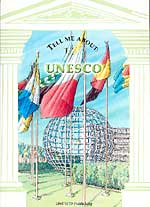
"Tell me about UNESCO"
All about UNESCO for the young (10-12 years old): its history, functioning, ideals, programmes and buildings. A clear and well-documented overview of the Organization working towards a better understanding of tolerance.

"Tell me about World Heritage"
This compact guide promotes the understanding of what it means to be included on the World Heritage List. Written in an accessible way and illustrated with many examples, the book touches on the meaning of heritage, the World Heritage Convention, the criteria for choosing sites and their protection. In short, information and projects that bring alive the meaning of heritage for a young audience.

"Cultures and Civilizations"
The history of humankind, its cultures and civilizations, is inextricably linked with the development of trade. Cities grew up around the markets and empires were built on the wealth that trade created. Across Asia, the paths of the Silk and Spice Routes brought together many different peoples, fostering the exchange of ideas, lifestyles, arts and goods. This book explores exciting aspects of intercultural relations brought about by the thriving trade along the Silk and Spice Routes.

"Inventions and Trade"
Over the centuries, the exchange of technologies -from the horse's bit and the wheel to the microchip and the computer- hasinspired new developments and improvements. It is through trade that much of this exchange has taken place. This book explains how the Silk and Spice Routes across Asia played an important role in bringing together different peoples and ideas that favoured new technologies and inventions in many fields: health and medicine, alchemy and chemistry, astronomy, mathematics, spinning and weaving. glass and ceramics, metalwork and agriculture, to mention just a few.

"Exploration by Land"
A fascinating account of the life and adventures, the discoveries and explorations of travellers along the Silk Routes, stretching over 8,000 kilometres through the heart of Asia, from the Mediterranean to the China Sea. They crossed some of the most spectacular and dangerous places on Earth: the Pamir Mountains, the Hindu Kush and the notorius Taklamakan desert whose shifting sands have been known to swallow up great cities.

"Exploration by Sea"
An exciting description of the adventures and discoveries of travellers along the Spice Routes, which stretched for over 15,000 kilometres around Asia, from China's seas, across the Indian Ocean up the Red Sea and the Persian Gulf and overland to the Mediterranean. A dangerous route, full of treacherous coral reefs, violent storms and unexpected pirate attack, which nevertheless tempted many sailors and adventurers seeking trade or treasure over the ages.

The History of the Civilizations of Central Asia


UNESCO plays a valuable role in promoting and publishing serious historical studies. Click here to see a list of available historical publications from UNESCO Publishing. Especially noteworthy is the series on Civilizations of Central Asia, since this is an area of considerable current and historical interest, about which relatively little has been written.

Readers will discover through this six-volume work cultures that flourished and vanished from the dawn of civilization to the present time and how the history of the ancient and medieval world was shaped by the movements of peoples in this heartland of Eurasia, stretching from the Caspian Sea to the borders of China.
* Volume V: Development in Contrast: from the Sixteenth to the Mid-nineteenth Century
* Volume VI: Towards the Contemporary Period: From the Mid-nineteenth to the End of the Twentieth Century
* # Part One: The Historical, Social and Economic Setting
* Part Two: The Achievements
* Volume III: The Crossroads of Civilization: A.D. 250 to 750
* Volume II: The Development of Sedentary and Nomadic Civilizations: 700 B.C. to A.D. 250
* Volume I: The Dawn of Civilization: Earliest Times to 700 B.C.

UNESCO plans assistance in Lebanon's early recovery efforts

One week after a cease-fire between Israel and Hizbollah went into effect, four experts from the UN Educational, Scientific and Cultural Organization (UNESCO) arrived yesterday in Lebanon for a five-day mission to determine how the cultural agency can best help the country recover from the devastation caused by the conflict. UNESCO is also focusing on restoring the educational system and providing post-trauma support for schoolchildren and teachers.

The Lebanese government-led early recovery plan will be presented to an international donors’ conference for Lebanon in Sweden on 31 August.

UNESCO's Interreligious Dialogue

The main aim of this program, which is the flagship of UNESCO's effort to promote intercultural dialogue, is to promote dialogue between different religions and spiritual traditions in a world in which intra- and interreligious conflicts are on the increase due to ignorance or lack of understanding of the spiritual traditions and respective cultures of others.

The UNESCO program is complementary to the World Faiths Development Dialogue that was set up in 1998 as an initiative of James D. Wolfensohn, President of the World Bank and Lord Carey, then Archbishop of Canterbury. The aim of the WFDD is to facilitate a dialogue on poverty and development among people from different religions and between them and the international development institutions.

Check out:
* The Network of UNESCO Chairs on the Intercultural and Interreligious Dialogue
* UNESCO's Effort to Promote Intercultural Dialogue in Central Asia
* UNESCO's International Congress on Dialogue of Civilizations, Religions and Cultures in West Africa

Monday, August 21, 2006

UNESCO Calls Cities to Promote Common Struggle Against Racism

The International Coalition of Cities against Racism is an initiative launched by UNESCO in March 2004 to establish a network of cities interested in sharing experiences in order to improve their policies to fight racism, discrimination and xenophobia. Signatory cities are expected to integrate within their strategies and policies the Ten-point Commitment, and to commit to it the human, financial and material resources required for its effective implementation.

In order to take into account the specificities and priorities of each region of the world, regional Coalitions are being created with their respective programme of action (Africa, North America, Latin America and the Caribbean, Arab States, Asia-Pacific and Europe). Under the coordination of a “Lead City” which is to be identified, each regional coalition will have its own Action Plan.

The annual meeting of the European Coalition of Cities against Racism was held in Madrid in June 2006. The Coalition of Cities Against Racism and Discrimination in Asia and the Pacific was officially launched in Bangkok early August 2006. The official launching of the Latin American Coalition is scheduled for October 2006 and will take place in Montevideo. As for the African Coalition, it is to be launched in Nairobi in September 2006.

*Call for nominations for the UNESCO Prize on Human Rights Education. The deadline for submission of candidatures has been extended till 8 September 2006. >> More

Sunday, August 20, 2006

Missa Johnouchi Named UNESCO Artist for Peace

Renowned Japanese conductor and composer Missa Johnouchi, will be designated UNESCO Artist for Peace by UNESCO Director-General Koïchiro Matsuura at a ceremony at the Teikoku Hotel in Tokyo on 21 August 2006. In announcing the appointment, Mr Matsuura paid tribute to Ms Johnouchi’s achievements and “her interest in contributing to the Organization’s mission, and in particular to UNESCO’s programme on tangible and intangible cultural heritage.”

Ms Johnouchi will promote the importance of preserving cultural heritage through her concerts. She has also agreed to donate a percentage of her CD sales to UNESCO and she will be participating in the Commemorative project of the 1300th Anniversary of Nara Heijo-kyo, former capital of Japan, inscribed on UNESCO’s World Heritage, in 2010.

An Internationally recognized musician, Ms Johnouchi is best known in Japan as a composer of music for film and television. Her most popular works include titles such as “Canon,” and “Asian Blossoms.”

UNESCO Artists for Peace are internationally-renowned personalities who use their influence, charisma and prestige to help promote UNESCO’s message and programmes. UNESCO works with these distinguished personalities in order to heighten public awareness regarding key development issues and to inform the public of what the Organization’s action is in these fields.

Saturday, August 19, 2006

UNESCO's Actions Against Slavery

In observance of the 50th week (08/21-08/27) of UNESCO’s 60th anniversary celebrations, we have selected for you a set of links and events dedicated to the Struggle Against Slavery.

In order to encourage reflection, scientific and historical research and the dissemination of information on slavery and its consequences, UNESCO’s Culture and Education Sectors develop new initiatives to combat the lingering consequences of the slave trade and slavery such as discrimination and racism.

In 1993, UNESCO approved the implementation of the "Slave Route" Project before moving on with the publication of "From Chains to Bonds: the Slave Trade Revisited" (1998). The idea of a "Route" expresses the dynamics of the movement of peoples, civilizations and cultures, while that of "slave" addresses not only the universal phenomenon of slavery, but also in a more precise and explicit way the transatlantic slave trade in the Atlantic, and slave trade the Indian Ocean and the Mediterranean. >> More

The transatlantic slave trade is often regarded as the first system of globalization. Millions of Africans were torn from their homes, deported to the American continent and sold as slaves. Two outstanding decrees for abolition were produced during the nineteenth century: the Abolition Bill passed by the British Parliament in August 1833 and the French decree signed by the Provisional Government in April 1848. In the United States, Abraham Lincoln extended the abolition of slavery to the whole Union in the wake of the Civil War in 1865. The abolition of slavery became the 13th Amendment to the Constitution of the United States.

Yet, despite the abolition of slavery, modern forms of slavery persist . In the context of the "Project to Fight Human Trafficking in Africa", UNESCO aims to promote effective and culturally appropriate policy-making to combat the trafficking of women and children in Africa. Today various international conventions define slavery and human trafficking as a "crime against humanity" punishable by international law. See legal instruments.

Events
*
23 August: International Day for the Remembrance of the Slave Trade and its Abolition. The night of 22 to 23 August 1791 marks a crucial date in the abolition of the transatlantic slave trade. The Director-General of UNESCO invites the Ministers of Culture of all Member States to organize events every year on that date, involving the entire population of their country and in particular young people, educators, artists and intellectuals. >> More

*
19-22 September, 2006: 50th Anniversary of the 1st International Congress of Black Writers and Artists. Nobel Prize Laureate Wole Soyinka, a Goodwill Ambassador to UNESCO, President of the African Community of Culture and the W.E.B. Du Bois Institute for African and African American Research at Harvard University will celebrate the event at the Sorbonne University and the UNESCO Headquarters in Paris. UNESCO is officially bringing its technical and financial support for this event mainly through the Division of Cultural Policies and Intercultural Dialogue and the Africa Department. >> More

* UNESCO, in collaboration with the Schomburg Center for Research on Black Culture (New York), has set up the Traveling Exhibition "Lest We Forget: Triumph over Slavery".This exhibition focuses on the centrality of the slave trade in the making of the modern world.

Read more
* UNESCO Programmes around this project
* History of the Slave Trade
* The 2006 Slave Route Project Brochure

*
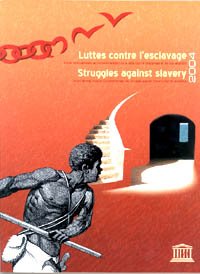
The Struggle Against Slavery Brochure

UNESCO Acting With and For Youth -- More information

In a belated bow to the United Nations' International Youth Day and UNESCO's week long celebration of its six decades of service to youth, we have added a Youth page to the Americans for UNESCO website.

In addition, here are some Youth oriented events, activities, and links:
· August 14-16, 2006 - XVI International AIDS Conference – Toronto, Canada. The Chasing the Dream online photo exhibit. This exhibit portrays the intersection of eight young people with Millennium Development Goals and will be on display at the XVI International AIDS Conference in Toronto, 14-16 August 2006. Link to: What Works in HIV Prevention: Engaging Young People

· Deadline: September 8th, 2006: UNICEF Voices of Youth Photo contest: Inspirational Women.

· May 1st-October 1st, 2006 2006 UNICEF/OneWorld Radio Prize contest. The theme for the 2006 contest is UNITE FOR CHILDREN. UNITE AGAINST AIDS. Entries should be about HIV and AIDS – prevention, education, the scope of the pandemic and youth action to address it. More Information on rules, regulations and entry forms

· 2007 G8 Youth Event in Germany

· September 2006- February 2007: Participate in a Kairos Future delfi survey on youth values and lifestyle! For more information, please visit

· Become a Youth Delegate to The United Nations

· More UN Youth Events

More on the UN and Youth:

· Download The MDGs Youth Action Guide on the Millennium Campaign Website

· UN Volunteers and the Millennium Development Goals.

Friday, August 18, 2006

UNESCO supports Libraries

UNESCO supports and promotes universal access to information and knowledge flows. Part of its many activities focuses on the strengthening of the institutional capacity of libraries as gateways to information. As such, UNESCO assists worldwide libraries to acquire new technologies and network resources through the UNESCO Network of Associated Libraries (UNAL). UNAL’s main objective is to encourage libraries that are open to the public to undertake activities in UNESCO’s fields such as the promotion of human rights and peace, cultural dialogue, protection of the environment, fight against illiteracy, etc. Over 500 libraries around the world are members of the Network, the Library of Congress being one of them.

UNESCO Libraries Portal currently contains over 14000 links to websites of libraries around the world, as well as to resources related to training, preservation and international co-operation in this area. A major part of this heritage is stored in libraries. The world’s documentary heritage constitutes a major part of mankind’s memory and reflects the diversity of peoples, languages and cultures. Through the Memory of the World Programme and other initiatives, UNESCO has played a leading role in preserving information and communication contents and in optimizing access to them. In particular, UNESCO encouraged the elaboration of strategies to facilitate the digitization of librarian collections; it also promoted and disseminated the International Charter for the Preservation of Digital Heritage adopted in October 2003.

From August 20th-24th, 2006, UNESCO will participate in the round-table on "Libraries: Dynamic Engines for the Knowledge and Information Society" organized by the International Federation of Library Associations and Institutions (IFLA) during its 72nd IFLA General Conference and Council to be held in Seoul, Korea. The IFLA meeting will have a UNESCO organized session on digital libraries which will include a presentation by the Library of Congress. >>More

Global Memory Net, an online image library and gateway to cultural, historical, and heritage images around the world, was launched earlier this month with a number of collections included in UNESCO’s Memory of the World Programme, and in the Library of Congress. The project was partially funded by the US National Science Foundation.>> More

Read more:
* UNESCO Libraries Portal
* Memory of the World - 8th meeting of the International Advisory Committee of the Memory of the World Programme, Pretoria, South Africa, 11-15 June 2007. >>More
* E-Heritage
* UNESCO Archives Portal
* UNESCO/IFLA MAnifesto
* World Book and Copyright Day
* Our previous postings "World Digital Library Planned: Library of Congress Envisions Collection To Bridge Cultures"

“What UNESCO for the Future”

The Forum of Reflexion “What UNESCO for the future?” was launched by the Social and Human Sciences Sector of UNESCO on 18 November 2004, on the occasion of the Third Philosophy Day. It continued throughout 2005 as a cycle of open debates whose main objective was to stimulate creative and audacious thinking on the future direction of UNESCO among Permanent Delegations, National Commissions and the Secretariat. In inviting thinkers, philosophers, political leaders and experts from diverse parts of the world, the Forum aimed above all to stimulate our common reflexion and to provide food for thought through insightful, out-of-the box perspectives.

This new publication presents the addresses given in the course of this forum by sixteen people:

* Jacques Attali
* Robert Badinter
* Boutros Boutros-Ghali
* Souleymane Bachir Diagne
* Fatma Haddad-Chamakh
* Ping Huang
* Albert Jacquard
* Randolph Kent
* Yersu Kim
* Achille Mbembé
* Edgar Morin
* Hisashi Owada
* Miguel Rojas-Mix
* Carolina Rossetti Gallardo
* Ghassan Salamé
* Tu Weiming

UNESCO SEAL of Excellence for Handicrafts Products

Second Santa Fe International Folk Art Market, 2005
Copyright: UNESCO


The products of craftspeople, such as pottery and textiles, are increasingly recognized as embodying the cultural heritage of their makers, and the best examples are strikingly beautiful. With the advent of the Internet and eCommerce, those products increasingly are finding a global market. The ability to sell their handicrafts to consumers in the United States and Europe via the Internet is enabling many craftspeople in the developing nations to escape from poverty. Now UNESCO is giving them a hand!

The UNESCO SEAL is a “stamp of approval” that guarantees that a handicraft product or product line meets the highest standards of quality and has been produced with careful regard to cultural authenticity and environmental conservation.

Originally piloted in Southeast Asia in 2000-2003 in cooperation with the ASEAN Handicraft Promotion and Development Association (AHPADA), the Seal of Excellence has succeeded in raising the standards of South-East craft products, as well as in improving their marketability. The Seal of Excellence has been awarded to more than 70 South East Asian handicraft products.

In 2005-2006, the SEAL program has expanded into Central Asia with the Central Asian Crafts Support Association (CACSA) and the World Crafts Council Asia-Pacific Region (WCCAPR).

During 2006-2007, UNESCO plans to extend the SEAL of Excellence to: West Africa, East Africa, North Africa/Arab States, Central America and the Caribbean, and Central Europe.

Thursday, August 17, 2006

Sixty States have already ratified the Convention for the Safeguarding of the Intangible Cultural Heritage

The Intergovernmental Committee for the Safeguarding of the Intangible Cultural Heritage session has been rescheduled for November 18th-19th, 2006. In preparation for this event, an extraordinary session of the General Assembly of the States Parties to the convention will be held on November 9th, 2006 at UNESCO Headquarters. Six additional members will then be elected to the Committee. Mr. Mohammed Bedjaoui (Algeria), President of the General Assembly of the States Parties, and Mr. O. Faruk Logoglu (Turkey), the Assembly Rapporteur, were elected during the first ordinary session in June 2006. Sixty states have already ratified the Convention for the Safeguarding of the Intangible Cultural Heritage. The Intergovernmental Committee will thus, as of its first session in Algiers on 18 and 19 November 2006, consist of the maximum number of members as stipulated by the Convention.


Read more on:
*The Convention for the Safeguarding of the Intangible Cultural Heritage, Speeches, Safeguarding, FAQ...
*The Intangible Cultural Heritage

© Photo: UNESCO/Michel Ravassard - Click here for full article

Wednesday, August 16, 2006

UNESCO supports MTV's first film competition on HIV/AIDS prevention


"Within the framework of UNESCO’s Global Network of Young TV Producer’s on HIV and AIDS and as part of MTV International’s ongoing HIV and AIDS prevention campaign, Staying Alive, the fortyeightfest competition is a first-time event that gives 48 youths, mainly from developing countries, 48-hours to write, shoot, edit and deliver three-minute short films on HIV and AIDS grassroots efforts during the Toronto XVI International AIDS Conference (AIDS 2006) 14-16 August 2006."

"The fortyeightfest competition will be broken into eight teams of six filmmakers from all over the world, who are also youth delegates to AIDS 2006." Their short films will be compiled into a 30-minute documentary that will showcase the films as well as behind-the-scenes footage as the young filmmakers progress through their many stages of film production.

"On August 17, all of the shorts will be screened by the contestants, their mentors and AIDS 2006 delegates." The fortyeightfest short films and documentary will be made available for broadcast across MTV’s network of TV channels, broadband services and websites as well as for rights-free and cost-free worldwide broadcast to third party broadcasters in September 2006.

"Fortyeightfest is supported by a consortium of partners and donors including the Canadian International Development Agency, UNAIDS, UNFPA, UNESCO and The Kaiser Family Foundation. The event is hosted by MTV in Canada."

For full article, please refer to: UNESCO supports MTV’s first multi-platform film competition on HIV and AIDS prevention

Read more about UNESCO's Global Network of Young TV Producers on HIV/AIDS:
* Launching Africadoc 2005
* Meeting of Young TV Producers on HIV/AIDS in South Africa
* Young TV producers network in Asia on HIV/AIDS

Documents for the Executive Board Meeting

Documents for the next (175th) meeting of the Executive Board of UNESCO are now available on the Executive Board's website. The meeting is to take place in the UNESCO headquarters in Paris, 26 September-12 October 2006.

The documents are:
* Report by the Director-General on implementation of the reform process: staff policy
* Report by the Director-General on the state of academic freedom and institutional autonomy within the context of the Recommendation concerning the Status of Higher-Education Teaching Personnel (1997)
* Convening of the Sixth International Conference on Adult Education (CONFINTEA VI) in 2009
* Proposal for the establishment of an IHP regional centre for the scientific study on management of shared groundwater resources under the auspices of UNESCO and WMO in Tripoli, Libya
* Arts education: the follow-up to the Lisbon World Conference
* Report by the Director-General on the advisability of elaborating an International Declaration on Science Ethics to serve as a basis for an ethical code of conduct for scientists
* Jerusalem and the implementation of 33 C/Resolution 50 and 174 EX/Decision 12
* Proposal for the establishment of the International Children Centre (ARTEK) as a centre under the auspices of UNESCO (category 2)
* Report by the Director-General on the implementation of the UNESCO Evaluation Strategy
* Monitoring of the implementation of UNESCO's standard-setting instruments
* Report on the fourth meeting of the Joint Expert Group UNESCO (CR)/ECOSOC (CESCR) on the Monitoring of the Right to Education (2006)
* Dates of the 34th session of the General Conference
* Report by the Director-General on the status of contributions of Member States and of payment plans
* Report by the Director-General on the implementation of the Participation Programme and emergency assistance
* Report by the Director-General, in cooperation with the Headquarters Committee, on managing the UNESCO complex
* Relations with non-governmental organizations, foundations and similar institutions
* UNESCO's cooperation with African subregional and regional organizations
* Implementation of 33 C/Resolution 68 concerning the strengthening of cooperation with the Republic of Guinea-Bissau
* Report by the Director-General on the cultural and educational institutions in Iraq
* Report by the Governing Board of the UNESCO Institute for Statistics (UIS) on the activities of the Institute
* Proposal for the establishment of the IHP International Groundwater Resources Assessment Centre (IGRAC) in the Netherlands under the auspices of UNESCO
* Convening of the Fourth International Conference on International Education in 2007 in Ahmedabad, India
The United States is a member nation of the Executive Board. The U.S. Representative to UNESCO and her team will have a busy couple of months!

Tuesday, August 15, 2006

The Mondialogo School Contest

Go to the contest website.

"Intercultural dialogue forms the basis for mutual understanding, respect and, above all, tolerance. That’s why DaimlerChrysler and UNESCO since October 2003 jointly launched the Mondialogo School Contest to motivate students to explore and appreciate the cultural diversity on our planet.

"The Mondialogo School Contest is the biggest contest between schools in the world where school students between 14 and 18 years of age from around the world get into contact and dialogue with one another. Mondialogo is aimed at giving a platform to students to take an active interest in others and to build bridges towards a harmonious coexistence.

"To do this, we are contacting thousands of schools around the globe, and are inviting teachers and their classes to join. Intercultural dialogue between the students plays a crucial role in the contest. During the project phase, all participants are encouraged to create new bonds and even forge new friendships. Participants shall learn the importance of openness, respect, tolerance and mutual understanding as prerequisites for living together in peace.

"The first Mondialogo School Contest 2003/2004 with approximately 1,500 participating teams and 25,000 students from 126 countries in the world, initiated the dialogue of people and an intensive exchange over borders. The overwhelming resonance and the positive feedback exceeded all expectations.

"For the contest each school will form a partnership with a paired school from another country or from another continent. Together, the students of both schools will specify a project topic that both schools will work parallely. This should involve an in-depth dialogue with one another.

"During the work on the project the teams should go through the following process:
* the conscious discussion with the own culture(s) (I)
* the goal based discussion with the culture(s) of the partner team(s) (YOU)
* the active dialogue with students from other cultures and countries and the development of a common project (WE)

"The results of the two schools that form a partner team are evaluated jointly. Decisive factors in the appraisal are the project results, but particularly the dialogue and the documentation of the project.

"Taking part in the international Mondialogo Symposium in November 2006 in Rome, Italy will thus become one of the highlights of the contest.
This is where two “Ambassadors" from the 25 most committed partner teams together with their teachers will meet the representatives of their partner schools and other participants. During a festive Awards ceremony, three outstanding partner teams will receive a symbolic donation of either EUR 500, EUR 1000 or EUR 1500 to be used for the benefit of their schools.

This years contest is well under way, and the final event of the Mondialogo School Contest 2005/2006 will take place from 4 to 7 November 2006 in Rome, Italy.

Watch the contest website
, since we can hope there will be another contest next year.

UNESCO : Acting with and for youth

Since the Youth is a priority for UNESCO, the Organization has dedicated a whole week to it:
Acting with and for Youth
(August 14-18th 2006)

The International Day for Youth, which is dedicated this year to the fight against poverty, was August 12th.

"UNESCO Associated Schools: Partners in Intercultural Learning"


Read the full 2004 article by Susan Fountain.

"The world's oldest and largest international network of educational institutions is UNESCO's Associated Schools Project (ASPnet), established in 1953 by the United Nations Educational, Scientific and Cultural Organization (UNESCO). The goal of ASPnet is to promote peace and international understanding through education. Since 1953, ASPnet has grown to nearly 7,700 educational institutions in 176 countries, ranging from pre-school to teacher training. To become an Associated School, schools commit to undertake substantive work related to one of four ASPnet priority themes:
* World concerns and the role of the United Nations system
* Human rights, democracy and tolerance
* Intercultural learning
* Environmental concerns and sustainable development
"ASPnet offers teachers, students and parents opportunities for exchange and networking with their counterparts in the United States and around the world who share their concerns for global education and issues of conflict resolution, human rights and sustainability. UNESCO does not have a prescribed curriculum for Associated Schools. Rather, it offers a range of educational projects and materials for teachers to select from and adapt to their own national and state standards, either through the formal curriculum or through extracurricular activities."

Check out:
* the UNESCO ASONet website
* InterConnections21 (which manages the 30 U.S. school network)

"Build The Defences Of Peace In People's Minds"

This message from Pope John Paul II was delivered in 2002, but it remains vivid and relevant today. He said:
The intuitions that prevailed at the foundation of UNESCO more than 50 years ago, stressed the importance of education for peace and solidarity, not losing sight of the fact that "if wars are born in people's minds, it is in the human spirit that the defences of peace must be built" (Constitution of UNESCO, 16 November 1945). Today these intuitions have been fully confirmed. The phenomenon of globalization has become a reality defining economics, politics and culture, bringing with it positive and negative values. They are areas that offer a challenge to our sense of responsibility so that a truly worldwide solidarity can be organized that alone can give our earth a secure future and lasting peace.

Monday, August 14, 2006

The State Department on the United Nations

The Department of State has a number of interesting documents posted on the website of its Bureau for International Organization Affairs. These include:
* "Founding of the United Nations: 'A Profound Cause of Thanksgiving'" by Gary B. Ostrower
* "The United States and the Founding of the United Nations, August 1941 - October 1945" by Office of the Historian of the U.S. Department of State and
* "U.S. Participation in the United Nations: Our Vision and Priorities" from State's Bureau of Public Affairs
While these do not deal with UNESCO specifically, they may be of interest to many UNESCO fans.

2006 U.S. National Commission for UNESCO Annual Conference

Click here to download the minutes of the meeting in a PDF file (2.4MB).

On June 1 and June 2, 2006, the U.S. National Commission for UNESCO held its annual conference in Washington, DC. The detailed minutes of the meeting are available on the NatCom website, They include a summary of the conference, including those who attended, matters discussed, and conclusions reached.

Saturday, August 12, 2006

DG's Declaration on the Crisis in the Middle East


The Director-General of UNESCO, Koïchiro Matsuura, issued a declaration on the crisis in the Middle East on August 11, 2006. It includes the following:
“In my capacity as Director-General of an organization dedicated to the construction of the defenses of peace in the minds of women and men through education, science, culture and communication, and in view of the spiraling conflict in the Middle East, I wish to express my dismay at the growing loss of life, suffering, and destruction on each side, and express my fear that the grief caused by present events will jeopardize the future.

“We can only be alarmed by the impending humanitarian disaster in Lebanon that will compound the environmental disaster already unfolding before us. But an even greater threat looms: what future for a country where so many people have been displaced, lived through fire, turmoil and death omnipresent? What future for a country where so many children have seen their schools destroyed, a country whose memory is ravaged along with its rich heritage of prestigious sites that are the heritage of humanity as a whole? And what prospects can there be for the construction of a knowledge society in a country sapped by the loss of its vital energy and talent?"
Click here to read the full declaration.

Earlier, the Director-General had convened a special session of the UNESCO Middle East Task Force to discuss UNESCO’s response to the crisis in Lebanon. In his opening remarks at the meeting, the Director-General joined the United Nations Secretary-General in calling for a way out of the crisis referring to the three pillars of the UN position expressed by the Secretary-General, namely, a cessation of hostilities, a political framework which includes the deployment of an international force, and agreement on a reconstruction programme. Mr Matsuura expressed his “deep concern about the escalation of violence and the tragic loss of human life”, and urged for “preparedness to assist the Lebanese authorities in early recovery and reconstruction efforts.” Click here to read more about the Task Force.

These expressions of concern about the current situation are part of the six decade long effort of UNESCO to promote peace. See, for example, this statement made a decade ago by a former Director General of UNESCO, Federico Mayor, to the Nuclear Age Foundation, in which he said:
In 1995, the fiftieth anniversary of the United Nations and UNESCO and the United Nations Year for Tolerance, we stressed that it was only through a daily effort to know others better - I am the 'other'! - and respect them that we would be able to tackle at source the problems of marginalization, indifference, resentment and hatred. This is the only way to break the vicious circle that leads from insults to confrontation and the use of force.

We must identify the roots of global problems and strive, with imagination and determination, to check conflicts in their early stages. Better still prevent them. Prevention is the victory that gives the measure of our distinctively human faculties. We must know in order to foresee. Foresee in order to prevent. We must act in a timely, decisive and courageous manner, knowing that prevention engages the attention only when it fails. Peace, health and normality do not make the news. We shall have to try to give greater prominence to these intangibles, these unheralded triumphs.

A universal renunciation of violence requires the commitment of the whole of society. These are not matters of government but matters of State; not only matters for the authorities, but for society in its entirety (including civilian, military, and religious bodies). The mobilization which is urgently needed to effect the transition within two or three years from a culture of war to a culture of peace demands co-operation from everyone. In order to change, the world needs everyone. A new approach to security is required at world, regional and national levels. The armed forces must be the guarantors of democratic stability and the protection of the citizen, because we cannot move from systems of complete security and no freedom to systems of complete freedom and no security. Ministries of war and defence must gradually be turned into ministries of peace.

Workers save remnants of fabled statues


BAMIYAN, Afghanistan. "Afghan laborers are collecting the pieces of two once-towering Buddha statues five years after the Taliban blew them up.

While they wait for the Afghan government and international community to decide whether to rebuild them, a $1.3 million UNESCO-funded project is sorting out the chunks of clay and plaster — ranging from boulders weighing several tons to fragments the size of tennis balls — and sheltering them from the elements.

Progress is slow in the central highland town of Bamiyan where the statues were chiseled more than 1,500 years ago into a cliff face about 1/4 mile apart. Rebuilding the statues, one 174 feet tall and the other 115 feet, will be like assembling giant jigsaw puzzles.

The Taliban dynamited the Buddha statues in March 2001, deeming them idolatrous and anti-Muslim. It was one of the regime's most widely condemned acts.

"Our job is to safeguard the pieces left from the Buddha statues and put the fragments in a shelter," said Ernst Blochinger, with the International Council on Monuments and Sites. The Paris-based group is working with UNESCO on the project."

© The Associated Press / Arizona Daily Star
© Photography: UNESCO

Friday, August 11, 2006

The United States of America and UNESCO: Building Knowledge, Bridging Cultures

"It is America's honor and gift to be a nation of nations, whose people and aspirations touch every nation on the face of the earth. From universal dreams of freedom, equality and prosperity, we became a country that melded many different cultures, ideas, perspectives, and talents — giving us a rich diversity that continues to make us strong today. With this strength comes great responsibility and a desire to engage with the international community. And words are not enough. Americans are committed to turning these visions into action." Colin L. Powell

When the United States reentered UNESCO, the State Department published this discussion of the reasons we belong in the organization. It makes good reading. It concludes:
The United States will again be the biggest financial contributor to UNESCO, paying 22 percent of the annual assessed budget, in addition to voluntary contributions. America will work to ensure that funds are spent efficiently and transparently.

With respect to education, the statement notes:
Education is the most important long-term investment that any country can make in its people and its future. It is an instrument for change. With UNESCO's support, nations can develop strong education programs. The United States has invested $333 million in international primary, secondary and college education in 2003......

The United States will work toward ensuring that UNESCO's education programs pay attention to civic education as a foundation of democratic governance and peace.

Education is essential for achieving the goals of the Millennium Declaration, which the United Nations adopted as a blueprint for building a better world. Literacy and education bring freedom, power and opportunity for people to transform themselves. The United States believes the world community cannot waste time if we are to meet UNESCO's goal of increasing global literacy by 50 percent by the year 2015.
Our nation is poised to rejoin UNESCO because — as President Bush pointed out — this organization is committed to advancing human rights, tolerance, and learning. It's a noble goal that we all share. We must devote ourselves to making education a universal reality now. Far too many have waited too long for this day to come." Rod Paige, U.S. Secretary of Education

With regard to culture, the statement includes the following:
UNESCO's role in preserving cultural heritage worldwide is aimed at helping nations better understand their own roots and each other. A long-term goal of the United States is to preserve cultural artifacts in those developing countries where such treasures are otherwise unprotected.......

The United States is one of the most culturally diverse nations on Earth. Such diversity stems from openness to and acceptance of cultural influences from around the globe. In addition to preserving cultural heritage, UNESCO has an obligation to encourage the exchange of cultural influences and cultural works that are essential to achievement of real cultural diversity and inter-cultural understanding.

Download the entire document setting forth the rationale. (August, 2003; PDF, 1.26MB)

The Asia/Pacific Culture Center for UNESCO

ACCU training in audio visual production
The Asia/Pacific Cultural Centre for UNESCO (ACCU) is a non-profit organization for Asia and the Pacific regional activities in line with the principles of UNESCO, working for the promotion of mutual understanding and cultural cooperation among peoples in the region.

ACCU was established in 1971 in Tokyo through joint efforts of both public and private sectors in Japan. ACCU has since been implementing various regional cooperative programs in the fields of culture, education and personnel exchange in close collaboration with UNESCO and its Member States in Asia and the Pacific.

It has a vigorous program. Too bad that the United States has not worked with its neighbor countries to establish a comparable center for our region!

Tuesday, August 08, 2006

Local and Indigenous Knowledge Systems -- LINKS


Rural and indigenous peoples possess their own knowledge, practices and representations of the natural environment, as well as their own conceptions about how human interactions with nature should be managed.

UNESCO launched the LINKS project in 2002 to heighten interdisciplinary and intersectoral action among the elements of its program.

The LINKS project seeks to promote dialogue amongst traditional knowledge holders, natural and social scientists, resource managers and decision-makers in order to enhance biodiversity conservation and secure an active and equitable role for local communities in resource governance. The survival of indigenous knowledge as a dynamic and vibrant resource within rural and indigenous communities depends upon its continuing transmission from generation to generation.

The project website includes links to publications and other resources as well as descriptions of project activities.

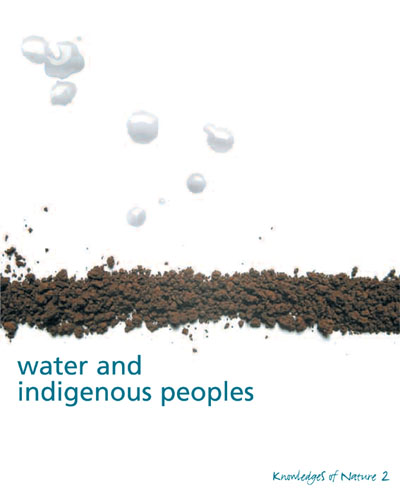
During the Fourth World Water Forum in Mexico City (March 2006), the project published "Water and Indigenous Peoples", based on the papers delivered at the Second and Third World Water Forums (The Hague in 2000 and Kyoto in 2003).
It brings to the fore some of the most incisive indigenous critics of international debates on water access, use and management, as well as indigenous expressions of generosity that share community knowledge and insight in order to propose remedies for the global water crisis.
To request a copy, email - links@unesco.org.

Sunday, August 06, 2006

US Policy toward UNESCO Clarified

The U.S. Ambassador to UNESCO, Louise Oliver, has written to the Director General of UNESCO, Koichiro Matsuura, to clarify that the U.S. government officials "did not ask, and do not wish, to approve contacts with U.S. individuals or non-governmental organizations." As the United States resumed membership in UNESCO, and as the State Department prepared to represent the nation in UNESCO venues, State officials asked that UNESCO make them aware of its contacts with U.S. citizens and organizations. Ambassador Oliver clarified that the request was for information only, and the intention was to enable State to facilitate such contacts. Reports had come to her attention that some UNESCO staff might have misunderstood State's request and were needlessly complicating contacts with people from the United States.

With the clarification, we hope that U.S.-UNESCO linkages will continue to grow and strengthen rapidly!

Saturday, August 05, 2006

New on the Americans for UNESCO website

Laura Bush, UNESCO Honorary Ambassador for the Literacy Decade
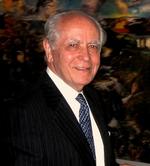
A page about the UNESCO Celebrity Advocates has been added to the Americans for UNESCO website. Check it out! It provides links to the programs that allow educators, artists, scientists, athletes,and other distinguished people to lend their support to UNESCO.

The response by the U.S. State Department to UNESCO's questionnaire about its mid-term strategy and next biennial program and budget has also been added to the AU website. Check it out!

Special session of the UNESCO Middle East Task Force to discuss UNESCO’s response to the crisis in Lebanon

On 31 July, Koïchiro Matsuura, Director-General of UNESCO, convened a Special Session of the UNESCO Task Force on the Middle East to discuss the current crisis in Lebanon. The aim of the meeting was to co-ordinate UNESCO’s response to the current situation and to prepare the Organization’s contribution to future recovery and reconstruction efforts by the Lebanese authorities.

To read more about the meeting, click here.

The Global Alliance for Cultural Diversity

UNESCO's Global Alliance for Cultural Diversity explores ways to turn creativity in developing countries into sustainable cultural industries. The Alliance aims to promote cultural diversity, support economic development and encourage job creation in a range of fields including music, publishing, cinema, crafts and the performing arts. According to its website, its "projects range from local level 'people to people' projects to the design of far-reaching public policy and regulatory frameworks." It is hoped that these projects will enable UNESCO and the alliance members to identify best practices and establish project models that can be reproduced in other regions of the world. Its projects are grouped into the following categories: Music, Cinema and Audiovisual, Publishing, Crafts and Design, Copyright, and Multisectoral. The Creative Cities program is also a part of the Alliance.

The Creative Cities Network

The Creative Cities Network connects creative cities so that they can share experiences, know-how, training in business skills and technology. Cities may apply to be endorsed by the Network and join the programme to ensure their continued role as centres of excellence and to support other cities, particularly those in developing countries, in nurturing their own creative economy.

The cities that have been appointed to the network are:
* Aswan, Egypt - UNESCO City of Folk Art
* Berlin, Germany - UNESCO City of Design
* Bologna, Italy - UNESCO City of Music
* Buenos Aires, Argentina - UNESCO City of Design
* Edinburgh, UK - UNESCO City of Literature
* Montreal, Canada - UNESCO City of Design
* Popayan, Colombia - UNESCO City of Gastronomy
* Santa Fe, New Mexico, USA - UNESCO City of Folk Art
* Seville, Spain - UNESCO City of Music

Americans for UNESCO in Lien/Link


Read the full April-June 2006 issue of Lien/Link (the bulletin of the Association of Former Staff Members of UNESCO).

Andre Varchaver, President of Americans for UNESCO, publishes an update on AU's activities in the most recent issue of the newsletter of the Association of Former Staff Members of UNESCO. (Andre served on the UNESCO staff from 1959 to 1981.) Here is an excerpt from the article:
AU’s Advisory Council, co-chaired by Esther Coopersmith and Dick Arndt, is composed of a number of distinguished Americans in fields directly or indirectly related to those of Unesco. A particularly distinguished one, Dr Miller Upton, died a few weeks ago at the ripe age of 88, having devoted years of energy to education, internationalism in general and Unesco in particular. Over the years, while heading Beloit College in Wisconsin, he innovated the widely admired “Beloit Plan” that featured a continuous school year and a “World Affairs” program that revitalized the college, attracted national attention and inspired other colleges, such as renowned Dartmouth, to adopt his innovations. He was greatly admired by René Maheu, with whom I visited Beloit College, and Jack Fobes who much later succeeded him at the helm of the U.S. National Commission for Unesco. Upton headed it from 1971 to 1975 and led the U.S. delegation to the eighteenth session of the General Conference where he displayed exceptional qualities of leadership and an innate sense of diplomacy. He was an early supporter of Fobes’ creation of “Americans for the Universality of Unesco”, now AU, and we mourn the loss of this exceptional man.

In cooperation with AU, the Better World Campaign, a subsidiary of the United Nations Foundation (which actively supports a number of Unesco programs, notably the World Heritage), has resumed organizing meetings of representatives of civil society as well as of the government/National Commission and the Congress, related to or interested in Unesco. AU will continue and develop its cooperation with the National Commission and looks forward to working closely with Unesco’s New York Office and its newly appointed Director Hélène Gosselin.

Friday, August 04, 2006

The New NatCom Newsletter is Out

Read the U.S. National Commission for UNESCO Newsletter (Volume 2, Issue 2, April/May/June 2006) online.

Contents:
* Comments from the Executive Director
* UNESCO National Commission Host Second Annual Meeting
* Mrs. Laura Bush Announces Global Literacy Conference
* U.S. Ambassador Hosts Reception for UNESCO Award Winning Journalist
* Newly Established U.S. National Committee for the International Hydrological Program * Conducts Inaugural Meeting on Future Objectives
* UNESCO Overall Review of Major Programs II and III
* UNESCO Prizes Information
* UNESCO Job Vacancies

Wednesday, August 02, 2006

UNESCO Courier Features New World Heritage Sites


The July-August 2006 issue of the UNESCO Courier headlines the 18 new sites added to the World Heritage List. The additions bring the total number of protected sites to 830. Five of the sights are the subject of Courier articles:
* Bisotun (Islamic Republic of Iran), a monument in bas-relief and cuneiform that that is located 70 meters above the ground.
* Bilbao’s ria in (Spain's Basque country), the first transporter bridge ever built in the world.
* Harar (Ethiopia), entrenched behind its encircling wall with a market and mosques pulsing with life.
* The valleys of Jalisco (Mexico) famous for their agave plantations used for making the famous Mexican liquor.
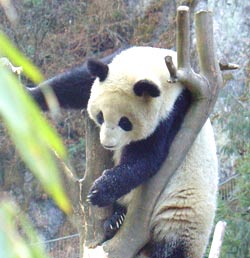
* The Giant Panda Sanctuaries in Sichuan (China).

The Ricky Martin Foundation has joined forces with UNESCO


The Ricky Martin Foundation, whose President, Puerto Rican singer and humanitarian Ricky Martin, was named a hero against trafficking in persons by the U.S. Department of State in 2005 for his work to promote awareness of and protect children from trafficking, has joined forces with UNESCO on a global initiative aimed at safeguarding children against exploitation and abuse.

Click here to read more about the initiative.

Sunday, July 30, 2006

UNESCO Resources for Those Who Wish to Study Abroad


The book, "Study Abroad", is UNESCO's international guide to higher-education study opportunities and scholarships offered by higher education institutions and international organizations in over 145 countries. It includes some 3,000 entries on courses and scholarships in different higher-education academic and professional disciplines. There is information on: addresses (including Internet sites), admission requirements, application deadlines, financial aid, fees, living expenses and other topics. Entries are presented in English, French or Spanish according to the language of the country concerned.

UNESCO's online "Study Abroad Database" contains some 3,000 opportunities for post-secondary studies in all academic and professional fields in 147 countries and territories for the years 2005 and 2006.

UNESCO International Conventions on the Recognition of Qualifications in Higher Education

There are six regional conventions on the recognition of qualifications (Africa, Arab States, Asia and Pacific, Latin America and the Caribbean, and two European conventions) and one interregional convention (Mediterranean Convention).

UNESCO conventions are aimed at promoting the recognition of academic qualifications for academic purposes (e.g. to continue studies in a different institution). Nevertheless, the conventions sometimes hold a ‘de facto’ and ‘de jure’ role in recognizing diplomas for professional purposes (e.g. to get a job). It is important to check with the different conventions.

Alert: Misuse of UNESCO Name by Bogus Institutions

Click here to read the full alert from UNESCO.

Recently, there has been an increase in the number of requests from individuals, recognition bodies and accrediting agencies concerning dubious providers of higher education that use UNESCO’s name or logo to give the impression that they are recognized providers of higher education.

UNESCO is an intergovernmental body. It does not have the mandate to accredit nor to recognise higher education institutions, programmes, diplomas or accrediting agencies.

Any provider of higher education or accrediting agency which claims or gives the impression of being accredited and/or recognised by UNESCO should be looked upon with caution. Such institutions or accrediting agencies may use different fraudulent modes.

UNESCO Project Mapping Archaeology in Kazakhstan

An archaeological expedition from The Institute of Archaeology of Kazakh Ministry of Education and Science is continuing its research at the necropolis located at Berel in the eastern part of Kazakhstan. A part of the work involves a UNESCO project which is studying the burial mounds in association with the scientists of Belgium's Ghent University. That subproject is mapping the site with the help of modern technologies of satellite space communications.

In another part of the research, in collaboration with the team from the Central Asian French Archaeological Mission, the body of a Saka prince was discovered buried with 13 horses. . In this princely kourgan at the site, the sacrificed horses were fitted with false wooden horns fixed to their foreheads imitating those of ibex.

Saturday, July 29, 2006

Some UNESCO Higher Education Initiatives

The UNESCO Higher Education Open and Distance Learning Knowledge Base
The Open and Distance Learning (ODL) Knowledge Base project was set up to support decision makers and practitioners with ready access to information and tools that will assist them in more effective policy planning, development and management of ODL in higher education programmes. It provides Web-based knowledge base regional resources for:
* Africa
* Asia and the Pacific and
* CIS/Baltic countries.
It also provides an Inter-Regional Decision Support Tool to assist decision makers to make first-level assessments about the viability and quality of distance education programs. The International Internet Forum on the Higher Education Open and Distance Learning Knowledge Base (HEODLKB) Project is also linked to this website.

Mega Universities
A dozen or so Mega Universities (each of which has an enrolment in excess of 100,000 learners per year) utilize a combination of media to accommodate learners. U.S. Mega Universities include:
* City College of San Francisco
* University of Maryland University College and
* University of Phoenix

This UNESCO website provides links to Mega Universities in developing nations, including:
* Allama Iqbal Open University (Pakistan)
* Bangladesh Open University
* China Central Radio & TV University
* Indira Gandhi National Open University (India)
* Indonesian Open Learning University
* Instituto Tecnológico Autónomo de México
* Payame Noor University (Iran)
* Korea National Open University
* Sukhothai Thammathirat Open University (Thailand)
* University of South Africa
* Universidad Nacional Autonoma de Mexico
* Shanghai TV University
The site also provides a link to the World Summit of Mega Universities held 23-25 September 2005.

Thursday, July 27, 2006

Reforms at UNESCO

According to Wikipedia:
The organization's reforms included the following measures: the number of divisions in UNESCO was cut in half, allowing a corresponding halving of the number of Directors -- from 200 to under 100, out of a total staff of approximately 2,000 worldwide. At the same time, the number of field units was cut from a high of 79 in 1999 to 52 today. Parallel management structures, including 35 Cabinet-level special advisor positions, were abolished. 209 negotiated staff departures and buy-outs took place from 1999–2003, causing the inherited $10 million staff cost deficit to disappear. The staff pyramid, which was the most top-heavy in the UN system, was cut back as the number of high-level posts was halved and the “inflation” of posts was reversed through the down-grading many positions. Open competitive recruitment, results-based appraisal of staff, training of all managers and field rotation were instituted, as well as SISTER and SAP systems for transparency in results-based programming and budgeting. In addition, the Internal Oversight Service (IOS) was established in 2001 to improve organizational performance by including the lessons learned from program evaluations into the overall reform process.


Go to Director General Koïchiro Matsuura's 2005 discussion of the reform and restructuring efforts.

Encyclopedia Entries for UNESCO

Online encyclopedias represent a great resource on the World Wide Web. Here are a couple of online encyclopedia entries on UNESCO that are chock full of information and useful links:
* Wikipendia
* Questia

The John Bolton Confirmation

The Washington Post today has an editorial opposing the confirmation of John Bolton as U.S. Ambassador to the United Nations. It states (in part):
Mr. Bolton began his tenure with an argument over the preparations for a gathering of heads of state. He demanded that the summit document omit, among other things, references to the anti-poverty Millennium Development Goals, on the ground that these had been interpreted by U.N. officials to include a commitment to more foreign aid. Mr. Bolton's action alienated other U.N. ambassadors with no obvious gain; such commitments, even if accepted, are non-binding.

Mr. Bolton's handling of the new U.N. Human Rights Council was equally clumsy. He failed to show up at nearly all of the 30 or so negotiating sessions leading up to the council's creation, then waded in at the eleventh hour with a bizarre proposal that the State Department quickly repudiated. Mr. Bolton's spokesman says that the ambassador engaged in good faith throughout the process. But U.S. allies felt that Mr. Bolton did not do so.

Mr. Bolton has embarrassed himself most recently by his mishandling of U.N. management reform, a cause supported by U.N. officials and the richer member states. Mr. Bolton came up with the idea of threatening to cut U.N. funding unless the management reforms were adopted, and his spokesman insists that this brinkmanship was helpful. But South Africa's U.N. envoy called it "poison"; Germany's ambassador called it "wrong"; his British counterpart said it was a mistake to hold the budget hostage. After six months the budget threat was dropped.

WP also published a story in today's news section ("The Bolton Nomination, Act II" by Colum Lynch) detailing some of the controvery around Bolton's role in the United Nations. Notably, it quotes the distinguished international civil servant, U.N. Deputy Secretary General Mark Malloch Brown who said in a public speech on June 6:
There is currently a perception among many otherwise quite moderate countries that anything the U.S. supports must have a secret agenda aimed at either subordinating multilateral processes to Washington's ends or weakening the institutions, and therefore, put crudely, should be opposed without any real discussion of whether they make sense or not.

Wednesday, July 26, 2006

"Future Leaders Meet Before World Heritage Session"

Lead: "Young leaders from around the Pacific will attend a global youth forum on world heritage ahead of next year’s UNESCO World Heritage Committee in Christchurch says Margaret Austin, chair of the New Zealand National Commission for UNESCO."

Wouldn't it be great if a delegation of young people from the United States could also attend?

Read the full article from Scoop (26 July 2006).

"Bolton Hopes for Vote on U.N. Nomination"

Read the full Associated Press article in The Washington Post. (Sunday, July 23, 2006.)

Last year Sen. George Voinovich, R-Ohio, in the Senate Foreign Relations Committee opposed Bolton's confirmation as U.S. Ambassador to the United Nations, leading to President Bush making a recess appointment. According to the WP:
the senator has had a change of heart, saying last week that he would not block Bolton's nomination this year because of an urgent need to ease tensions in the Middle East.
The GOP-controlled Senate Committee has scheduled a hearing for Thursday on Bolton's nomination. If confirmed by the Senate, Bolton would be expected to serve as UN Ambassador through the rest of the Bush Administration. It seems likely that the nomination will go forward to the full Senate, and that Democrats will oppose it in the Committee and on the floor of the Senate.

Since UNESCO is part of the United Nations family of organizations, the U.S. Ambassador to the United Nations has significant influence on U.S. policy towards UNESCO.

Friday, July 21, 2006

UNESCO Job: Senior ProgramSpecialist for Science and Technology Education and Technical Capacity Building

Purpose of post:: Promoting Natural Sciences Sector actions in Science and Technology Education & Technical Capacity building.

Main responsibilities: Under the authority of the Assistant Director-General for Natural Sciences and under the supervision of the Director of the Division of Basic and Engineering Sciences, the incumbent shall, in particular:
· Foster the quality of university science and technology education in developing countries and reinforce the linkage of university education with other levels of education in science and technology.

· Promote the Organization’s clearing house functions on science and technology education for sharing information on curricula development, innovative teaching methodologies, and best practices.

· Carry out and/or develop selected activities for capacity building in engineering and technology in developing countries. Oversee and foster collaboration between divisions of the Sector for Natural Sciences and regional offices in strengthening national capacities in engineering, science and technology and science-based monitoring of the environment.

· Provide back up to cross-sectoral activities on building capacities in developing countries and mainly, least developed countries and post-conflict countries to address the goals for sustainable development specified in the UN Millennium Declaration.

· Promote extra-budgetary activity in technical capacity building and in science and technology education.


Profile
:
· Advanced University Degree, preferably at Doctorate level, in one of the basic or engineering sciences.

· 10 to 15 years of progressively responsible relevant experience of which, at least 5 years’ experience in university teaching in science and/or engineering, and in the planning, management or administration of university education, and at least 5 years’ experience of regional or international activity in building up human and institutional capacity in science or engineering in developing countries. Part of this experience should be acquired at the international level.

· Demonstrated experience in science-based monitoring of the environment.

· Thorough knowledge and ability to use micro-computers (for retrieval and analysis of information and for information service to Member States and partner organizations) in particular mastering of Word; Excel, Internet, etc.

· Excellent oral and written communication skills.

· Excellent knowledge of English or French, and good knowledge of the other language.

Conditions of employment: UNESCO’s salaries are calculated in United States dollars but mainly paid in local currency. They consist of a basic salary and a post adjustment which reflects the cost of living in a particular duty station and exchange rates. For this post, the annual remuneration in local currency will start at around €95,900 (€89,100 if without dependants), exempt from income tax. In addition, UNESCO offers an attractive benefits package including 30 days’ annual leave, home leave, an education grant for dependent children, a pension plan and medical insurance. The initial appointment will be for two years, with a probationary period of 12 months, and renewal of the contract is subject to satisfactory service. Wordwide mobility is required as staff members have to serve in other duty stations according to UNESCO’s job rotation policy. UNESCO is a non-smoking organization.

How to apply: Candidates should use UNESCO’s online application system at www.unesco.org/employment. Candidates without access to internet may send a paper application by completing the official UNESCO CV form (available at Headquarters, UNESCO Offices, National Commissions in Member States, or any office of a United Nations Resident Representative) in English or French to Chief, HRM/RCR, UNESCO, 7 place de Fontenoy, 75352 Paris 07 SP, France, before the closing date, quoting the post number “SC-427”. There is no application, processing or other fee at this or at any stage of the process.

New Edition of the NatCom Newsletter

U.S. National Commission for UNESCO, Volume 2, Issue 2, April/May/June 2006

In This Issue:
* Comments from the Executive Director
* UNESCO National Commission Host Second Annual Meeting
* Mrs. Laura Bush Announces Global Literacy Conference
* U.S. Ambassador Hosts Reception for UNESCO Award Winning Journalist
* Newly Established U.S. National Committee for the International Hydrological Program Conducts Inaugural Meeting on Future Objectives
* UNESCO Overall Review of Major Programs II and III
* UNESCO Prizes Information
* UNESCO Job Vacancies

Marguerite H. Sullivan To Leave the State Department

To read a biography of Ms. Sullivan, click here.

Margerite Sullivan will be leaving the Department of State on August 4, 2006 to take up a new position in the field of international media. For the last two years she has served as the Executive Director of the U.S. National Commission for UNESCO.

Tuesday, July 04, 2006

New World Heritage Sites to be Named

Read the story online in the Times of Oman.

"Thirty-seven sites are to compete for a place on UNESCO's prestigious World Heritage list at a meeting in Lithuania later this month, the UN's educational, scientific and cultural organisation said Monday."

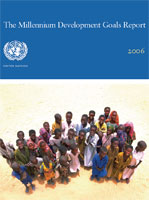
The Millennium Development Goals Report 2006


Read the full report online (PDF file).

The MDGs Report of the United Nations was released on 3 July 2006. The report presents the latest assessment on how far we have come, and how far we have to go in reaching the goals, in each of the world’s regions.

Reuters AlertNet notes with respect to the report:
"With less than a decade left to meet its development targets, the United Nations said on Monday there were "staggering" obstacles to succeeding and conditions in many poor countries were actually worsening.

"The eight Millennium Development Goals include targets on health, poverty and the environment -- such as halving the number of people living on less than $1 a day and stopping the spread of AIDS and tuberculosis.

"The U.N. progress report on the goals, set in 2000, found that while global incidence of extreme poverty has declined, some 140 million more people have entered that category in sub-Saharan Africa.

"More people are also going hungry in the region, which has seen only modest improvements in child mortality and maternity rates in the past six years, according to the study."

Education Today is hot off the press!


Read the new issue of UNESCO's Education Today newsletter online!

In recent years, non-governmental organizations have established themselves as fully recognized partners in the Education for All movement. The latest issue of UNESCO’s Education Sector newsletter reports on how civil society involvement pushes the boundaries in education.

Monday, July 03, 2006

Aksu-Dzhabagly Nature Reserve


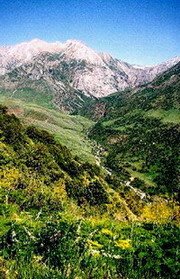
The Aksu-Dzhabagly Nature Reserve is the oldest nature reserve in Central Asia. It also the first in the world to get status of a UNESCO biosphere preserve. For more than 70 years fauna and flora of Aksu-Dzabagly have been safe from ax, hunting and industrial pollution. The symbol of the preserve is Graid's Tulip. The Aksu Canyon - is 15 km long and 500 m deep, with a width between the canyon walls of 600-800m.

There is also a paleonthological preserve a the altitude of 3000 m above the sea level. Petroglyphs here go back to the 5-7th cc BC.

Robert Rauschenberg: Artist and Citizen


Go to the Smithsonian’s Robert Rauschenberg Traveling Exhibit website.

Robert Rauschenberg, Artist-Citizen presents 17 framed prints produced between 1970 and 1996 that reverberate with Rauschenberg’s commitment to making the world a better place .

The exhibition includes posters created for and often donated to such organizations as the United Nations, UNESCO, and the AFL-CIO as well as work from the Rauschenberg Overseas Culture Interchange (ROCI), an evolving multi-media traveling exhibition of the artist’s paintings, sculpture, prints, and objects. All of the posters in the exhibition, which was developed by the University Art Gallery, California State University, Hayward, have been lent by the artist.

The International Council of Museums

The ICOM Home Page.

The International Council of Museums (ICOM) is an international organisation of museums and museum professionals which is committed to the conservation, continuation and communication to society of the world's natural and cultural heritage, present and future, tangible and intangible.

Created in 1946, ICOM is a non-governmental organisation maintaining formal relations with UNESCO and having a consultative status with the United Nations' Economic and Social Council.

13 Specialist International Organisations are affiliated to ICOM. They are:
* AEOM - Association of European Open-Air Museums
* AIMA - International Association of Agricultural Museums
* AMOI - Association of Museums of the Indian Ocean
* CAM - Commonwealth Association of Museums
* IACM - International Association of Custom Museums
* IATM - International Association of Transport and Communications Museums
* ICAM - International Confederation of Architectural Museums
* ICMM - International Congress of Maritime Museums
* MAC - Museums Association of the Caribbean
* MINOM - International Movement for a New Museology
* PIMA - Pacific Islands Museums Association
* SADCAMM - Southern Africa Development Community Association of Museums and Monuments
* SIBMAS - International Association of Libraries and Museums of the Performing Arts