Showing posts with label Iraq. Show all posts

Saturday, December 05, 2009

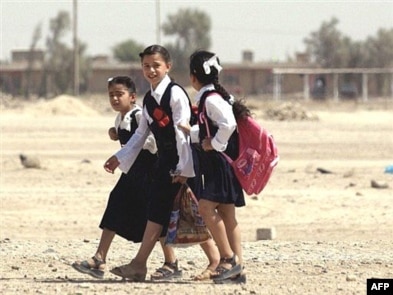
Once Seen As A Model, Iraq Struggles To Rebuild Its Education System

Source: Radio Free Europe/Radio Liberty

"Despite the brutality of its former regime, Iraq was once seen as a model of education in the Arab world. The country boasted some of the region’s highest literacy rates, justifying the Arabic saying, “The Egyptians write, the Lebanese publish, the Iraqis read.”

"Today, up to one-quarter of Iraq's adults are illiterate.......

"International Literacy Day on September 8, which is sponsored by the United Nations Educational, Scientific,and Cultural Organization (UNESCO), is an opportunity to address these issues.

"This year, the UN agency is putting the spotlight on literacy’s importance for civic participation, citizenship, and social and human development.

"The message will be delivered in Iraq, where economic sanctions imposed in the 1990s and six years of occupation and violence have dramatically affected the education system."

Tuesday, February 24, 2009

Iraq to reopen museum


Source: "Iraq to reopen museum looted in US invasion chaos," SAMEER N. YACOUB, The Associated Press, February 23, 2009.

Iraq's restored National Museum is reopening today.
U.S. and Iraqi officials have said about 15,000 artifacts were stolen from the museum and about 8,500 of those items had been recovered. A number of countries in the region, including Jordan, Syria and Egypt, have returned stolen objects to Iraq......

Up to 7,000 pieces are still missing, including about 40 to 50 considered to be of great historical importance, according to the U.N. cultural body UNESCO.
UNESCO has been of great help to Iraq in ascertaining the damage done during the invasion and its aftermath and helping to mobilize the international community to support the restoration of the museum and its collection. The recuperation of the stolen articles was made possible in large part due to the UNESCO Convention for the Protection of Cultural Property in the Event of Armed Conflict.

Broken Classical sculpture from Roman gallery, 2003
Source: The Oriental Institute, University of Chicago

Wednesday, November 21, 2007

An appeal to stop illicit trafficking of Iraqi cultural property

The International Coordination Committee for the Safeguarding of Iraqi Cultural Heritage, which met at UNESCO Headquarters in Paris on 13 and 14 November, ended with an appeal to the international community to help stop illicit excavations, pillaging and trafficking of Iraqi cultural property.

The Committee brings together some 20 international experts on Iraqi cultural heritage and is chaired by Iraq’s Senior Deputy Minister of Culture, Jaber Mohammad Abbas Al-Jaberi. It recommended, among other measures: to facilitate an international prohibition on trade in or transfer of ancient Iraqi cultural property in line with United Nations Security Council Resolution 1483 of 22 May 2003; and to encourage all countries to keep the recovered items in established safe havens, under the auspices of UNESCO and/or Iraqi diplomatic missions, in view of their restitution to Iraq when the adequate conditions are met.


April 10-12, 2007 was the fourth anniversary of the looting of the Iraq Museum in Baghdad. SAFE/Saving Antiquities for Everyone organized a candlelight vigil to end the looting and destruction of cultural heritage in Iraq, and around the world. The following (five minute long) video was produced as part of that effort, with a talk by the Director of the Iraq Museum in Baghdad, and images of the vigil at the State University of New York's Stony Brook campus:

Sunday, August 19, 2007

UNESCO Supports Iraqi Cultural Institutions

The Director General of UNESCO has submitted a report on the Cultural and Educational Institutions in Iraq in preparation for the next meeting of UNESCO's Executive Board. He reports on progress achieved by UNESCO in contributing to ongoing reconstruction and development efforts by the United Nations in Iraq since June 2006. He states in introducing the report:
The period of reporting was characterized by a highly volatile security situation despite stepped-up security measures. Escalating sectarian violence, as well as violence targeting journalists, artists, academics, teachers and students were of particular concern to UNESCO. On 13 June 2007, a second bombing at the Al-Askari Shrine in Samarra destroyed two 36-metre high minarets. The first bombing, which occurred in February 2006, had destroyed the golden dome of the shrine and sparked inter-sectarian violence throughout the country. The second bombing is stirring fears for renewed inter-community tensions, including further attacks on religious sites and monuments. The phenomenon of targeted violence affecting professionals and academics continued, with over 830 documented murders of university academics, medical doctors, journalists, media workers, lawyers, as well as teachers and students. Through advocacy, research and the development of professional support and solidarity networks, UNESCO sought to raise continuous attention on this matter within the international community.

The number of displaced populations both internally and to neighboring countries have reached unprecedented levels. According to reports by the Office for the Coordination of Humanitarian Affairs (OCHA), an estimated 1.9 million persons are now internally displaced and 2 million have left Iraq temporarily for neighbouring countries. This situation creates important humanitarian needs as large population groups suffer from problems of access to basic services. Of particular concern to UNESCO is the continued access to education for displaced schoolchildren, as well as the conditions and status of Iraqi teachers and academics who have left the country.
The report states, with respect to UNESCO's activities in the field of culture:
Following the first bombing of the Holy Al-Askari Shrine in Samarra on 22 February 2006, UNESCO launched several preparatory activities to protect the damaged site through urgent preventive works. In February 2007, agreement on the nature and scope of the preventive works had been reached with all parties concerned and funding was received from the European Commission under the UNDG Trust Fund ($5.4 million) and the Government of Iraq through a selfbenefiting funds-in-trust ($3 million). In addition, the Government of Iraq committed itself to put in place all necessary security arrangements to allow the selected contractors to work in Samarra. Preventive works at the site were expected to start in July 2007. In parallel, UNESCO continued to provide technical assistance to the Iraqi State Board of Antiquities and Heritage in the elaboration of the nomination file of “Samarra Archaeological City”. Within the framework of the Nordic World Heritage Foundation (NWHF) funded project, two workshops were organized to train Iraqi experts for the preparation of the nomination file, which was submitted to the World Heritage Centre on 1 February 2006, for consideration by the World Heritage Committee at its 31st session in 2007. The World Heritage Committee decided to inscribe the site on the World Heritage List and on the List in Danger.

Regrettably, a second devastating bombing resulted in the destruction of two of the shrine’s minarets on 13 June 2007. As indicated in the press release issued in the immediate aftermath of the bombing, UNESCO remains committed to the reconstruction process and cooperation with Iraqi counterparts to this end.

In the follow-up to the recommendations of the two working meetings on the site of the Babylon respectively in June and November 2005, a working session on Babylon will be organized in November 2007 at UNESCO Headquarters during the third ICC Iraq meeting. A full assessment of the damage caused to Babylon is currently being undertaken, combining three different components: (i) a survey prepared by Stony Brook University, (ii) a detailed report prepared by Iraqi scholars, and (iii) a documentary screening the actual state of conservation of the Babylon site. Thanks to a contribution from Poland ($25,000), the assessment report on the status of the archaeological site of Babylon is planned to be completed before end 2007.

In response to an emergency request of the Kurdistan Regional Government (KRG) related to the technical assistance for the safeguarding of the outstanding features of the Erbil Citadel, UNESCO provided assistance and expertise in May 2007, and is currently mobilizing funds for the establishment of the Erbil Citadel Conservation Master Plan.

As part of the Organization’s efforts towards the reviving of Iraqi cultural institutions, UNESCO organized two training sessions for talented young Iraqi students of the Music and Ballet School of Baghdad in Amman, under the title “Healing through Music”. The events gave a unique opportunity to the students from Baghdad to concentrate their efforts on improving their skills in peaceful conditions and to benefit from master classes by renowned international musicians.

In the context of the project on “Restoration of the Laboratories of the Iraq National Museum (INM) in Baghdad” ($1 million, Japanese FIT) a second three-month training course was carried out at the National Research Institute for Cultural Properties – Japan (NRICP) and focused on capacity-building of the Iraqi staff in conservation practices and on micro-environmental monitoring. Moreover several visits to archaeological sites, museums and other institutes in Japan were undertaken from October to December 2006.

As part of “Management enhancement and capacity-building in museums in Iraq”
($80,795, Norwegian FIT) a first working meeting was organized with Iraqi stakeholders on 18 and 19 March 2007 in order to identify the content and timing of the training workshops. The first training on museums management is scheduled to take place for three weeks, starting 29 July 2007.

UNESCO Supports Iraqi Education

The Director General of UNESCO has submitted a report on the Cultural and Educational Institutions in Iraq in preparation for the next meeting of UNESCO's Executive Board. He reports on progress achieved by UNESCO in contributing to ongoing reconstruction and development efforts by the United Nations in Iraq since June 2006. He states in introducing the report:
The period of reporting was characterized by a highly volatile security situation despite stepped-up security measures. Escalating sectarian violence, as well as violence targeting journalists, artists, academics, teachers and students were of particular concern to UNESCO. On 13 June 2007, a second bombing at the Al-Askari Shrine in Samarra destroyed two 36-metre high minarets. The first bombing, which occurred in February 2006, had destroyed the golden dome of the shrine and sparked inter-sectarian violence throughout the country. The second bombing is stirring fears for renewed inter-community tensions, including further attacks on religious sites and monuments. The phenomenon of targeted violence affecting professionals and academics continued, with over 830 documented murders of university academics, medical doctors, journalists, media workers, lawyers, as well as teachers and students. Through advocacy, research and the development of professional support and solidarity networks, UNESCO sought to raise continuous attention on this matter within the international community.

The number of displaced populations both internally and to neighboring countries have reached unprecedented levels. According to reports by the Office for the Coordination of Humanitarian Affairs (OCHA), an estimated 1.9 million persons are now internally displaced and 2 million have left Iraq temporarily for neighbouring countries. This situation creates important humanitarian needs as large population groups suffer from problems of access to basic services. Of particular concern to UNESCO is the continued access to education for displaced schoolchildren, as well as the conditions and status of Iraqi teachers and academics who have left the country.
With respect to education the report states:
During the period under review, education remained the main area of UNESCO assistance to Iraq. Assistance focused on capacity-development of the Ministry of Education (MoE), of the Ministry of Higher Education and Scientific Research (MoHESR), as well as of the provincial directorates to support educational planning and management, as well as effective service delivery. Within the United Nations Country Team for Iraq based in Amman, UNESCO continued acting as deputy cluster coordinator for Cluster B (Education and Culture), chaired by UNICEF. UNESCO was also an active member of the Education Sector Working Group (SWG), which meets in Baghdad under the chairmanship of the Iraqi Minister of Education (MoE).

UNESCO started three new projects in the field of education, one on Training of trainers in teacher education for sustained quality education ($2.3 million), and one ICT in education ($1.9 million) thanks to contributions from the European Commission (EC) through the UNDG Trust Fund. The third project, also funded through the UNDG Trust Fund, is a component of the Local area development programme ($30 million total), an inter-agency programme which focuses on three localized areas of Iraq. The programme aims at working with local partners to stimulate local economic development, generate short-term and sustainable employment using labour intensive approaches and improve the service delivery capabilities of local authorities in the three selected areas. UNESCO’s activities within the programme ($3.23 million) focus on strengthening capacities for delivering opportunities for vocational training. Finally, several projects approved in 2004 were operationally completed in December 2006, while three projects are still ongoing.

9. The following three projects funded by the UNDG Trust Fund for Iraq were completed:
• Textbooks quality improvement project ($7.1 million, EC funds under UNDG Trust Fund). Following the successful completion of the printing and distribution of 9 million school textbooks in March 2006, focus was put on strengthening in-country capacities for future textbook development. Hence, a Prepress Centre was set up in Baghdad and training organized for MoE staff on the principles of writing and designing textbooks. UNESCO also established a Textbooks/CDs Library, and contributed to the formulation of a National Textbooks Printing and Distribution Policy.

• Education management information system – EMIS ($1.5 million, earmarked funds to UNESCO from Japan through the UNDG Trust Fund). As a direct result of the equipment and capacity-building provided under this project, the educational data for four directorates have been compiled and the EMIS was used to develop indicators and produce statistical reports. The instructional material developed earlier in cooperation with the Open University Worldwide was translated into Kurdish and made available in July 2006.

• In-service training of secondary-school teachers of science, mathematics and English language ($2.35 million, funded by Japan under the UNDG Trust Fund). By March 2007, the "Institute of Educational Training and Development" at the MoE in Baghdad had been fully equipped with film, projection and editing material for classroom observation for teacher training purposes. Training material was also produced and mentors trained on the use of new material and methods in intermediate and secondary schools.
Ongoing projects included:
• Training of trainers in teacher education for sustained quality education ($2.3 million, EC funds under the UNDG Trust Fund). Under this project, five of ten master trainers in peace, democracy and human rights are currently studying in Turin, Italy. Master trainers in English language and in computer skills attended training courses in Amman in March 2007. The first Teacher Training Network for Iraq (TTNI) Steering Committee meeting took place in May 2007, with a view to launching the Teacher Training Network for Iraq, establishing a work plan for the implementation of the remaining capacity-building programmes under the project and formulating a national strategic action plan for teacher training in Iraq.

• The project Strengthening secondary education in Iraq ($4.7 million, EC funds under the UNDG Trust Fund) focused on training on specific aspects related to the reconstruction and reform of secondary education, such as: low-cost equipment for science education; laboratory skills and competencies for science teachers, library supervision, and the development of science experiment manuals. As a result, teacher experiment manuals in physics, chemistry and biology were developed. Also, furniture, equipment and materials for science laboratories and school libraries are being provided and installed.

• The Literacy and life skills development project ($2.3 million, earmarked funds to UNESCO from Japan through the UNDG Trust Fund). One national literacy resource centre (NLRC) in Baghdad and three community learning centres (CLCs) in the cities of Baghdad, Dyala and Samawa have been established, including refurbishment of the centres and provision of furniture and equipment. A training for non-formal education (NFE) facilitators, animators and volunteers on the function of CLCs and NLRCs was organized (Cairo, July 2006), and so was an expert group meeting to formulate the national NFE policy paper (Amman, December 2006).

• Revitalization of technical and vocational education and training in Iraq ($3 million, funded by Japan and the European Commission under the UNDG Trust Fund). MoE instructors were trained on programme design and review of equipment specifications, while training material was prepared by international experts for the following vocational disciplines: electronics, sewing, agriculture, communication, electrics, automotive, mechanics, food service and production and construction. UNESCO is currently in the process of delivering the last lots of supplies and equipment to the MoE, which are expected to be distributed and installed in the different vocational centres by September 2007.
In the field of higher education, all activities under the “International Fund of higher education in Iraq” are being completed. The Fund, which benefited from a generous $15 million donation from the First Lady of Qatar, was a major contribution to the reconstruction of main universities in Iraq, through the provision of equipment for laboratories, reference materials to libraries and textbooks to students. In addition, more than 300 short-term fellowships were granted to university professors and students, of which 157 have already completed their programme and are back in Iraq with new knowledge and skills.

Saturday, May 05, 2007

Cultural Property: International Conventions and United States Legislation

Read the full 2004 report of the Congressional Research Service.

Summary:

The looting of the Iraq Museum in Baghdad, initially described as a devastating blow to the world's cultural heritage, has raised interest in measures to protect cultural patrimony. While more recent reports revealed that the loss of museum holdings had been exaggerated, the damage continues to be assessed as significant. There is broad international consensus that antiquities and art deserve special protection from the ravages of war, as is codified in the 1907 Hague Regulations, the 1949 Geneva Conventions, and the 1954 Hague Convention. Other agreements address protection of world heritage from pilfering and smuggling, including conventions drafted under the auspices of the United Nations Educational, Scientific and Cultural Organization (UNESCO) and the United Nations International Institute for the Unification of Private Law (UNIDROIT). However, there is no international consensus on the most appropriate and effective means of providing protection. U.S. law to prevent the illicit "black market" trade in art and antiquities imposes both civil and criminal sanctions on art thieves, looters, and smugglers. This report describes relevant treaties, U.N. Security Council Resolution 1483, current U.S. law, and proposed legislation, including H.Con.Res. 113, the Iraq Cultural Protection Act (H.R. 2009 and H.R. 3497), and the Emergency Protection for Iraqi Cultural Antiquities Act of 2004 (S. 1291 and S. 671, the latter of which has passed the Senate as an engrossed amendment to H.R. 1047, the Miscellaneous Trade and Technical Corrections Act of 2004). The report will be updated as events require.

Wednesday, January 31, 2007

UNESCO Outraged by Attack on Baghdad Girls School

On Sunday, according to DetNews.com:
In Baghdad, mortar shells crashed down on a girls high school, killing at least five students and wounding 13 other people, including two teachers, said Brig. Gen. Saad Sultan of the Interior Ministry.

Hours after the attack, grieving parents wept as the bodies of their children were placed in coffins.

Police said four of the girls were killed instantly and a fifth died later.

No group claimed responsibility for the attack.
The Islamic Republic News Agency reports:
UNICEF and UNESCO in a joint statement, a copy of which was faxed to IRNA here Monday, expressed outrage at a terroristic act of mortar attack on a girls' school in Baghdad on Sunday January 28, 2007.

UNICEF Representative for Iraq, Roger Wright, and Mohamed Djelid, UNESCO Country Director, both emphasized, "This is yet another tragic reminder of the risks facing Iraq's schoolchildren every day as they struggle amidst the insecurity to receive their right to education.

The apparently deliberate targeting of children in this incident is an unforgivable crime."

The two UN agencies stressed that violence and the threat of more violence have seriously disrupted the education system across parts of Baghdad. Girls' schools in particular have suffered, with girls now making up the majority of the far too many children out of school in Iraq's capital.

UNICEF and UNESCO called upon all parties in Iraq to exercise their responsibility and duty to ensure that schools remain safe havens for children to attend, learn and play. Finding appropriate strategies to bring education to children in environments where normal schooling has become impossible is now an imperative.
To read the full article on the Islamic Republic News Agency website click here.