Saturday, March 03, 2007

Unesco conference to devise initiatives to cut Arab illiteracy rates

Doha: Qatar will host the first Unesco Regional Conference in Support of Global Literacy here from March 12 to 14.

The event under the theme 'Literacy in the Arab States: Building Partnerships and Promoting Innovative Approaches' will seek ways to reduce illiteracy in the Arab states, where approximately 58 million adults are illiterate. Of that figure 66 per cent are women.

Present to address the conference will be Koichiro Matsuura, Director-General of Unesco, Mousa Bin Ja'afar Bin Hassan, President of Unesco General Conference and Permanent Delegate of the Sultanate of Oman to Unesco, and Amr Mousa, President of the Arab League.

Mrs. Laura Bush, Honorary Ambassador for the United Nations Literacy Decade and a passionate promoter for literacy in the United States, will make a video address.

In a press statement, Shaika Mouza said, "Literacy oxygenates families, schools, civil society, and all types of institutions and businesses. This is why when we speak of genuine reform in our region and the path to peace, we must keep literacy at the very core of this agenda."

Sources:
Gulfnews.com
Whitehouse.gov

Supporting links:
The Conference - for more information and downloads
UNESCO Regional Conferences
United Nations Literacy Decade (UNLD), 2003 - 2012
UNESCO Literacy Portal

Thursday, March 01, 2007

International Women’s Day (8 March)

ABOUT INTERNATIONAL WOMEN'S DAY

UNESCO is organizing an international conference entitled “Women Peacemakers” to celebrate International Women’s Day. This conference will bring together distinguished women whose work has contributed to the promotion of peace.

Eighty to 90% of the victims in today’s conflicts are civilians, and the vast majority of them are women and girls. Yet women do not participate fully in peacemaking processes, and when they do, their contribution is often overlooked.

Grand Duchess Maria Teresa of Luxembourg(pictured to the left), a UNESCO Goodwill Ambassador, will inaugurate the conference. Panelists will include Swanee Hunt(pictured to the right), former US Ambassador to Austria and founder of the Initiative for Inclusive Security.

A series of other events marking Women’s Day will take place at UNESCO from 28 February to 22 March.

Check out the UNIFEM website for International Womens Day!

Friends of World Heritage -- Photo Pool

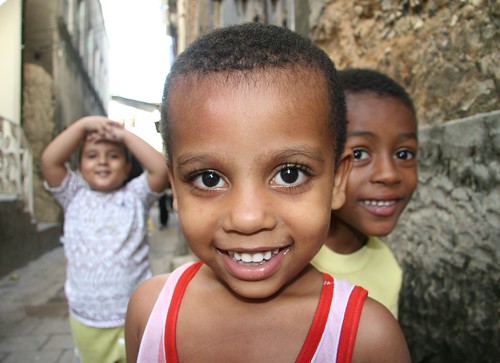
Zanzibar faces
© by Nina Wessel,
from the Friends of World Heritage (Pool)


The Friends of World Heritage have created this pool of great photos on Flickr.


Photos of your last trip could be the ticket to your next! Enter your favorite World Heritage photos in the Friends of World Heritage photo contest for a chance to win an all expenses paid trip to spectacular World Heritage sites. Register your photo by adding it to the Friends of World Heritage group on Flickr AND by completing the online registration form at www.friendsofworldheritage.org.

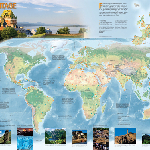
Map of World Heritage Sites

2007 World Heritage Map


Produced through a UNESCO World Heritage Center, National Geographic and Hewlett Packard Partnership!

You can obtain a free copy of this large format full-color map featuring the 830 World Heritage sites!

Friends of World Heritage

The mission of Friends of World Heritage is:
to foster a constituency of World Heritage supporters and travelers to ensure the protection of World Heritage sites for today’s travelers and future generations.
Expedia, Inc., UNESCO’s World Heritage Center, and the UN Foundation are working together to support this mission.

The World Heritage program is, in my opinion, the flagship of UNESCO -- its most visible as well as its most cost-effective program. JAD
World Heritage sites are places around the world that have been internationally recognized for their outstanding value as natural and cultural treasures. Sites currently on the World Heritage List include Independence Hall, Stonehenge, the Galapagos Islands, the parks, forests and wildlife reserves of the Democratic Republic of Congo, the historic Centre of Prague, the Pyramids of Egypt and the Great Wall of China.

All sites are protected by the 1972 World Heritage Convention, signed to date by 180 countries and administered by the United Nations Educational, Scientific and Cultural Organization (UNESCO), making it one of the most universal international legal instruments for the protection of cultural and natural heritage. While fully respecting the national sovereignty, the States Parties to the World Heritage Convention recognize that the protection of our World Heritage is the duty of the international community as a whole. There are currently 830 World Heritage sites (644 cultural, 162 natural and 24 mixed properties in 138 States Parties) in 138 countries.

Friends of World Heritage also manages a Fund, Donations to the Fund go to World Heritage projects and priorities, mainly in the developing world -- where money is so scarce. Furthermore, contributions from individuals may be matched twice over - turning every $1 into $3 - by the support of Expedia, Inc. and the UN Foundation.

Monday, February 26, 2007

Two Early Books on UNESCO

UNESCO: its purpose and its philosophy by Julian Huxley
Huxley, the first Director General of UNESCO wrote this as UNESCO was being conceived. It was published by the UNESCO preparatory commission in 1946.
UNESCO: Peace In The Minds Of Men by Theodore Besterman
This is the first book published on UNESCO (in 1951). Besterman was an early employee of the organization.

Sunday, February 25, 2007

UNESCO's History

The opening of UNESCO's first General Conference
at the Sorbonne, Paris (20 November to 10 December 1946).
© UNESCO/Eclair Mondial


There are a number of resources on the web that might be useful to those interested in the history of UNESCO.

"The Organization's History" on the UNESCO website. This site has a brief statement of early history, plus some interesting archival photos.

The history of UNESCO's headquarters.

UNESCO's Directors General

On the occasion of its 60th anniversary, UNESCO hosted, in its Paris headquarters, an international symposium on the Organization’s history. Click here for a copy of the program for the meeting.

UNESCO at 60: 60 weeks 60 themes

60 Women Contributing to the 60 years of UNESCO.

Sixty Years of Science at UNESCO 1945-2005

The Association of Former Employees of UNESCO has produced a number of publications on UNESCO history, and in fact has a history club.

"UNESCO Celebrates 60 Years of History" by Caroline Haddad of the UNESCO Bangkok office.

A timeline of UNESCO's communications history.

Read The MacBride Report, "Many Voices, One World" of 1980.

You might also find "A New World Order in Communication" by William F. Fore interesting about one of the controversies that resulted in the departure of the United States, the United Kingdom, and Singapore from UNESCO.

Related is "The United States and the Founding of the United Nations, August 1941 - October 1945" published by the U.S. State Department.

The United Nations History Project.
Links to related projects on history of UN agencies.

Saturday, February 24, 2007

AROUND THE WORLD IN 80 MISSIONS

AROUND THE WORLD IN 80 MISSIONS by Jacques Tocatlian, apparently published by the author, but available online, 2000.

From the publisher's summary:
"Around the World in 80 Missions", by Jacques Tocatlian, is not an autobiography. It is rather the product of an interaction between imagination, experience, fiction, reminiscence and fantasy. A cocktail mixed in the environment of international diplomacy and tempered by a sprinkling of light humor.
This book provides both light reading and an unusual insiders view of UNESCO. Its fictitious main character, Jacques Dupont, joins UNESCO in 1965, at the age of thirty and retires in 1995 when he reaches the age of sixty.
The author's ambition in writing this book was to make a modest contribution to international understanding. The frictions and wounds caused by cultural differences and interethnic misinterpretations will only be healed by tolerance. Tolerance based on a better understanding of others.

World Heritage in Young Hands


World Heritage in Young Hands is an on-line learning community for students, teachers, museum-personnel and others involved in the preservation and promotion of cultural and natural heritage sites from local to global levels. It was created upon request from students and teachers worldwide participating in the UNESCO "World Heritage in young hands" Project.

Launched in 1994 at the grassroots level by the UNESCO Associated Schools Project Network (ASPnet) and the UNESCO World Heritage Center, this Project gives young people a chance to voice their concerns and to become involved in the protection of the world’s natural and cultural heritage.

Check out:
* The World Heritage Education Kit

* A Map of World Heritage Sites

Friday, February 23, 2007

Education and Globalization

Contributing to peace and human development
in an era of globalization through education,
the sciences, culture and communication
Theme of UNESCO's
Medium Term Strategy
2002-2007


According to Alan Taylor:
We are now living in the second era of globalization, not the first. The first stretched from roughly 1870 until the start of World War I in 1914 and saw unprecedented integration in international market for goods, capital, and labor.......Circa 1870, the ratio of world trade to GDP stood at 10 percent, rising to 21 percent by 1914, falling to 9 percent by 1938, and then rising to 27 percent by 1992.
Branko Milanovic points out:
The “Halcyon days” were never Halcyon for those who were “globalized” through colonization since colonial constraints prevented them from industrializing. And they were even less “Halcyon” for those who were taken into slavery. Even among the Western economies, the 19th century globalization, contrary to some views, failed to bring income convergence. The record of the last two decades (1978-1998) is shown to be uniformly worse than that of the previous two (1960-78). It is thus only by a serious misreading of the recent evidence that the partisans of globalization are able to argue for its unmitigated beneficence........Global capitalism needs to be “civilized” in the same way that national capitalisms of the 19th century were “civilized” after World War II—a period which then witnessed the fastest growth in history.
UNESCO as Nobel Prize winner Joseph Stiglitz "What is the impact of globalization in the fields of education, culture and knowledge sharing?" He replied:
New technologies can support cultural diversity by making it easier for communities to express themselves. But globalization has sometimes been pushed too fast and in an inappropriate way, threatening the stability of existing cultures. Many societies have traditional ways of handling social support, but sometimes international institutions have come in with assistance programmes that undermine those local systems.
What specifically does Globalization mean for educators? UNESCO has addressed this issue in a number of publications:
* UNESCO Position Paper on higher education in a globalized society

* "Globalization and Educational Reform: What Planners Need to Know" by Martin Carnoy, UNESCO, 1999.

* "Globalization, Human Rights and Education" by Jacque Hallak, UNESCO, 1999.

* "Education and Globalization," IIEP Newsletter, April-June, 1998.

* “Globalization and Higher Education,” First Global Forum on International Quality Assurance, Accreditation and the Recognition of Qualifications in Higher Education.
More generally, the idea of “globalization with a human face” is woven into the very fabric of UNESCO’s program, as its strategic responses to globalization. Thus in 2004, UNESCO held a conference on the theme of Globalization and Intangible Cultural Heritage: Opportunities, Threats and Challenges in Japan. Siimilarly, in 2006, UNESCO and the United Nations University held a conference in Japan on the theme of Science and Technology in the Era of Globalization.

Here is a 2005 annotated review on the topic of Education and Globalization (posted on the Eldis website).

Monday, February 19, 2007

UNESCO and Hewlett-Packard launch project to counter brain drain in Africa

Read the full UNESCO Press Release.

UNESCO and Hewlett-Packard have launched a joint project to help reduce brain drain in Africa by providing grid computing technology to universities in Algeria, Ghana, Nigeria, Senegal and Zimbabwe.

The “Piloting Solutions for Reversing Brain Drain into Brain Gain for Africa” project aims to establish links between researchers who have stayed in their countries and those that have left, connecting scientists to international colleagues, research networks and potential funding organizations. Faculties and students at beneficiary universities will also be able to work on major collaborative research projects with other institutions around the world.

How to Better Finance Two UNESCO Programs

UNESCO's Information for All Program is the only intergovernmental program exclusively dedicated to promoting universal access to information and knowledge for development. It is a small program, which has been supported by nine donor nations. IPAP was created in 2000, but it has never received a donation from the U.S. government. The Intergovernmental Council for the Information for All Program has been invested with the authority to speak on strategic priorities and to lobby and create awareness about issues pertaining to the use of information and ICT for development at the international level. More than 50 IFAP National Committees have been created. The program has approved and funded a number of small projects.

The International Program for the Development of Communication is a major forum in the UN system designed to develop free and pluralistic media with a global approach to democratic development. Created at the initiative of the United States, it currently receives support from 25 governments, including that of the United States. It also accepts donations from individuals (but requires them to be made by bank transfer.) The program is managed by an Intergovernmental Council and its Bureau. Over the last quarter century, IPDC has mobilized some US$ 90 million for over 1000 projects in 139 developing countries and countries in transition.

Suggestion: An website should be created to allow individual contributions to individual projects sponsored under these programs.

With the development of the Internet and the World Wide Web, a number of websites have been developed which illustrate how this might be done:
* GlobalGiving was created in 2000 by two former World Bank officials. It allows the managers of small development projects to post descriptions of those project on its website, and allows donors to make small donations online to those projects. More than $US3million has been raised through this organization, and almost all goes to the development projects themselves.

* The U.S. Peace Corps website provides facilities for individuals to donate to small projects that are posted by the PCVs themselves, thus allowing the donor to directly support a project without overhead to a charitable organization.

* Heifer International provides an online Gift Catelog allowing donors to make small gifts of livestock to projects in developing countries. An email to the organization will allow the gift to be made to a specific project -- for example, to a project introducing rabbit raising in Uganda or duck raising in Haiti.
UNESCO might create such a website for its small grants programs, or alternatively civil society (with the assistance of a corporate donor) might create one in support of UNESCO.

Click here to read an interview with the founder of GlobalGiving, describing the operation of its website for online giving.

Sunday, February 18, 2007

A good article on the United Nations system

Read "Is the UN Doomed?" by Tony Judt in The New York Review of Books (Volume 54, Number 2 · February 15, 2007). Subscription or online payment is required to read this.

Bob Maybury alerted me to this review of three recent books about the United Nations.

"There are actually many UNs of which the military and political branches (General Assembly, Security Council, Peacekeeping Operations) are only the best known." UNESCO is the first of several that Judt names.

"Much of the work done by these units is routine. And the "soft tasks" of the UN- addressing health and environmental problems, assisting women and children in crisis, educating farmers, training teachers, providing small loans, monitoring rights abuse -- are sometimes performed just as well by national or nongovernmental agencies, though in most cases only at UN prompting or in the wake of a UN sponsored initiative."

Judt may underestimate the global importance of UNESCO's leadership in providing the vision for "Education for All", or the catalytic role of UNESCO in focusing the world's attention on the preservation of world heritage sites.

Wednesday, February 14, 2007

UNESCO’s Offers Help to World Heritage City of Valparaiso, Chile

Koïchiro Matsuura, the Director-General of UNESCO, has offered the Organization's assistance in repairing damage caused by the fire that destroyed part of the historical city centre of Valparaiso, Chile, killing several people, on 3 February.
"Firstly, I wish to extend my sincere condolences to the families and friends of the victims of this tragedy," the Director-General said. He also announced that "UNESCO stands ready to extend emergency assistance to the appropriate Chilean authorities in their effort to repair the damage caused to the historic centre of Valparaiso. We are in touch with the authorities and will do all we can to help them preserve this outstanding landmark. I have fond memories of my visit to Valparaiso, in the company of its mayor, before the city was inscribed on UNESCO's World Heritage List in 2003. I remember the city as a place of great beauty, bearing rich testimony to the region's cultural, economic and social history."
A mission of UNESCO's World Heritage Centre will visit Valparaiso in early March and will discuss restoration plans with the local authorities.

For more information on the fire, try this story from The Santiago Times. It notes:
In Valparaíso’s historic Puerto neighborhood, the gas leak caused a blast so severe that it downed power lines and blew out windows in a three-block radius. The explosion also resulted in a massive fire that consumed three buildings along Calle Serrano (ST, Feb. 5, 2007).
Comment: My sympathy too goes out to the people of Valparaiso, who were so hospitable and kind to me in the years I lived in that beautiful city. JAD

Scripps Health Director Reappointed to U.S. NatCom for UNESCO


San Diego Source > News:
The State Department has reappointed Scripps Health President and Chief Executive Officer Chris Van Gorder to the United States National Commission for the United Nations Educational, Scientific, and Cultural Organization for a three-year term. Scripps is currently the only health care organization on the commission."

You can see a complete list of the members here.

Friday, February 09, 2007

The New Issue of the UNESCO Courier Is Out

© UNESCO; Video training in Hebron, Palestinian Territories

Click here to read issue number 1 for 2007 of The UNESCO Courier.

"Whatever the particular challenges of life in different parts of the world, people everywhere need pluralistic and independent media. Since its creation, UNESCO has sought to promote the free flow of ideas by word and image in the interest of international solidarity, democracy, peace and development....

"The current edition of the UNESCO Courier looks at how UNESCO has been helping people around the world acquire the media that will meet their specific needs; learn about their problems and possible solutions; share experiences and opinions; and celebrate their culture."

The "issue examines some of these projects, like the training Palestinian television reporter Lana Shaheen received to help her contend with the challenges of working in a context of political instability, material hardship and gender stereotyping.

Other programmes help geographically scattered communities, like those of the Caribbean islands, pool know-how and resources. While some training workshops, for example, assist journalists - in this instance in Mongolia - gain awareness of important issues of democratic governance. Meanwhile, in Cape Verde UNESCO has helped the authorities design the legislative framework that is indispensable for free and independent public and private media.

Tuesday, February 06, 2007

Federal Budget Request Short-Changes United Nations, Lantos Says

Read the full press release from Representative Lantos' office.

"Congressman Tom Lantos (D-CA), chairman of the House Committee on Foreign Affairs, said the Administration is short-changing the United Nations in the budget proposal delivered to Congress today, which will ultimately harm national security.

“'We face a $130 million shortfall in the account used to pay U.S. dues to the United Nations,' Lantos noted. 'For the first time since the historic Helms-Biden agreement to pay off old U.S. debt the United Nations, we will once again be in arrears. This is absurd. The Administration is budgeting for massive new arrears to the United Nations at a time when we need the organization to help us in Iraq, Darfur, Lebanon, Haiti and a host of other global hot spots.'"

"Ancient Temples Face Modern Assault"

Image from The Washington Post.

Read the full article subtitled "Rapid Rise in Tourism Is Overwhelming Cambodia's Ability to Protect Fragile Sites" by Anthony Faiola in The Washington Post, February 6, 2007.

Including Cambodians, the number of visitors to the ancient Angkor "archaeological park will reach a record 2 million this year and at least 3 million by 2010, according to the U.N. Educational, Scientific and Cultural Organization (UNESCO), which identified Angkor as a World Heritage site in 1992.

"The growth has put the Cambodian government in a difficult position, observers say, forcing it to balance the potential to make money against the need for preservation, restoration and study. It is a dilemma familiar to other countries that profit from treasured cultural sites.

"The Acropolis in Athens, the Forbidden City in Beijing and the Hagia Sophia area of Istanbul are all experiencing tourism pressures. In Peru, the massive sand lines at Nazca and Palpa have come under threat from encroaching power lines and roving tourists in jeeps. In Nepal's Kathmandu Valley, UNESCO has decried 'uncontrolled urban development.'

UNESCO's World Heritage Program, which under Russell Train's leadership the United States proposed for UNESCO, provides a uniquely cost-effective instrument by which we can encourage countries to protect natural and cultural sites that are the heritage of all mankind.

Monday, February 05, 2007

Where Does UNESCO Fit in the Multinational Family of Organizations?

Source: The United Nations

The United Nations system includes a large number of organizations and programs. United Nations programs, such as the Peace Keeping Programs and the United Nations Development Program, which fall directly under the United Nations itself may be considered to form one aspect of the system. The World Bank Group of agencies, including the International Monetary Fund, The International Bank for Reconstruction and Development, and the International Development Association (together with other international development banks) may be considered to form another aspect of the system -- one with independent governance. The third aspect would then be the decentralized agencies, such as UNESCO, the World Health Organization, the Food and Agricultural Organization, etc. These too have their own independent governance structures. All cooperate, and all share certain features such as a those of the international civil service.

The Global Policy Forum maintains a website with good information on UN Finance. The United Nations and all its agencies and funds spend about $20 billion each year. (The International Development Banks, which loan as well as grant fund projects, are not included in this total.) The regular budget of UNESCO is some US$300 million per year, of which the United States government contributes 22 percent, under US$70 million per year. This might be compared to the operating budget of the public schools of the county in which I live, of US$1.85 billion. In 2000, according to the National Science Foundation, "global R&D expenditures totaled at least $729 billion, half of which was accounted for by the two largest countries in terms of R&D performance, the United States and Japan." Note that the United States is severely in arrears in its payments to the United Nations:
31 October 2006
Regular Budget: $526 million (80%)
Peacekeeping: $799 million (31%)
Total: $1,384 million (42%)
Here are some Frequently Asked Questions (and their answers) about the United Nations, provided by The Federation of International Civil Servants' Associations.

While you are at it, check out Lien/Links, the online magazine of the Association of Former UNESCO staff members.

Wednesday, January 31, 2007

UNESCO Outraged by Attack on Baghdad Girls School

On Sunday, according to DetNews.com:
In Baghdad, mortar shells crashed down on a girls high school, killing at least five students and wounding 13 other people, including two teachers, said Brig. Gen. Saad Sultan of the Interior Ministry.

Hours after the attack, grieving parents wept as the bodies of their children were placed in coffins.

Police said four of the girls were killed instantly and a fifth died later.

No group claimed responsibility for the attack.
The Islamic Republic News Agency reports:
UNICEF and UNESCO in a joint statement, a copy of which was faxed to IRNA here Monday, expressed outrage at a terroristic act of mortar attack on a girls' school in Baghdad on Sunday January 28, 2007.

UNICEF Representative for Iraq, Roger Wright, and Mohamed Djelid, UNESCO Country Director, both emphasized, "This is yet another tragic reminder of the risks facing Iraq's schoolchildren every day as they struggle amidst the insecurity to receive their right to education.

The apparently deliberate targeting of children in this incident is an unforgivable crime."

The two UN agencies stressed that violence and the threat of more violence have seriously disrupted the education system across parts of Baghdad. Girls' schools in particular have suffered, with girls now making up the majority of the far too many children out of school in Iraq's capital.

UNICEF and UNESCO called upon all parties in Iraq to exercise their responsibility and duty to ensure that schools remain safe havens for children to attend, learn and play. Finding appropriate strategies to bring education to children in environments where normal schooling has become impossible is now an imperative.
To read the full article on the Islamic Republic News Agency website click here.

"Young People and AIDS: A Practical Guide"

Published on paper, this UNESCO book was designed for primary and secondary school teachers, youth leaders in voluntary organization and radio and for all those interested in working on HIV/AIDS preventive programmes targeting young people.

For more information or to order a free copy, click here.

Editor's comment: Why in the world would UNESCO publish this first or only on paper, when the problem of educating young people about AIDS is so urgent? They must have had an electronic copy, and it is certainly easier to mount such a copy of the World Wide Web than to type set and print the book. With something like one billion personal computers in the world, most connected to the Internet, it seems clear that this book would be of interest and widely used if and when it is made available on the Web. JAD

Briefing Book for Congress on the UN


The Better World Campaign has published online its 2007 Briefing Book for the Congress with lots of information on the United Nations. It is full of useful, accurate information.

Check out its briefing titled: Agencies, Funds, and Programs

A few years ago, before President Bush announced that the United States would rejoin UNESCO, the Better World Campaign published this add.

An "Ancient Settlement Is Unearthed Near Stonehenge"

National Geographic Society photo of the Stonehenge monument, within UNESCO Stonehenge World Heritage site in January 2007.

Read the full article subtitled "Sites Apparently Used for Ceremonies and Burials" by Marc Kaufman in The Washington Post, January 31, 2007.
New excavations near the mysterious circle at Stonehenge in southern England have uncovered dozens of homes where hundreds of people lived -- at roughly the same time that the giant stone slabs were being erected 4,600 years ago.

The finding strongly suggests that the monument and the settlement nearby were a center for ceremonial activities, with Stonehenge probably a burial site, while other nearby circular earthen and timber "henges" were devoted to feasts and festivals.

The small homes and personal items found beneath the grounds of the Stonehenge World Heritage Site are the first of their kind from that late Stone Age period in Britain, and they suggest a surprising level of social organization and ceremonial behavior to complement the massive stonework nearby. The excavators said their discoveries, about two miles from Stonehenge itself, together constitute an archaeological treasure.

Monday, January 29, 2007

NatCom Seeks Information for List of UNESCO Clubs

The U.S. National Commission for UNESCO (the NatCom) is seeking to compile a list of UNESCO clubs and associations in the United States. Click here for information on how to contact the Department of State UNESCO unit.

There are now some 4.000 UNESCO associations, centers and clubs in about 100 countries throughout the world. However, we believe there are relatively few in the United States. Club movement members, who are all volunteers, share a commitment to UNESCO’s ideals and work to translate them into reality on the ground. In the half-century since the first UNESCO club was founded in Japan, the world has witnessed a vast range of events. Those events have included ones in every one of UNESCO’s fields of competence.

At the international level, the World Federation of UNESCO Clubs, Centers and Associations (WFUCA) is responsible for informing, coordinating and mobilizing its members, with UNESCO's support and cooperation. Officers of Americans for UNESCO currently represent the United States in the World Federation.

There is considerable information on this UNESCO website for those who might be interested in starting a UNESCO club. The materials include a 191 page online book by Anne Willings-Grinda on the history of UNESCO clubs from 1946 to 1996: UNESCO Clubs, Paths to Light

More information about UNESCO clubs, centers, and associations is available from UNESCO.

Apply Now to Become a UNESCO Chair

The deadline to apply is March 30, 2007.

UNESCO Chairs are awarded each year to individual colleges, universities and research institutions to initiate programs that further research and training in one of UNESCO's fields of competence. A Chair may be established by reinforcing an existing teaching or research program and giving it an international dimension, or one may be established as a new teaching and research unit.U.S. organizations wishing to apply.

Upon the recommendation by the U.S. National Commission for UNESCO, UNESCO recently has approved two UNESCO Chairs at U.S. universities. The University of Oregon proposal for a chair in Transcultural Studies, Interreligious Dialogue, and Peace was approved, as well as, a Georgetown University proposal for a chair in Achieving the Promise of EFA: A Focus on Literacy and Sustainable Development.

Obtain more information on how to submit your application through the Department of States Secretariat to the United States National Commission for UNESCO at this website.

Friday, January 26, 2007

"U.S. Civil Society Views of UNESCO"

Read the full report of the meeting.

The Board on International Scientific Organizations of the National Academies in 2002 held a meeting of experts from U.S. civil society organizations to discuss the United States’ re-entry into UNESCO. The meeting was held at the request of the Bureau of International Organizations of the U.S. Department of State, and took place at the facilities of the National Academies on November 22, 2002. The report of the meeting represents the opinions of individuals who attended, and does not represent the formal recommendations of the National Research Council (nor does it appear to have been subjected to the Academies' peer review process required for more formal recommendations.) Still the material is of sufficient interest and importance to be quoted extensively.

General comments reported from the meeting were:
* Given that there is a significant overlap between U.S. civil society’s priorities and those of UNESCO, a mechanism is needed to better integrate U.S. and UNESCO programs and thereby multiply their effectiveness.
* Several people pointed out that in the United States there is a general lack of awareness and understanding of UNESCO programs. Civil society organizations can help inform the U.S. public about UNESCO and its programs. For example, the media can play an important role in promoting and increasing awareness of UNESCO World Heritage Sites.
* UNESCO programs tend to be too compartmentalized; there is a need for more collaboration across the different UNESCO sectors.
* It would be useful to strengthen partnerships between UNESCO and other international organizations.
* UNESCO’s main role is as an advocate and convener, not as a funder.
* In addition to discussing how the United States can influence the programs funded through UNESCO’s appropriated budget, it is also important to look at how to impact extra-budgetary programs.
* In support of technical cooperation and international assistance objectives, the United States should encourage more partnerships, particularly with the UNESCO regional offices and institutes.
* In looking at UNESCO’s priorities and draft program, participants expressed concern about going to UNESCO with many specific changes to the program and budget without a good understanding of the overarching strategy and priorities. It was suggested that it might be helpful to reexamine UNESCO’s mandate since it has not changed significantly since 1946 when the organization was first established.
* As the United States looks at which UNESCO program areas are most important to U.S. goals, it should especially consider activities that engage large segments of different communities and activities where UNESCO would bring some unique added value that cannot be acquired anywhere else.
* As a member of UNESCO, the U.S. may have some new opportunities. These include: the ability to work globally and benefit from the capacity of each of the members of this global organization, and the formation of partnerships between government and non-government organizations.
Education
* The principal priority for UNESCO’s education sector, Education for All, is also a priority for the United States education community. The United States can help UNESCO increase its staff and develop its resources to create the internal organization it needs to carry out this principal priority. It can also provide UNESCO with policy advice and talent from the U.S. government, private sector, academia, and the professional community.
* While UNESCO advocates the role of civil society in Education for All programs, its primary experience has been working government to government. To help develop public-private partnerships, the United States can contribute its experience in working with civil society through policy forums and by bringing U.S. education experts to UNESCO’s staff.
* The U.S. education community should help to develop programs that go beyond a sectoral framework. For example, programs could address themes such as international citizenship, dialogue between civilizations, and global awareness.
Science Education
* Science education is fragmented within UNESCO – higher education in the science sector and K-12 in education. The sectors are beginning to collaborate and hold joint meetings in an effort to develop a common direction.
* The United States is in a leadership role on the issues of gender in science and technology for development and science education.
* In higher education, UNESCO could play a key role on issues of mutual recognition of degrees, credentials, quality assurance mechanisms, and accreditation. It will be difficult for UNESCO to achieve international accreditation standards without U.S. involvement.
Culture
* Culture is a topic that the United States has traditionally been reluctant to discuss in government circles and in the international arena. Culture is an area that should receive greater attention, especially in the context of promoting good will and peace throughout the world.
* Because increased tourism could potentially be harmful to some World Heritage sites, there should be more emphasis on enabling governments and the world preservation community to better manage heritage sites rather than focusing primarily on the World Heritage List. The United States could contribute its expertise in preservation and conservation to the UNESCO World Heritage Fund program. Related to this, the UN Foundation has made the preservation of biodiversity at natural World Heritage sites a priority. It has developed partnerships with other foundations and organizations to generate additional funding for natural World Heritage sites.
* The United States could partner with UNESCO and other organizations in an effort to preserve cultural diversity. A possible project could be a web-based “cultural genome” that would map out all the existing indigenous cultures of the world before the records of these cultures are lost.
The role of U.S. civil society in advising the U.S. government on UNESCO

The UNESCO constitution requires each member state to have a national commission. U.S. legislation from 1946 allows for a commission of up to 100 people: 15 from federal government, 15 from state and local government, 40 from non-governmental organizations, and 30 other at-large groups. Several participants commented that it is important to look at new possible formations. Other countries, such as Canada, Germany and Brazil, are using their national commissions to help inform their domestic policies and programs, not just as the representative body for UNESCO. Participants discussed the idea of ad hoc committees or subgroups on specific issues. Linkages between such groups and good communication among the staff of the commission, the State Department’s IO Bureau, and civil society groups are key to a successful national commission.

There was a discussion on how to reach out to and include civil society – and the private sector – in the national commission. It was suggested that perhaps a few key organizations could have a permanent slot on the commission, with some sort of rotating mechanism so that all of the different professional societies are represented at some stage. The State Department could use the national commission as the head of a civil society network.

In order to facilitate its work and to reach out to the public, the commission could take advantage of information technology. A Web site and a regular online newsletter could be useful in engaging the public in activities of the commission and promoting greater U.S. participation in UNESCO.

The U.S. national commission could use the help of U.S. civil society in recruitment for jobs at the UNESCO Secretariat. Civil society groups could 1) inform the commission of any upcoming vacancies at the UNESCO Secretariat that they hear about through their networks; 2) identify which positions at the UNESCO Secretariat are of primary interest to the United States; and 3) help identify candidates for these positions.

Thursday, January 25, 2007

Donna E. Shalala Joins Americans for UNESCO

Donna Shalala has joined the Advisory Council of Americans for UNESCO.

Donna E. Shalala has been President of the University of Miami since June 1, 2001. She was U.S. Secretary of Health and Human Services (HHS) for eight years (1993-2001), the longest serving HHS Secretary in U.S. history. As Chancellor of the University of Wisconsin-Madison (1987 to 1993), she led what was then the nation’s largest public research university. She served in the Carter administration as Assistant Secretary for Policy Development and Research at the U.S. Department of Housing and Urban Development, and was President of Hunter College of the City University of New York from 1980 to 1987.

Dr. Shalala received her A.B. degree in history from Western College for Women and her Ph.D. degree from The Maxwell School of Citizenship and Public Affairs at Syracuse University. A leading scholar on the political economy of state and local governments, in addition to her current professorship at Miami, she has held tenured professorships at Columbia University, the City University of New York (CUNY), and the University of Wisconsin - Madison.

Wednesday, January 24, 2007

Where would we be now without UNESCO?


Read “The world needs both skeptical intelligence and vision.” by Paul Kennedy in The InterDependent (magazine of the United Nations Association of the United States of America), Vol. 4, No. 4, Winter 2006/07. The article is on pages 15 and 16.

Paul Kennedy is the author of The Parliament of Man: The Past, Present, and Future of the United Nations and a great historian and writer. He says in part:
What does our world posses today, because of the United Nations organization, that it did not possess in, say, 1942-43, the middle of the Second World War?...

We have established a stunning array of international bodies to respond to the needs of the world’s women and children, especially the poorest and most discriminated against...

We have established an international human rights regime that for all its dreadful setbacks may be the single most significant advance in our globe mentality—in our way of thinking about the rights of others—since the campaigns against slavery...

We are steadily, and with setbacks and grudging opposition, setting up an international monitoring regime to protect our environments, local, national and global, and to safeguard future generations from the all too obvious harm that neglect of our ecologies can bring...

We have, alongside all this institutional building, witnessed the emergence of the idea of an international civil society. It is vague, contested and always in flux, which is probably a good thing. It has developed thanks to the profound technological, economic, social and ideological transformations of the post-1945 era. And it has done so not apart from international institutions, but in conjunction with them...
Of course, Kennedy is addressing the entire United Nations system of organizations, but UNESCO plays an especially important role in each of the efforts mentioned above.

Sunday, January 21, 2007

Standards and norms in education

Check out the new UNESCO website on standards and norms in education.

This is a collection of UNESCO’s standard-setting and normative instruments in education, legal as well as non-legal. It also includes support documents, plus other relevant United Nations documents pertaining to the right to education as well as other key education themes.

Thursday, January 18, 2007

World falling behind on 2015 education goal


Read the full article by David Alexander in Reuters AlertNet.
"Access to education increased dramatically over the past century but 323 million children worldwide are still not in school and efforts to achieve universal primary education by 2015 are likely to fail, a new study said on Wednesday.

"Despite the findings, the study by the American Academy of Arts and Sciences said the goal of providing a high-quality education to all children could be achieved at a reasonable cost with more support and funding from governments worldwide.

"'There's no question that it's possible," said David Bloom, one of the authors of the study. "It's a question of financial resources and it's a question of political will.'

"'We have cost estimates, for example, of what it would take and we're looking at numbers that are less than what the U.S. is spending on an annual basis in Iraq and Afghanistan,' he said. The United States is currently spending about $8 billion a month on the Iraq war."
Click here for the website for the Academy report Educating All Children: A Global Agenda.

Tuesday, January 16, 2007

UNESCO and Mrs. Laura Bush hosted roundtable on literacy and teacher training

DSC_0070 copie WEB 200pixels.jpg The United States and UNESCO yesterday hosted a roundtable discussion at UNESCO’s Paris Headquarters focused on literacy and teacher training for educational practitioners who teach literacy outside of formal school settings. The roundtable, entitled "Teacher Training and Literacy" highlighted the need for a greater supply of trained teachers in regions where an acute shortage is affecting efforts to promote literacy and meet the goals of the Education for All program by 2015. It was hosted by Laura Bush and Koïchiro Matsuura, the Director-General of UNESCO. Mrs. Bush is the Honorary Ambassador for the UN Literacy Decade.

Monday, January 15, 2007

Peter Plympton Smith

PETER PLYMPTON SMITH, UNESCO's Assistant Director-General for Education, is the highest ranking U.S. citizen on the UNESCO staff. He took up the duties as Assistant Director-General on 20 June 2005.

Educational Qualifications:
Dr. Smith served as Assistant to the Commissioner of Education of Vermont, then in 1970 founded and served as President of the Community College of Vermont (1970-78), concurrently serving as Director, Office of External Programmes of the Vermont State Colleges (1975-76). In 1986, he became Vice President (1986-1988) of Norwich University, Vermont. Between 1991 and 1994, he served as Dean of the Graduate School of Education and Human Development (GSEHD) at George Washington University. From 1994 to 2005 he 1994, he was the Chief Executive Officer and Founding President of California State University, Monterey Bay.

Dr. Smith received an M.A. degree in teaching (1970) and doctoral degree (Ed.d) in Education Administration, Planning and Social Policy (1984) both from Harvard University.
Other:
Dr. Smith served as State Senator (1980-1982), Lieutenant Governor (1982-1986), and a Member of the U. S. House of Representatives (1989-1990) for the state of Vermont. During his tenure as Congressman-at-large, he served on the Education and Government Operations Committee and on the Select Committee on Children and Youth.
Read Dr. Smiths biography on the UNESCO website or his entry in Wikipedia.

Since his arrival at UNESCO, Dr. Smith has been very much involved in the reform of the educational sector. The Director-General and the Executive Board asked Dr. Smith as he assumed his post to create a decentralized, result-oriented Education Sector that operates more effectively and accountably in achieving its mission. They also asked him to work with the education sector staff to develop an Action Plan and a Management Framework for Education For All (EFA). Navigant Consulting, Inc., a U.S. consulting firm, is reported to have been contracted to advise on the reform. Progress is reported to have been good so far in the planning and reform process.

The U.S. and UNESCO Co-organize Teacher Training and Literacy Roundtable

Today, the United States and UNESCO hosted a roundtable discussion at UNESCO’s Paris Headquarters. The event focused on literacy and teacher training for educational practitioners who teach literacy outside of formal school settings. The roundtable, entitled "Teacher Training and Literacy" highlighted the need for a greater supply of trained teachers in regions where an acute shortage is affecting efforts to promote literacy and meet the goals of the Education for All program by 2015.

It was hosted by the Director-General of UNESCO, Koïchiro Matsuura, and Mrs. Laura Bush, First Lady of the United States. Mrs. Bush is the Honorary Ambassador for the UN Literacy Decade. Other participants included teachers from the developing world, representatives from UNESCO delegations and UNESCO secretariat staff.

“Teacher Training and Literacy” served as a bridge between the first ever White House Conference on Global Literacy in September 2006, and the first of five follow-up UNESCO regional literacy conferences, which will be held in
Qatar in March. That meeting will be followed by the Africa regional conference in Mali in September. Three other conferences are planned for Latin America, Europe and Central Asia and Asia.

Wednesday, January 10, 2007

UNESCO Awards Czech Film Festival One World

The following is excerpted from Prague's Daily Monitor, 01/03/2007

UNESCO has given a special mention to the One World International Documentary Film Festival focused on human rights annually held in the Czech Republic. UNESCO has been presenting awards for human rights education every other year since 1978. In 1990 the award was given to then Czechoslovak and later Czech president Vaclav Havel. Havel reportedly proposed the candidacy of the Czech festival, presenting documentaries focused on human rights issues.

The One World festival has been annually held in Prague and other Czech towns since 1999. Last year, the event offered almost 120 films from 40 countries. This year´s festival will be held from February 28 to March 30. Click here for further information on One World 2007.
© Prague Daily Monitor

Tuesday, January 09, 2007

UNESCO's Guide for Electronic Theses and Dissertations


The Electronic Thesis and Dissertation (ETD) site is a resource for graduate students who are writing theses or dissertations, for graduate faculty who want to mentor ETD authors, for graduate deans who want to initiate ETD programs, and for IT administrators at universities.

Published by UNESCO, The Guide is an international, "living" document, written by ETD scholars throughout the world. The Editors, Web Administrators, Graphic Designers of the Guide are Professors from prestigious US Universities such as Cornell, whose goal is to identify "technologically innovative" theses and dissertations, and provide models of new media scholarship for the next generation of scholars and researchers.

Theses or dissertations that are "technologically innovative" are crafted in new ways, perhaps using streaming multimedia, interactive features (chats, listservs, response questionnaires, three-dimensional models, animation.

The Guide will be updated regularly based on submissions by ETD authors and NDLTD members. You may access the ETDs collection, or submit your innovative dissertation on the ETD website.
© Picture: Mahidol University

Monday, January 08, 2007

UNESCO and the Management of Social Transformations

The Management of Social Transformations (MOST) Program, which is part of the Social and Human Sciences Sector (SHS) of UNESCO, is the first intergovernmental initiative launched within the United Nations System, and was created to “manage social transformation”.From 1994 to 2003, the program focused on international research. The most recent initiative (2004-2013) focuses primarily on the need to link international public action networks to those of researchers and experts. The goal is to make social science research relevant to concrete political issues. The program works in close relationship with National Committees established in 63 countries.
MOST promotes a culture of evidence-based policy-making – nationally, regionally and internationally. The initiative seeks new ways to widely distribute information pertinent to target groups including social affairs ministers, regional and local authorities, the media, grass-roots organizations, civil society and the academic community. A series of services and resources was developed to meet their needs.

Launched at the end of spring 2005, the MOST-2 Digital Library, is a clearing house for the program’s publications. A multilingual search engine makes it easy to access documents.

More about MOST, Phase II: Bridging research and policy-making

About Growing Up In Cities, a UNESCO/MOST project

Events:
MOST-UNESCO Summer School for Latin America and the Caribbean , Salvador de Bahía, Brazil, 26 February to 2 March 2007
This Summer School aims to bring together young researchers, scholars and students following a Masters degree or a PhD from the region. The program will concentrate on the following themes: poverty, social management and local development.

Towards a Free, Pluralistic, Vibrant Media in Iraq

An International Conference on Freedom of Expression and Media Development in Iraq will take place from 8 to 10 January at UNESCO Paris Headquarters. The conference is organized by the Communications and Media Commission of Iraq (CMC)* in cooperation with UNESCO and UNDP. A session will be devoted to journalists who have risked – and in all too many cases lost – their lives to cover events in Iraq.

The Conference will provide a forum for debate, reflection and analysis of different issues concerning the Iraqi media landscape and its development needs, addressing such themes as: journalist safety; international assistance; ownership, editorial independence, pluralism; professional standards; human and institutional capacity building and gender issues; markets and commercial sustainability; public service broadcasting; regulatory frameworks and legislation.

With the recent constitution of Iraq’s first permanent government, it is an ideal time to meet again and to take stock of the most pressing challenges faced by Iraqi journalists and media outlets. Furthermore, there remains a great deal to do in terms of journalist protection and capacity-building.

The consensus of opinion is that a conference should be held to refocus attention on challenges faced by Iraqi media, and that the chances of success of such a conference would increase with the involvement of United Nations organizations-players with the objectivity and gravitas to encourage all parties to work together toward common goals.
Some 180-200 participants, including a delegation of Iraqi media professionals, international NGOs and other implementing organizations, donors, Iraqi government officials and other policy makers are expected to attend the event.

*The Communications and Media Commission of Iraq (CMC) was established in mid-2004 under Iraqi law as the independent regulatory body with exclusive authority to license and regulate broadcasting and telecommunications in Iraq. In addition to these regulatory responsibilities, the law obliges the CMC to work towards developing media in Iraq - including print, internet and other media - in accordance with internationally-accepted best practices and requirements of international law for freedom of expression and media independence.

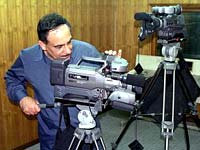
© Photo: UNESCO/ Giovanni Boccardi, Iraki TV, UNESCO provided equipment and trained staff

Sunday, January 07, 2007

Editorial: How Young Should a Young Professional Be?

The Director General of UNESCO launched its Young Professionals Program for 2006 and has continued it for 2007. This is a very good initiative, providing a way to bring new ideas and new people into the organization.

The program is limited to only about 10 or 12 new appointments per year. That number might be appropriate for a test of the concept, but seems low for a continuing program. One would expect a competitive program recruiting young professionals to be a major source for UNESCO's staff of career officers.

The program is also limited to those from unrepresented and under-represented countries. This seems at first glance to be a reasonable policy, as a multinational organization should have international civil servants from many countries on its staff. The policy now provides an advantage for applicants from the United States and bars applicants from France, which no doubt pleases the U.S. State Department. But it also keeps out well qualified candidates from other developed nations, and encourages emigration of highly qualified people from countries desperately short of educational, scientific and cultural leaders -- the poor nations that are often under or unrepresented in UNESCO. It would be better to open the program to all nations, but to use the representation of the candidates nations as a criterion for selection among equally qualified candidates.

The program is limited to those who will be under the age of 30 at the start of their employment. The World Bank Young Professionals Program accepts people 32 or younger, that is up to three years older than does UNESCO. Age 35 seems an even better standard.

Consider the ideal candidate for a career position in UNESCO's educational program. That person should probably have teaching experience, as well as experience in educational planning and administration. The person should speak several languages, and should have international experience as well as experience in his/her own country. Education to the doctoral level would seem necessary for those involved in higher education programs, and highly desirable for those in most other education programs.

If anything, the ideal candidate for UNESCO's cultural programs should have an even broader background, combining not only professional qualifications in a specific discipline, but broad understanding of culture and development, and professional abilities in the planning and administration of cultural programs.

Increasingly, UNESCO must be seen as a development organization, emphasizing services to poverty reduction and developing nations. Thus the young professionals entering the organization should be prepared as development experts as well as leaders in education or cultural programs. Thus a further training and professional background is to be desired.

Giving candidates up to 35 years to achieve all these qualifications does not appear at all unreasonable. While many administrative positions in UNESCO might be filled more than adequately with less well trained and experienced people, the core functions of the organization demand the highest levels of professionalism that are available. Those qualifications often are not achieved until people are in their mid 30's.

It seems very likely that by the time the new class of Young Professionals is ready to retire, the mandatory retirement age will be 65 or older. Thus a person entering a career in UNESCO at the age of 35 today might well expect to work for the organization for 30 years.

UNESCO needs and should demand exceptionally qualified people to lead its global efforts. Recruiting young professionals provides an opportunity for the organization to develop such leadership through its own ranks. However, the entrants to that process should be of the highest quality available. Selecting fewer than 20 candidates worldwide per year should allow the organization to set a very high standard indeed. Giving the candidates up to 35 years to qualify would allow more of the best young men and women time to meet such standards. JAD

"United It Wobbles"

Read the full review by Samantha Power, subtitled "Should we blame the U.N. for its shortcomings, or the countries that make up the world body?" in the Washington Post Book World (January 7, 2007).

This is a review of two books:
* THE BEST INTENTIONS: Kofi Annan and the UN In the Era of American World Power By James Traub, and
* COMPLICITY WITH EVIL: The United Nations in the Age Of Modern Genocide By Adam LeBor
I quote:
Since the United States helped found the United Nations in 1945, American ties with the organization have often been strained. Because the last six decades have coincided with an epoch of U.S. hegemony -- first as the stronger of two superpowers, then as the lone post-Cold War "hyperpower," now as an economic powerhouse that has been politically neutered by the catastrophic invasion of Iraq -- Americans have generally seen the United Nations as a body more likely to curb U.S. power than to enhance it.

But something appears to be changing in the United States. Poll data show that Americans are at last grasping that the major 21st-century threats -- transnational terrorism, nuclear proliferation, global warming, public health calamities, large-scale refugee flows -- cannot be met by individual nations. For all their frustrations with international organizations, Americans have also come to understand that U.S. policies with international backing are more likely to succeed than those advanced solo.

Because the United States needs help, and because the United Nations is the lone body that gathers all of the world's countries in one place, reflections on the organization -- how to live with it and how to reform it -- seem suddenly urgent.

Friday, January 05, 2007

Education and ICTs

This website is formally a proposal for an Education sub-﷓portal to be developed as part of UNESCO's Knowledge Portal -- specifically that section dealing with teacher education and information and communication technologies or ICT. However, it provides a wealth of resources for those interested in the topic.

The Right to Education

The Right to Education is a fundamental human right. It occupies a central place in Human Rights and is essential and indispensable for the exercise of all other human rights and for development. "As an empowerment right, education is the primary vehicle by which economically and socially marginalized adults and children can lift themselves out of poverty, and obtain the means to participate fully in their communities." None of the civil, political, economic and social rights can be exercised by individuals unless they have received a certain minimum education.

Go to the UNESCO website on the right to education for more information on UNESCO's programs to insure this right for all people, the legal basis for this right, and other resources.

Check out the Salamanca Statement and Framework for Action on Special Needs Education, adopted by the World Conference on Special Needs Education : Access and quality, (Salamanca, Spain, 10 June 1994)

Thursday, January 04, 2007

UNESCO's International Conventions

UNESCO uses international standard setting instruments such as Conventions, and Recommendations and Declarations by the General Conference to improve education and the international flow of information. Read this description of UNESCO's 28 International Conventions produced for the Americans for UNESCO website.

Tuesday, January 02, 2007

Heritage Fellowships on Offer

Launch of New Cycle of UNESCO-VOCATIONS PATRIMOINE Co-Sponsored Fellowships for World Heritage Site Managers

World Heritage site managers and people intending to pursue a career in World Heritage site management are being invited to apply for Fellowships offered through this World Heritage Site Managers Program.

At present, the Fellowships are only offered in connection with the Master of Arts in World Heritage Studies at Brandenburg Technical University, Cottbus, Germany (http://www.tu-cottbus.de/whs), and with the Master of Science in World Heritage Management at University College Dublin, Ireland (http://www.ucd.ie/cpe). Applicants should therefore either be in receipt of an offer on or in the process of applying to one of these courses. Applicants should be under 45 years of age.

Applicants may submit their application to the official national liaison body for UNESCO (usually the National Commission - see Communities section on http://portal/unesco.org ), which will select a maximum of 2 candidates from each country to forward to UNESCO. Applications must reach UNESCO by 31 March 2007.

The UNESCO Education Portal

Two million people visited the UNESCO Education Portal in 2006. Be one of the first to visit it in 2007!

Check out these 2006 highlights on the Education Portal:
* International Years and Decades
* the Human Rights Program
* The Global EFA Monitoring Report
* three 2006 issues of Education Today
* Priority Program initiatives:
- Literacy
- Teacher training
- Responses to HIV and AIDS

Monday, January 01, 2007

Communication from Ambassador Morella

Andre Varchaver forwarded a communication from the U.S. Ambassador to the OECD, Constance A. Morella to your editor. It stated:
On the very day I received your letter and the Americans for UNESCO brochure, I had lunch with Ambassador Stapleton and Ambassador Oliver. I shared the information with them and we acknowledged our mutual support of UNESCO. You may know that the U.S. Mission to UNESCO is in the same building as the U.S. Mission to OECD. We work together whenever possible.
Ambassador Morella was my Congresswoman for many years, and earned my respect and that of my neighbors for her intelligence and devotion to her work and our nation. JAD

UNESCO and the Reduction of Terrorist Threats

Rod Beckstrom, in an interview with Elizabeth Williamson in the Washington Post, (January 1, 2007) said:
The most important thing for us to remember is that decentralized terrorist networks are driven by ideology. Ideologies are not only the glue that binds them; they coalesce a social energy. One of the most important ideology factories in the world are schools.

As a nation we have not engaged in supporting good education across the Middle East. That is probably the most important thing we can contribute to . . . increase employment, promote more critical analysis and reasoning among the population, and to teach what we might consider modern social values.

Another thing we can do is focus on a simple ideological principle called respect. Many Muslims do not feel respected by Americans or by the Western press, and they feel that their own cultures are diminished. When cultures feel insulted, people can become radicalized.
Editor's comment: UNESCO's education programs are the most powerful instrument available to the United States and its allies in improving education in the Middle East and other areas where terrorist threats loom large. UNESCO is also a powerful instrument to build the peace by building cultures of respect among different peoples, and by building a free press that reports fairly and honestly. JAD