Friday, December 31, 2010

The United Nations recognizes the role of culture for development

On 20 December 2010, the United Nations General Assembly adopted a resolution on culture and development, which emphasizes the important contribution of culture for sustainable development and for the achievement of national and international development objectives, including the Millennium Development Goals (MDGs).


For more information:

Thursday, December 16, 2010

Quotation

The House of UNESCO is a place. But it is also an idea that lies at the heart of our quest for a better world. 
UN Secretary-General Ban Ki-moon
On the sixty-fifth anniversary of the United Nations Educational, Scientific and Cultural Organization (UNESCO), in Paris, 14 December 2010

Wednesday, December 15, 2010

Introduction to the Economic Crisis and Education website


Introduction of the Economic Crisis and Education website by Mr Qian Tang, UNESCO Assistant Director-General for Education. Click here to go to the website.

UNESCO's Priorities for the XXI Century

The Government wants comments on future U.S. World Heritage Nominations

The National Park Service is seeking public comment on possible future U.S. nominations to the UNESCO World Heritage List, as well as on potential additions to the U.S. World Heritage Tentative List (the official list of potential nominations to the World Heritage List). 

Jefferson's Poplar Forest
on the U.S. Tentative List

The Federal Register Notice seeking public comment is available on-line here:


Comments are due by January 12, 2011.

This past July, the World Heritage Committee inscribed the first new U.S. site to the World Heritage List in 15 years - the Papahanaumokuakea Marine National Monument in Hawaii."

For more information on World Heritage in the United States, see:


Undersea life at Papahanaumokuakea MNM

Tuesday, December 14, 2010

Nazareth to be proposed as World Heritage Site


Omar Massalah, Muslim secretary of the Mediterranean Peace Forum and author of the proposal that UNESCO declare Nazareth patrimony of humanity, explained that this “would be the best way to protect the city, to avoid transformation and modernization putting an end to Nazareth’s soul.”

Massalah said, “The preparation of the dossier for UNESCO of Nazareth’s candidature is a technical aspect being carried out in collaboration with the municipality of the city and the national Israeli commission concerned.”

He expressed his intention to speak with the Arab countries “to support the petition, as it is not an initiative with a political connotation, but a cultural issue.”…Read more....

Friday, December 10, 2010

Promoting Mother Tongue-based Multilingual Education


This video is a part of the UNESCO Bangkok Advocacy Kit for Promoting Multilingual Education: Including the Excluded.

Borobudur Temple Compounds: A UNESCO World Heritage Site

Asma Jahangir, 2010 UNESCO/Bilbao Laureate

December 10 = Human Rights Day

The theme for Human Rights Day 2010 – 10 December – is "Human Rights' Defenders who act to end Discrimination". Human rights' defenders acting against discrimination, often at great personal risk to both themselves and their families, are being recognized and acclaimed. At this occasion, the UNESCO/Bilbao Prize for the Promotion of a Culture of Human Rights will be awarded to Asma Jahangir (Pakistan) in recognition of her exceptional and courageous contribution to building a universal culture of human rights. The Award Ceremony will take place in Bilbao (Spain). More on the UNESCO celebration.......

When Eleanor Roosevelt presented the Universal Declaration of Human Rights to the UN General Assembly, she proclaimed: "We stand today at the threshold of a great event, both in the life of the United Nations and in the life of mankind." On December 10, 1948, the world moved to recognize and protect the equal and inalienable rights of all people, inspiring individuals around the globe to claim the rights that are our common heritage.
Hillary Rodham Clinton

Saturday, December 04, 2010

American Candidates for the UNESCO Intangible Heritage List

Nicholas DeRenzo, noting that no aspects of American cultural heritage have yet been added to the UNESCO list of Representative Intangible Cultural Heritage elements, suggests the following candidates:

  • Baseball
  • Pacific Northwest totem poles
  • The Halloween tradition—trick-or-treating and pumpkin carving
  • Jazz and/or blues music
  • The Thanksgiving feast—turkey and all the fixings
  • Break dancing
  • Amish barn raising
  • Outlandish Christmas light displays
  • Cowboy poetry
  • Cajun cuisine
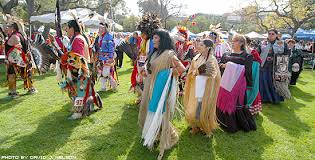
Comment: In the area of sport, Baseball does seem the obvious candidate. In music and dance there would seem to be many alternatives in addition to those Mr. DiRenzo has put forward, such as Dixieland, the American popular song, Rock and Roll, and Hip-Hop. So too there are numerous Native American traditions that could be proposed such as the Pow Wow or Navajo weaving. There are other cuisines that might be considered such as Tex-Mex, or specific dishes (Maryland crab cakes, New England clam chowder, Buffalo wings) not to mention the fast-food franchise hamburger, fries and milk shake. The community non-profit organization or the charitable foundation also are typically American.


John Daly
The comment represents my personal opinions and not that of Americans for UNESCO.

Marine World Heritage Sites

Tuesday, November 23, 2010

Recommended: Sites of Transformation

Sites of Transformation is a blog devoted to UNESCO's World Heritage program and the sites it has chosen to honor. Herdis Hølleland, the blogger has been posting materials on the blog for a year, and plans to add additional materials for two more years.

“Sites of transformations? Glocal perspectives on UNESCO’s mixed World Heritage Sites” is her PhD project, currently undertaken at the University of Oslo. The PhD project is part of a research project entitled “Cultural Transformations in the Age of Globalization (KULTRANS). In short KULTRANS is to conduct research that is transdisciplinary, transnational and transhistorical. The blog is to function as a means to disseminate and discuss the on-going research as well as to be an online field diary. It is also to discuss heritage tourism and World Heritage more generally.

Monday, November 22, 2010

CULTURE, HERITAGE, SPORTS, AND EDUCATION


The State Department has published a brief statement titled "U.S. Multilateral Engagement: Benefits to American Citizens". I quote the section relating to UNESCO:
The UN Educational, Scientific, and Cultural Organization (UNESCO) helps to protect our cultural and natural property and landmarks, strives to keep sports doping-free, and promotes educational exchanges around the world. UNESCO’s World Heritage Convention attracts international visitors to our national parks and monuments, and helps ensure that those sites are protected for future generations. The International Convention Against Doping in Sport helps keep performance enhancing drugs out of sports, and ensure that only participants can bid to host the Olympic Games. The UNESCO Associated Schools Project Network, which includes more than 8,500 educational institutions in 180 countries, provides U.S. schools with opportunities to engage with their peers all over the world, including through programs on international understanding, intercultural dialogue, human rights education, and sustainable development.
The State Department limited its statement to four pages, and thus its discussion of UNESCO to one paragraph. Let me add a second paragraph to that statement.
UNESCO seeks to promote peace by building the defenses of peace in the minds of men and thus protects American security, it does this through its worldwide education programs and by its support for a culture of peace. It plays a key role in improving education worldwide, providing American firms with educated foreign consumers and all our citizens with educated foreign partners in solving a host of global problems. UNESCO helps Americans to express their generosity helping the poorest people and the poorest nations in the world.  It helps Americans promote democracy abroad by standing as a firm defender of freedom of the press. Not only does UNESCO help "to protect our cultural and natural property and landmarks," it helps to assure that those things are protected everywhere so that we Americans can see them when we travel and so that we can rest assured that those foreign sites will be there for our children and their children to know and enjoy. UNESCO has certified  a global system of university chairs and networks which helps to enrich higher education worldwide, linking American universities with those in other continents. UNESCO helps American scientists to network with their colleagues worldwide, providing benefits from better prediction of tsunamis and earthquakes that might endanger our citizens, to developing a global network of bioreserves to help understand how to protect against environmental threats.

Saturday, November 20, 2010

The U.S. Delegation Brings World Heritage Photo Exhibit to UNESCO

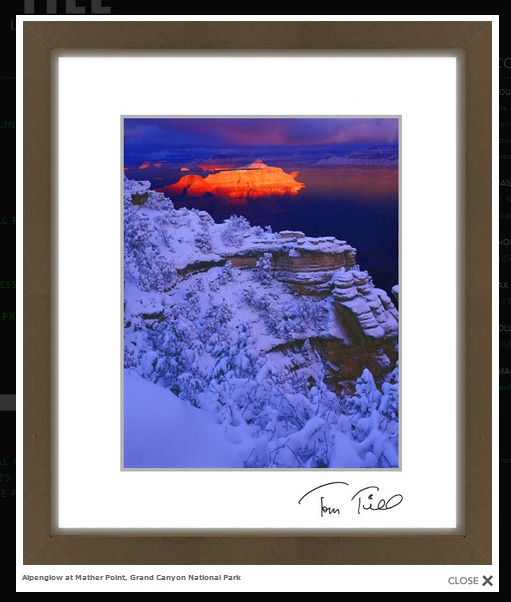
“World Heritage Sites around the World,” is a U.S. sponsored photographic exhibition by award-winning U.S. photographer Tom Till that was recently installed at UNESCO. The exhibit included breathtaking photographs of 32 World Heritage sites taken in 23 different countries, reflecting both the natural and manmade beauty and grandeur found in countries around the world and highlighted by the World Heritage program.

Among the photos were six American sites – including the Grand Canyon and five of the other most visited landmarks and natural wonders found in the U.S. Also on display during the exhibition was a short video about the United States’ most recent addition to the World Heritage list, Papahanaumokuakea Marine National Monument, inscribed at the World Heritage Committee meeting in Brasilia, in July 2010. Read more....

You can purchase original prints of Mr. Till's photos online from his website.

Tom Till photograph
Alpenglow at Mather Point, 
Grand Canyon National Park