Saturday, February 09, 2008

UNESCO and Knowledge Sharing

Four new publications from UNESCO:

* UNESCO and knowledge sharing
Publ: 2008; 2 p., illus.; BPI/EPP/2008/PI/60M/03.
For over 60 years, UNESCO has had a mandate to “maintain, increase and diffuse knowledge” (Constitution, Art 1. 2 (c)). In response to the challenges of globalisation and the Information Society, it advocates a vision of “Knowledge Societies”. But what do we mean by “knowledge” at UNESCO and what links are there between the Organization’s knowledge sharing programmes and its knowledge management (KM)?
* UNESCO and knowledge sharing (2): the capacity-building function
Publ: 2008; 2 p.; BPI/EPP/2008/PI/60M/04.
The first of this four-part series of meetings examines two case studies, from ED and CI Sectors, to explore key concepts and issues connected with capacity-building.
* UNESCO and knowledge sharing (3): the clearing house function
Publ: 2008; 2 p.; BPI/EPP/2008/PI/60M/05.
The second in this four-part series examines two case studies – one of the longest-standing and one of the newest knowledge sharing initiatives of the Organization – to explore key concepts and issues connected with UNESCO’s role as a clearing house
* ICT-Enabled Knowledge Acquisition
Publ: 2008; BPI/EPP/2008/PI/60M/02.
The Communication and Information Sector's work on ICT-enhanced knowledge acquisition is anchored within the "knowledge mandate" and Constitution of UNESCO. It seeks to develop an integrated work stream, inter-relating with other emphases and competencies within UNESCO. This capacity-building work focuses on four tracks: (1) content development, (2) communication infrastructure, (3) capacity-building and (4) innovative applications.

Bush Sends UNESCO Anti-Doping Treaty to Senate

Cycling News reports:
The United States took one step closer to signing a treaty intended to help fight doping in sport when President Bush asked the Senate to ratify the International Convention Against Doping in Sport on Thursday. The World Anti-doping Agency (WADA)-backed agreement, which was drawn up under the United Nations Educational, Scientific and Cultural Organization (UNESCO), has already been ratified by more than 70 other nations.

The UNESCO treaty formalizes global anti-doping rules under the WADA code, getting around issues which prevented some governments, such as the United States, from being legally bound by documents of non-governmental organizations such as WADA.
The White House statement noted that the treaty was in agreement with existing US laws and policies, but the aim was to "solidify our Nation's place as a leader in the worldwide effort to rid athletics of cheating through chemistry."
The administration's decision to move toward ratification of the International Convention Against Doping in Sport is receiving positive press attention worldwide..

Federico Mayor on the Culture of Peace

Federico Mayor was the previous Director General of UNESCO. He is now Co-chair of the UN Alliance of Civilizations High-level Group and President of the Culture of Peace Foundation. In this short video he talks about the culture of peace.

Friday, February 08, 2008

From Friends of World Heritage

Grand Canyon : dawn panorama from Desert View
Photograph by Ian Parker

Places like Grand Canyon National Park and the Statue of Liberty in New York symbolize the best of U.S. natural beauty and history. But did you know these destinations are also UNESCO World Heritage sites?

Currently the United States has 20 World Heritage sites, and that list may grow. For the first time in over 25 years, the U.S. government is reviewing American places that may merit the international recognition that comes from being identified as a UNESCO World Heritage site.

Is the next U.S. World Heritage site near you?

Last fall, the U.S. National Park Service received dozens of nominations from both publicly and privately owned sites throughout the United States that were interested in being a part of the United States’ “Tentative List” of World Heritage sites. Of these nominations, 14 have been selected by the Secretary of Interior as potential candidates for the next U.S. World Heritage site.

To learn more about these places and how the tentative list works, visit our website to view an interactive map of these sites.

Stay tuned as the United States and other countries select their potential sites, we’ll bring you more about places and peoples contending for what is sometimes considered the Nobel Prize for world’s most important natural and cultural sites.

The Friends of World Heritage Team
http://www.friendsofworldheritage.com/

The New Edition of the UNESCO Courier is Out

More than half of the 7000 languages spoken in the world are in danger of disappearing. Yet, they are an essential part of people's identity. The United Nations has proclaimed 2008 the International Year of Languages. To find out more, read the February issue of the UNESCO Courier.

This year the UNESCO Courier is celebrating its 60th anniversary. It is now interactive! Send your comments and the Courier will publish them.

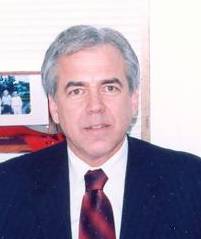
James Michael Kulikowski, Deputy Assistant Director-General for External Relations and Cooperation

Jim Kulikowski receives plaque fromMatthew Cooper
at meeting of the UK National Commission

Appointed Deputy Assistant Director General for External Relations and Cooperation in August 2005, Jim Kulikowski leads the UNESCO Division responsible for relations with Member States and for National Commissions as well.

Prior to joining UNESCO, he worked for the U.S. Government for some 21 years. Of those, the first 16 were with the Appropriations Committee in the U.S. House of Representatives, much of it dealing with the State Department and international organizations. Then, after joining the Senior Executive Service in 2000 as a senior career civil servant, he spent five years in Office of Management and Budget, again dealing with international affairs, and 6 months with the Office of Global Health Affairs in the Department of Health and Human Services.

In 2002, he was detailed to the Global Fund to Fight AIDS, Tuberculosis and Malaria in Geneva for four months during its startup phase, and then worked as part of the U.S. Delegation to the Global Fund in 2004 and 2005.

He also tried a couple of short stints as a lawyer in the private sector.

He has three degrees -- undergraduate, law and public health -- from Harvard University, and a diploma from the Phillips Exeter Academy.

Thursday, February 07, 2008

Americans for UNESCO News

1. Dr. Stephen Knapp, the new president of George Washington University has join the Americans for UNESCO Advisory Council. Also joining the Advisory Council are Dr. Martin C. Jischke, President Emeritus of Purdue University, and Dr. Sally Mason, President of the University of Iowa.
2. The U.S. National Commission for UNESCO announced that its 2008 Annual Meeting would take place on May 19-20 at Georgetown University. Andre Varchaver, the President of Americans for UNESCO is on the Planning Committee for the meeting.

Wednesday, February 06, 2008

Human Rights: comments and interpretations; a symposium edited by UNESCO

Last week this blog recognized the celebration of the 60th anniversary of the Universal Declaration of Human Rights. In the preparation for the Declaration, UNESCO conducted a worldwide study of the recognized human rights in different societies. The results of that study were published in a book, Human Rights: comments and interpretations; a symposium edited by UNESCO, with a forward by Jacques Maritain, and contributions by Mahatma Gandhi, Harold Laski, Pierre Teilhard de Chardin, Chung-Shu Lo, Aldous Huxley, Ralph Gerard and other distinguished thinkers. The book has long been out of print.


You may also be interested in

Teaching About the United Nations and

the Universal Declaration of Human Rights

This is a report from a 1951 regional meeting of National Commissions for UNESCO.

Wednesday, January 30, 2008

UNESCO marked Holocaust Remembrance Day at its Paris headqarters

The United Nations inaugurated the commemoration in 2005.

Against a backdrop of 180 yahrzeit candles. the program included speeches by UNESCO, French and philanthropic leaders. They included UNESCO's director, Gen. Koichiro Matsuura, and Simone Veil, a former French minister and Auschwitz survivor who is the honorary president of the Rothchild Foundation.

Survivors and members of the Sons and Daughters of Survivors Association headed by Serge Klarsfeld were among those who attended the ceremony, which featured the French army choir singing Jewish religious hymns. An exhibit assembled by the Yad Vashem Holocaust museum in Jerusalem was inaugurated at the UNESCO complex.


UNESCO and The Universal Declaration of Human Rights

Eleanor Roosevelt with a copy
of the Universal Declaration of
Human Rights


This year the United Nations, and indeed the whole world, are celebrating the 60th anniversary of the Universal Declaration of Human Rights.

The English Bill of Rights was passed in 1689. The French Declaration of the Rights of Man and the Citizen was adopted in 1789. The U.S. Bill of Rights was introduced as ten amendments to the Constitution in 1789 and ratified in 1791. Thus in three countries, political and civil rights were codified by the end of the 18th century. People were seen as having a right to participate in the governance of their nation, and to have natural rights that would be protected against the "divine rights" of kings and the aristocracy.

The social and economic rights of man took longer to recognize. However, with the increasing wealth of Western nations, people began to demand that all people in those nations had the rights to be free from hunger, that they shared with the rich the right to at least a basic education, and to some standard of care during their illness. In the Great Depression, the right to work, to a living wage, and to some form of social security for the young and old became evident, notably to the Government of the United States.

At the end of World War II, the United States was the world's super power militarily, economically, scientifically, culturally, and politically. The U.S. Government, serious in its concern to avoid the mistakes made after World War I, sought to establish with its allies a United Nations that would help to keep the peace. The United Nations would succeed where the League of Nations had failed. As the Bill of Rights was a needed complement to the U.S. Constitution, so the Universal Declaration of Human Rights would be a complement to the Charter of the United Nations.

The existence of the Universal Declaration is due in large part to the determination of non-governmental organizations (along with a number of smaller countries, particularly those from Latin America). A Pan-American conference held in Mexico City in February and March of 1945 consolidated Latin American determination to see human rights included in the UN Charter. Over 1,300 American non-governmental organizations joined together in placing newspaper ads calling for human rights to be an integral part of any future international organization. Individually and collectively, these advocates demanded that the United Nations Charter include a clear and substantive commitment to human rights.

Based on the recommendations of a commission chaired by Eleanor Roosevelt, the UN’s Economic and Social Council established the official UN Commission on Human Rights in June 1946. The Council selected eighteen members to sit on the Human Rights Commission. U.S. Delegate Eleanor Roosevelt was elected Chairperson. Her role was crucial. Not only was she the widow of Franklin Delano Roosevelt, credited with leading the United States out of the Depression and to victory in World War II -- with enormous prestige among the allied nations -- but she had acted often for him due to his disability and in her own right in the defense of human rights. Moreover, she was an exceptionally capable leader in bringing people with divergent views together to agree on that which they could share.

A number of organizations prepared inputs to the process of writing the Declaration. UNESCO, specifically, was asked to examine whether there were in fact universally recognized human rights. Were human rights recognized only in the traditions of Western culture, or were they also recognized in Asian, African, and Middle Eastern cultures. Indeed, there was a great divide among those who felt that there were natural rights established at the creation of man, and those who felt that rights accumulated through a historical process and that the rights of man in the late 1940's differed from those of the past, and from those that would be recognized in the future.

UNESCO created a distinguished committee in 1947 to consider the matter. They in turn invited intellectual leaders from all over the world to provide inputs describing human rights, and indicating the sources of those rights in the traditions of their own cultures. The committee sent forward a report to the United Nations setting forth the grounds for the Declaration, a report which was quite influential in the final creation of the Universal Declaration. Importantly, the committee recognized that people everywhere recognized a right to life and dignity, certain freedoms, and aspirations for rights to at least a minimum standard of life. Even when people could not agree on the philosophical basis from which those rights were derived, they agreed that those rights did exist and should be recognized by nations.

A book was published from the committee's work titled Human Rights: Comments and Interpretations: A Symposium Edited by UNESCO. The book included an introduction by Jacques Maritain, and included contributions by Mahatma Gandhi, Harold Laski, Pierre Teilhard de Chardin, Chung-Shu Lo, Aldous Huxley, and Ralph Gerard. It illustrated the power of UNESCO which could provide a forum for intellectual leaders from different continents and traditions to discuss intellectual issues of global importance, and find ways to reach agreement.

Maritain, who headed the French delegation to the Second General Conference of UNESCO, in his introduction to the book, wrote looking back at his speech to the General Conference:
"How", I asked, "can we imagine an agreement of minds between men who are gathered together precisely in order to accomplish a common intellectual task, men who come from different cultures and civilizations, but are of antagonistic spiritual associations and schools of thought...? Because, as I said at the beginning of my speech, the goal of UNESCO is a practical goal, agreement between minds can be reached spontaneously, not on the basis of common speculative ideas, but on common practical ideas, not on the affirmation of one and the same conception of the world, of man and of knowledge, but on the affirmation of a single body of beliefs for guidance in action. No doubt this is little enough but it is the last resort of intellectual agreement. It is, nevertheless, enough for a great task to be undertaken, and it would do much to crystallize this body of common practical convictions.
UNESCO continues to include human rights actions as a central part of its concerns, including through its:

Monday, January 21, 2008

UK Seminar on Scientific World Heritage Sites

A three-day international workshop, designed to develop guidelines to identify future World Heritage Sites which represent advances in science and technology of global significance, will be hosted next week by the Department for Culture, Media and Sport and the UK National Commission for UNESCO on behalf of the World Heritage Committee.

The workshop, taking place from 21-23 January, brings together experts from 15 countries, representing the physical sciences and technology as well as those with detailed knowledge of the operation of the UNESCO World Heritage Convention.

The delegates will discuss ways to create a scientific framework, to help identify and recognize sites which represent the heritage of science and technology that could potentially become World Heritage Sites. The conclusions of the expert meeting will be presented to the World Heritage Committee for consideration at their next meeting this July in Quebec, Canada.

1. The program for the workshop can be found on the UK National Commission for UNESCO website at http://www.unesco.org.uk/Science-Heritage-Meeting.htm.
2. There will be particular focus on four areas: astronomy, physical sciences, biological sciences and engineering and technology.
3. This workshop was organized at the UK's suggestion during the 31st session of the World Heritage Committee, held last July in Christchurch, New Zealand.
4. The outcome of this meeting will contribute to the development of guidelines for the identification of sites and a preliminary framework for the evaluation of properties of interest for the heritage of science and technology and their potential inscription on the World Heritage List. The recommendations of the Workshop will be submitted to the 32nd session of the World Heritage Committee. This session will be held from 2-10 July in Quebec, Canada.
5. The concept of World Heritage Sites is at the core of the World Heritage Convention, adopted by UNESCO in 1972, to which 184 nations belong. The Convention required the establishment of the World Heritage List, under the management of an inter-governmental World Heritage Committee, as a means of recognizing that some places, both natural and cultural, are of sufficient importance to be the responsibility of the international community as a whole. The UK ratified the World Heritage Convention in 1984.
Editorial Comment: Given American leadership during much of the last century in science and technology, I would think that the United States might proudly claim a number of such world heritage sites. How about Cape Canaveral, Edison's laboratory, the sites of the American System of Manufacturing, the University of Chicago site of the first nuclear reactor, a site linked to the invention of the Internet, etc. JAD

Two from Roger Coate


Roger Coate, a long time member of the Board of Directors of Americans for UNESCO has published two important articles in The Interdependent Winter 2007-2008 issue. The Interdependent is the flagship publication of the United Nations Association of the United States of America (UNA-USA).
  • Poverty Goals: The Possible, the Probable, the Unlikely
    The article points out that while the Millennium Development Goals are not likely to be met, their importance may not be so much in defining a specific development path as in creating a process by which the nations of the world focus on poverty and agree on means to combat it.

  • AID AND DEBT RELIEF: Development’s Bottom Line
    Coate shows that the donor community is lagging badly on its committments to provide financial assistance to developing nations. Moreover, that assistance is being focused on only a few countries, such as Iraq and Afghanistan. The lack of donor assistance, which is covered in MDG 8, is in part responsible for the shortfall in meeting the other Millennium Development Goals. So too is the international trade domain that does not allow developing nations equitable access to international markets. Coate notes that a bad as the failure to achieve the Millennium Development Goals might be, abandonment of the global effort to erradicate poverty would be much worse for the world.

Thursday, January 17, 2008

Culture and Human Rights

Culture and Human Rights

Created in 1945 to combat "the denial of the democratic principles of the dignity, equality and mutual respect of men", UNESCO, through its founding ideals, prefigured the Universal Declaration of Human Rights proclaimed sixty years ago. For the signatory states of the UNESCO Constitution, the “dissemination of culture” is more than a right; it is a sacred obligation.

UNESCO and partners help teachers bring technology to the classroom

UNESCO initiated, in 2006, a project aimed at providing core standards for the integration of information and communication technology (ICT) into the classroom. Competency Standards for Teachers (CST) were launched on 8 January 2008 after two years of development, at the Moving Young Minds conference, an international seminar gathering 100 education ministers from around the world to discuss the role of technology in enhancing education.

  • ICT competency standards for teachers: policy framework
  • ICT competency standards for teachers: competency standards modules
  • ICT competency standards for teachers: implementation guidelines: version 1.0
  • UNESCO takes Mini-laboratories and Microscience to the Middle East

    For a decade now, UNESCO has been introducing the methodology for microscience into the education systems of both developed and developing countries. One of UNESCO’s key partners in this endeavour is the RADMASTE Centre, Witwatersrand University, South Africa. Training workshops in microscience have been organized in some 84 countries and recently, UNESCO has turned its attention to the Middle East.

    In collaboration with the Islamic Organization for Education, Science and Culture (ISESCO), UNESCO has introduced the microscience project into Jordan, Lebanon, the Palestinian Territories and Syria. As project coordinator at UNESCO, Maria Liouliou took part in the first training workshops in Beirut and Ramallah, in November 2006 and February 2007.


    The microscience methodology gives primary and secondary school pupils and university students alike an opportunity to conduct practical scientific experiments in physics, chemistry and biology using kits that come with a textbook. These kits are veritable mini-laboratories. They are perfectly safe, insofar as pupils never need to use more than a couple of drops of chemicals for each experiment. The kits are also affordable and far cheaper than conventional laboratory material. Each kit is compact, can be reused and is unbreakable because made of plastic. In addition, the small quantities of chemicals used make it environment-friendly.


    Friday, January 11, 2008

    UNESCO and HP Sign Strategic Partnership Agreement

    UNESCO and Hewlett-Packard (HP) signed a strategic partnership agreement on 19 December to strengthen their collaboration around existing education projects.

    “UNESCO’s education priorities are very much in line with the goals of HP’s education strategy. In Europe, the Middle East and Africa, HP has supported more than 200 education projects in over 20 countries, reaching over 50,000 young people in 2007. On a worldwide level, HP contributed grants to more than 850 schools in 36 countries, worth €30 million between 2004 and 2007,” said Gabriele Zedlmayer,vice president, Global Citizenship HP Europe, Middle East and Africa (EMEA).

    Tuesday, January 08, 2008

    UNESCO photo contest on The Changing Face of the Earth


    UNESCO’s International Geoscience Program (IGCP) is running a photo contest on the theme of The Changing Face of the Earth, to raise awareness among youth of the state of the planet. There are several cameras and 40 book prizes to be won. Entries close on 30 June 2008.

    Happy One-hundred Years, Unesco!

    LIEN / LINK, the journal of the former employees of UNESCO, has just published its 100th issue. Jacques Richardson has written an interesting article for the issue titled "Happy One-hundred Yeats, UNESCO." His abstract:
    Just as the world’s educational, scientific and cultural atmosphere helped shape Unesco’s programs during the 20th century, so would certain emergent factors help lend new form and dynamism to the Unesco of the first half of the 21st century and its future.

    Here is the story of how this happened.

    UNESCO: 2008: The Year Ahead in Education

    Quality, inclusion, financing and governance in education are some of the major themes UNESCO will address in 2008.

    Among key UNESCO events to advance Education for All (EFA) are two regional literacy conferences, the International Conference on Education, the EFA Working Group and High Level Group meetings and the launch of the 2009 EFA Global Monitoring Report. More

    Sunday, January 06, 2008

    UNESCO Clubs distribute relief among cyclone victims

    The National Association of UNESCO Clubs in Bangladesh has been carrying out a relief operation in the cyclone-hit Jhalakathi district in cooperation with Korean National Federation of UNESCO Clubs and Associations recently.

    The clubs distributed food, baby food, utensils and old clothes to the affected people of Kathalia and sadar upazila of the district. Members of UNESCO Club of Bagerhat also distributed rice, water purifying tablet, oral saline, old clothes and utensils among the affected people of Morelganj upazilla.

    UNESCO has a network of thousands of clubs that spans the globe, although there are relatively few UNESCO clubs in the United States. Americans for UNESCO participates for the United States in the
    World Federation of UNESCO Clubs, Centers and Associations (WFUCA).

    What do you think about Americans for UNESCO taking a strong role in helping to create UNESCO clubs in the United States? American UNESCO clubs could take part in UNESCO's efforts, and could help their counterparts in developing nations as the Korean clubs have recently done in Bangladesh.

    Leave us a comment with your answer!

    Thursday, January 03, 2008

    MUSEUM International N°236

    Gender Perspectives on
    Cultural Heritage and Museums


    Editorial

    CHAP 1: Women’s cultural participation and rights

    CHAP 2: Women’s approaches to cultural heritage and museums

    CHAP 3: Museums for and about women

    Reinventing Higher Education

    "Reinventing Higher Education: Toward Participatory and Sustainable Development" was the theme of the 11th UNESCO-APEID International Conference held from 12 to14 December in Bangkok, Thailand

    Convened by UNESCO and the Asia-Pacific Programme of Educational Innovation for Development (APEID), the Conference explored the linkages among higher education, participatory development and sustainable development.

    Go to the Conference website.

    "Imagine a world in which all individuals are recognized as productive, educated citizens and as potential agents of change. Imagine a world in which universities embody democratic values, make strong connections between head, heart and hands, and recognize that their institutional goals go beyond the generation of wealth and the advancement of self-recognition."

    Wednesday, January 02, 2008

    UNESCO supports development and free distribution of world class educational materials

    Signing of the agreement.
    © UNESCO

    Utilizing open source technology to make learning material development a less timely and costly process is the objective of a cooperation agreement established between UNESCO and the U.S. based Global Educational Learning Community (CURRIKI).

    The MOU was signed on 8 October 2007 at UNESCO Headquarets in Paris. UNESCO and CURRIKI will cooperate in the field of ICT and education and undertake a variety of activities in support of the common objectives of the UNESCO’s Communication and Information, Education and Science sectors and CURRIKI’s education, science and community programmes. Areas covered by the cooperation include:
    • Identify and assist countries that already face limited access to textbooks and other learning materials,
    • Work in collaboration with the country’s Ministry of Education (MOE) to develop standards for open source curricula content and design,
    • Train appointed staff on the use of open source technology (including MOE representatives, NGO educators and local publishers),
    • Use open source communities and trained educators to help develop curricula and textbook design using open source technology and philosophy, and
    • Maintain an open source learning resources’ portal that will serve as a clearinghouse for open source curricula and can be shared with other school districts and countries.

    Monday, December 31, 2007

    Happy New Year

    World Conference on Education for Sustainable Development


    UNESCO’s Director-General and Assistant Director-General for Education have announced that the "World Conference on Education for Sustainable Development – Moving into the Second Half of the UN Decade” will be held in Bonn, Germany, from 31 March to 2 April 2009.

    Some 700 stakeholders from all over the world will attend the conference, which is being organized by UNESCO and the German Federal Ministry of Education and Research, in cooperation with the German Commission for UNESCO.

    Registration will begin in November 2008

    U.S. Based organization Curriki receives UNESCO’s 2007 King Hamad Bin Isa Al-Khalifa Prize

    The Global Education and Learning Community (Curriki) was one of two recipients of the the 2007 King Hamad Bin Isa Al-Khalifa Prize in a ceremony held at UNESCO Headquarters in Paris on Wednesday, 19 December 2007. Curriki Executive Director Barbara Kurshan attended the ceremony and accepted the award on behalf of Curriki. United States Deputy Permanent Delegate to UNESCO Stephen Engelken was also present at the ceremony.

    Curriki is an online environment created to support the development and free distribution of world-class educational materials to anyone who needs them. Curriki is different from other e-learning sites in that it focuses on complete curricula and not just a textbook or lesson plans, and provides easy-to-use tools for creating curriculum packets out of content available on the site. The 10,000 learning resources available on Curriki are used regularly by 35,000 people. Current offerings range from lesson plans, assessments and media clips to complete textbooks, all available at no cost.

    Thursday, December 20, 2007

    US NGO Wins UNESCO Award

    The Belgian Claroline Project (Claroline Consortium) and the US-based Global Education and Learning Community (Curriki) are the co-winners of the 2007 Unesco-King Hamad Award for best use of information and telecommunications in education.

    Bahrain Royal Equestrian and Endurance Federation president and Royal Charity Foundation board of trustees' chairman Shaikh Nasser bin Hamad Al Khalifa will today present the $50,000 (BD18,745) award on behalf of His Majesty King Hamad.

    UNESCO and HP Sign Strategic Partnership Agreement


    UNESCO and Hewlett-Packard (HP) signed a strategic partnership agreement on 19 December to strengthen their collaboration around existing education projects. The signing ceremony, held at UNESCO’s headquarters in Paris, was attended by Koïchiro Matsuura, UNESCO Director-General and Gabriele Zedlmayer, vice president, Global Citizenship HP Europe, Middle East and Africa (EMEA).

    Through the partnership, UNESCO and HP will work together on several projects in the area of education, especially to support UNESCO’s priority of “Education for All". This includes an evaluation on the extension of the existing brain drain project to additional regions in Europe, the Middle East and Africa. UNESCO and HP started to collaborate five years ago in South East Europe to help key universities connect to global research networks. In 2006 the project was extended to Africa. The project fights brain drain by providing universities with an advanced technology called grid computing, which allows top quality researchers to play a key role in international research and contribute to economic development in their home countries.

    Another project is the World Heritage Map, which enables the general public to visualize the spread of World Heritage sites around the globe, and raises the awareness of the World Heritage Convention. The map is above all an educational tool, allowing UNESCO to communicate its work in this field on a large scale.

    In addition HP has provided a financial contribution to UNESCO for the “Printing and distribution of the Man and the Biosphere Map”. The Man and the Biosphere Map will be fully prepared and edited by the Division of Ecological and Earth Sciences of UNESCO, which will provide the full lay-out to HP for printing and distribution.

    The Computer recycling training guide is also the fruit of UNESCO and HP cooperation: it aims to support local stakeholders, in developing countries in particular, to manage electronic waste. The goal is to support local actors, especially those with a background in managing used computer equipment, and to create environmentally clean and healthy business opportunities. HP is the only technology partner in the project, which also includes the French Agency for Environment and Energy Management (Agence de l'Environnement et de la Maîtrise de l'Energie - ADEME), EMMAUS, the international movement of solidarity, and TIC ETHIC, Information and Communication Technologies in the service of ethics and sustainable development.

    Monday, December 17, 2007

    Athelstan Spilhaus: First U.S. Ambassador to UNESCO

    The new highlight on the website of Americans for UNESCO begins a series on the pioneers in the creation of the organization and on the establishment of linkages between the United States and UNESCO.

    The first person to be profiled is Athelstan Spilhaus, a distinguished scientist, inventor, educator, and popularizer of science who was the first U.S. Ambassador to UNESCO and who served on its Executive Board. Late in his life, when he accurately described himself as a "retired genius", he established a world class collection of more than 3,000 mechanical toys.

    UNESCO BPI Memos

    The Bureau of Public Information of UNESCO publishes a series of memos, called Memobpi. Here are links to a few of them:

    Peacebuilding
    A commitment to peace implies a way of resolving conflicts, not according to the force of might, but by respecting internationally accepted norms, the rule of law and negotiation, with the aim of achieving a fullness of life for each and every one. By its Constitution, UNESCO is called upon to “build the defenses of peace in the minds of men.”
    Distance learning
    Open and distance learning is one of the most rapidly growing fields of education. It is fast becoming an accepted and indispensable part of the mainstream of educational systems in both developed and developing countries, with particular emphasis for the latter.
    Open content: Towards equal learning opportunities?
    The number of open collaborative technologies has exploded over the last years. What impact have they had on access to and quality of education worldwide? Can developing countries afford these expensive technologies and thus avoid remaining on the sidelines of the digital revolution? What about copyright issues? What role for UNESCO?
    UNITWIN/UNESCO Chairs programme: Towards New Strategic Orientations and New Tools.
    UNITWIN which is the abbreviation for university twinning and networking, was launched in 1991, as an international plan of action aimed at strengthening training and research through inter-university co-operation, with particular emphasis on support to higher education in developing countries, more importantly, in the least developed ones.

    Friday, December 14, 2007

    IITB designated as “Knowledge Heritage Centre”

    The Indian Institute of Technology Bombay (IITB) was designated a “Knowledge Heritage Center” by UNESCO,s New Delhi Office on the occasion of IITB’s Golden Jubilee.

    IITB was originally established with the cooperation and participation of UNESCO, and over the past 50 years it has grown to be an institution not only of national but of international importance. It is a leader in higher education, research and training in India, Asia, and indeed worldwide.

    The historical role of UNESCO in helping to create IITB is an indication of the role that it has played in the past, and that it can play in the future.


    Editorial Comment: I was very impressed by Media Lab Asia, a collaboration between MIT and IITB, and was sad when it failed to find funding to continue. I also had the opportunity to visit IITB with a team from the World Bank and the Development Gateway. IITB was a member of the Development Gateway's Research and Training network. I saw demonstrations of many fine projects that were implemented by IITB in its role as an Indian member of that network.

    Of course, many graduates of IITB are important contributors to India's software industry, and indeed many have immigrated to Silicon Valley and other U.S. centers helping to create the Information Revolution in this country. Indeed, it is suggested (only partially in jest) that the best high school graduates in India, concerned by the extraordinary competitiveness of entry into IITB, apply to MIT and Cal Tech as "back up schools".

    Perhaps the United States Permanent Delegation to UNESCO should recommend that the organization create a global network of "Knowledge Heritage Centers" in the great institutions of higher education in the world. JAD

    Wednesday, December 12, 2007

    Review of UNESCO’s Capacity-Building Function

    A review was completed last February or UNESCO’s experience in capacity building and of the international research on capacity building to answer the following questions:
    1. What have UNESCO and others learned about the most effective approaches to capacity building?
    2. What should UNESCO’s role in capacity building be (given UN reforms that emphasize country-led, comprehensive development strategies and collaboration among donor agencies)?
    3. What needs to change within UNESCO in order to do a better job of capacity building?
    The purpose of this review was to inform UNESCO's senior management about good practices in capacity-building and to enable UNESCO's Secretariat to improve their capacity-building interventions.

    A key finding of the review was:
    Most UNESCO staff members interviewed recognize that capacity building needs to get beyond conventional inputs, such as training and technical assistance, in order to bring about sustainable change within institutions. However, much of the Organization’s programming begins and ends there.

    Tuesday, December 11, 2007

    A Human Rights-Based Approach to Education for All


    A Human Rights-Based Approach to Education for All is a joint UNESCO and UNICEF publication. It provides a framework for the realization of children’s right to education and rights within education.

    The report brings together the current thinking and practice on human rights-based approach in the education sector, presenting key issues and challenges in rights-based approaches and providing a framework for policy and program development from the level of the school up to the national and international levels.

    UNESCO at GK3 in Kuala Lumpur: Towards building knowledge societies


    The Global Knowledge Partnership's GK3 is a unique gathering of 2,000 global visionaries, innovators, practitioners and policy makers, all geared to sharing knowledge and building partnerships on a platform created by and for stakeholders from every sector - private companies, governments, international institutions and civil society groups.

    UNESCO is participating
    actively in the Third Global Knowledge Conference (GK3) from 11 to 13 December 2007 and in its parallel events and exhibits. UNESCO has set up an onsite Community Multimedia Centre (CMC) and an exhibition promoting the concept of CMC in building knowledge societies at the Kuala Lumpur Conventional Center.


    Here are a couple of videos from GK3:

    Robotics program from the Omar Dengo Foundation in Costa Rica

    i4d film festival: Viirtual village

    Monday, December 10, 2007

    The Office of Director General of UNESCO

    Luther H. Evans
    The only U.S. citizen to be
    elected Director General

    The Director General is the chief executive officer of UNESCO. The DG's term of office is four years (previously six years), and the Director General is elected by the General Conference. The current Director General, Koïchiro Matsuura, has been in office since 1999. He was reelected to that post by the 33rd General Conference of UNESCO in 2005. Thus there is some speculation as the election of his successor in 2009.

    There have been nine Directors General since UNESCO was founded in 1946:
    • Koïchiro Matsuura from Asia
    • Four from Europe: Federico Mayor (1987 - 1999), René Maheu (1962 - 1974; acting 1959, 1961-1962), Vittorino Veronese (1958 - 1961), and Julian Huxley (1946 - 1948)
    • Amadou-Mahtar M'Bow from Africa
    • Three from North America: Luther Evans (1953 - 1958). John W. Taylor (Acting DG 1952 - 1953), and Jaime Torres Bodet (1948 - 1952)
    The position of Director General of UNESCO is an important one within the system of intergovernmental organizations. Therefore the election of a new Director General is the subject not only of electioneering by individual candidates, but also diplomatic negotiations among member nations.

    There is an informal understanding that the post should rotate among the (193) member nations of UNESCO, and indeed among continents and groups of nations. Moreover, there are informal understandings about the need to distribute leadership of UN family organizations among nations. (The situation is somewhat different in international financial institutions, programs of the United Nations such as the UNDP, UNICEF and UNFPA, and organizations with their own general assemblies such as UNESCO, WHO, and FAO.)

    The Islamic nations, which form a large cultural block with significant voting power in United Nations bodies, may see their opportunity in the next General Conference to elect one of their citizens to the post of Director General. You can be sure that State Department diplomats are already debating possible candidates and consulting with their counterparts in other delegations to UNESCO.

    Sunday, December 09, 2007

    Two Foreign Policy Experts Recommend Smart Power

    Reference: "Stop Getting Mad, America. Get Smart." By Richard L. Armitage and Joseph S. Nye Jr., The Washington Post Sunday Outlook, December 9, 2007.

    Richard L. Armitage was deputy secretary of state from 2001 to 2005. Joseph S. Nye Jr., a former assistant secretary of defense, teaches political science at Harvard. They co-chaired the Center for Strategic and International Studies' Commission on Smart Power.

    They write:
    The world is dissatisfied with American leadership. Shocked and frightened after 9/11, we put forward an angry face to the globe, not one that reflected the more traditional American values of hope and optimism, tolerance and opportunity. This fearful approach has hurt the United States' ability to bring allies to its cause, but it is not too late to change. The nation should embrace a smarter strategy that blends our "hard" and "soft" power -- our ability to attract and persuade, as well as our ability to use economic and military might......the United States needs a broader, more balanced approach (than it has been employing).....

    when our words do not match our actions, we demean our character and moral standing. We cannot lecture others about democracy while we back dictators. We cannot denounce torture and waterboarding in other countries and condone it at home. We cannot allow Cuba's Guantanamo Bay or Iraq's Abu Ghraib to become the symbols of American power.......

    In a changing world, the United States should become a smarter power by once again investing in the global good -- by providing things that people and governments want but cannot attain without U.S. leadership. By complementing U.S. military and economic strength with greater investments in soft power, Washington can build the framework to tackle tough global challenges. We call this smart power.

    Smart power is not about getting the world to like us. It is about developing a strategy that balances our hard (coercive) power with our soft (attractive) power. During the Cold War, the United States deterred Soviet aggression through investments in hard power. But as Gates noted late last month, U.S. leaders also realized that "the nature of the conflict required us to develop key capabilities and institutions -- many of them non-military." So the United States used its soft power to rebuild Europe and Japan and to establish the norms and institutions that became the core of the international order for the past half-century. The Cold War ended under a barrage of hammers on the Berlin Wall rather than a barrage of artillery across the Fulda Gap precisely because of this integrated approach.

    Specifically, the United States should renew its focus on five critical areas:
    • We should reinvigorate the alliances, partnerships and institutions that allow us to address numerous hazards at once without having to build a consensus from scratch to respond to every new challenge.
    • We should create a Cabinet-level voice for global development to help Washington develop a more unified and integrated aid program that aligns U.S. interests with the aspirations of people worldwide, starting with global health.
    • We should reinvest in public diplomacy within the government and establish a nonprofit institution outside of it to build people-to-people ties, including doubling the annual appropriation to the Fulbright program.
    • We should sustain our engagement with the global economy by negotiating a "free trade core" of countries in the World Trade Organization willing to move directly to free trade on a global basis, and expand the benefits of free trade to include those left behind at home and abroad.
    • We should take the lead in addressing climate change and energy insecurity by investing more in technology and innovation.
    Editorial Comment. This is a very important recommendation. If the next administration decides to adopt a "smart power" policy, UNESCO should be a key instrument of that policy. No organization is better placed on which to build a consortium of like minded nations, and to practice public diplomacy that listens as well as lectures! JAD

    Education Report -- Progress has been made, but much more needs to be done!

    The Education for All Global Monitoring Report for 2008 has just been released by UNESCO. Progress in this decade has been better than in the last, but many countries are still lagging in achieving the EFA goals; more needs to be done.

    The number of children starting primary school has increased sharply since 2000, there are more girls in school than ever before and spending on education and aid has risen. That’s the good news. But on the down side, poor quality, the high cost of schooling and persisting high levels of adult illiteracy are undermining the chances of achieving education for all* by 2015.

    Especially hopeful are the findings that primary school enrollment increased by 36% in sub-Saharan Africa and 22% in South and West Asia between 1999 and 2005. Governments in 14 countries abolished primary school tuition fees, a measure that has favoured access for the most disadvantaged. Worldwide, the number of out-of-school children dropped sharply from 96 million in 1999 to 72 million in 2005.

    High Level Meeting on Education for All


    Seventh Meeting of the High-Level Group on Education for All
    Dakar, Senegal
    11-13 December 2007


    In the year 2000, the International Community gave itself 15 years to achieve the EFA and UN development goals. This year, the High-Level Group on EFA (HLG) will meet at the midpoint along that time-line.

    Three Heads of State, Ministers of Education from 15 countries, representatives of the main donor countries, multilateral organizations, representatives of civil society and the private sector are to meet from 11 to 13 December in Dakar (Senegal) to examine the different means of accelerating progress towards the Education for All (EFA) goals, which were set by 164 countries in Dakar in 2000.

    The opening ceremony will be chaired by the Senegalese head of state Abdoulaye Wade, and Mali’s President Amadou Toumani Touré will address the conference at the opening.

    The HLG is to place special focus on three areas – equity, quality and financing of education – as top policy priorities for the coming year. In addition, it will address the special concerns of countries facing conditions of fragility as well as relatively neglected EFA goals with a view to ensuring a holistic and balanced approach to the full EFA agenda.

    Saturday, December 08, 2007

    UNESCO's Internal Oversight Service


    UNESCO's Internal Oversight Service (IOS), established in 2001, provides consolidated oversight covering internal audit, evaluation, investigation and other management support to strengthen the functioning of the Organization. The IOS website provides links to recent evaluations, as well as guidance for evaluations, and links to evaluation resources.

    Some examples are:

    UNESCO's 21st Century Talks


    The 21st-Century Talks are forums for prospective reflection and future oriented debate that gather together leading figures from different regions of the world. Together with the UNESCO's World Reports they form UNESCO’s Foresight and Anticipation Program.

    The Talks are used as the basis for books, articles in leading newspapers and academic journals of different regions of the world, and production of radio and television programs.

    Over the period 1999-2005, 27 “21st Century Talks and Dialogs” were organised. There were 118 speeches by 95 different speakers in the series. The three “Dialogues” gathered more speakers (particularly in Seoul with 23 speakers) than the “Talks” with only three or four. “Talks” were organised at UNESCO Headquarters in Paris, Barcelona, Durban and Seoul.

    As a result of the program, three books – and a total of 21 translated versions - were published.
    There is specific information on many of the talks available from the UNESCO website.

    An evaluation of UNESCO's Foresight program was published in 2006.
    The evaluation report notes:
    The activities of the Foresight and Anticipation Program had major support from UNESCO Member States. The “21st Century Talks and Dialogs” are viewed as having dealt with crucial issues for the future which were debated by a highly competent and diverse set of specialists who contributed highly relevant analyses. Member State representatives appreciated the foresight effort made by UNESCO. There is general agreement that Foresight and Anticipation are major missions of UNESCO.

    "Midway to the 2015 target date: meeting of the High Level Group on Education for All in Dakar"

    Read the full article on the African Press Organization website.

    'Three Heads of State, Ministers of Education from 15 countries, representatives of the main donor countries, multilateral organizations, representatives of civil society and the private sector will meet from 11 to 13 December in Dakar (Senegal) to examine the different means of accelerating progress towards the six goals of Education for All (EFA) set by 164 countries in Dakar in 2000.

    "The president of Senegal, Abdoulaye Wade, and the Director-General of UNESCO, Koïchiro Matsuura, will open the meeting chaired by Senegal’s Minister of Education, Moustafa Sourang. During the opening ceremony, the president of Mali, Amadou Toumani Touré, will also give a keynote speech.

    "The seventh annual meeting of the High Level Group on Education for All is taking place at the halfway point to 2015, which is the target date 164 countries have set to achieve the six EFA goals. According to the 2008 edition of the Global Monitoring Report on Education for All, which has just been released, the number of children, especially girls, starting primary school has increased sharply, but the poor quality of education, the high cost of schooling and the high level of adult illiteracy are
    undermining chances of achieving education for all by 2015."

    Thursday, December 06, 2007

    Eleanor Roosevelt on UNESCO


    In 1961, in her newspaper column "My Day" wrote:

    We should work very closely with the United Nations body called UNESCO in our efforts to gain not only the maximum understanding of our own educational needs but also the understanding of what the world needs. UNESCO has the duty to promote education about the U.N. and a mutual international understanding between peoples. Our own educational objectives must be formed with the idea of making us better able to understand other areas of the world and more able to help in their struggles for development.

    For 10 years now UNESCO has published a magazine called "The UNESCO Courier." This magazine is devoted entirely to portraying the customs, the arts, the cultures and the peoples of the earth. It has some 300,000 subscribers throughout the world, but in the U.S. the magazine is hardly known. Circulation here is only 10,000, whereas even in Russia it has 25,000 subscribers.

    No college or school in their country can really afford to be without "The UNESCO Courier," and I feel sure that once we have succeeded in having it in our libraries, schools and colleges that families all over the nation will feel the need to have it in their homes.
    Comment: Today, through technological advances, you can read The UNESCO Courier online or subscribe via email for free. JAD


    Wednesday, December 05, 2007

    UNESCO Policy Brief on Early Childhood

    The results from the OECD Thematic Review of Early Childhood Education and Care Policy from 1998 to 2006 can be consulted in Issue No. 41 of the UNESCO Policy Brief on Early Childhood series.


    Other recent publications on Early Childhood Care and Education include the Policy Review Report: Early Childhood Care and Education in Brazil” (2007) and the Summary Report of the UNESCO/OECD Early Childhood Policy Review Project for Brazil, Indonesia, Kazakhstan and Kenya (2007).

    Related links

    60th anniversary of the Universal Declaration of Human Rights

    © UNESCO/Ivaldo Alves
    Brasilia


    Celebrations for the 60th anniversary of the Universal Declaration of Human Rights will be launched at UNESCO on 10 December, Human Rights Day. Events commemorating the anniversary will take place over the next year, until 10 December 2008.

    The 60th anniversary provides an opportunity to mobilize the whole of the United Nations and to evaluate progress in respecting and promoting human rights. UNESCO will take this opportunity to assess the situation of rights in its fields of competence. UNESCO is planning two international conferences on the subject in 2008: one on human rights education, the other on human rights in the Organization’s other fields of competence. In addition, the 61st International Conference of non-governmental organizations (NGOs) which will be organized at UNESCO in September 2008, in partnership with the United Nations Department of Public Information, will focus on the celebration of the Universal Declaration’s 60th anniversary.

    The Magic Planet

    As a reminder of the importance of outreach and education in enhancing S&T goals, Ambassador Oliver invited the developers of the Magic Planet digital video globe - Global Imagination - to display a portable version of the globe and associated control panel at a reception held by the Permanent Delegation of the United States to UNESCO. The reception was held in conjunction with the General Conference. A larger version of the Magic Planet was used by NOAA and NASA presenters during the Planet Earth: Space to Place exhibit at UNESCO during the Conference. In a hands-on mode, many of the reception’s guests were able change display global datasets ranging from water temperature to population shifts. In an example of public-private-partnership, the U.S. National Commission for UNESCO worked closely with Global Imagination on the presentation.

    Here is a short video of Magic Planet.

    First Lady Further Supports UNESCO's Literacy Drive

    First Lady Laura Bush Addressed the UNESCO Literacy Conference in New Delhi, India

    A delegation of representatives from the U.S. Department of State, USAID, and the U.S. Department of Education traveled to New Delhi, India for the UNESCO Regional Literacy Conference held from November 29 to 30, 2007. The delegation joined representatives from throughout the Indian Sub Continent, South and South West Asia as well as senior representatives of UNESCO and other international and regional organizations at the conference, entitled "Addressing Literacy Challenges in South, South-West and Central Asia: Building Partnerships and Promoting Innovative Approaches". The conference was hosted by the Government of India in conjunction with UNESCO and opened by Congress Party President Sonia Gandhi.

    10 December 2005 - Human Rights Day


    Human Rights Day is observed every year on 10 December to mark the anniversary of the adoption by the United Nations General Assembly of the Universal Declaration of Human Rights in 1948.

    Also in celebration of Human Rights Day:

    International Human Rights Day

    Symposium and Working Meeting

    Rights and Responsibilities: Scientific Associations and International Human Rights Norms

    Hosted by

    AAAS Science and Human Rights Program

    Monday, 10 December 2007
    2:00 pm - 5:15 pm
    AAAS Headquarters,
    1200 New York Avenue, NW, Washington, DC

    "U.S. Teens Trail Peers Around World on Math-Science Test"

    Read the article by Maria Glod in The Washington Post, December 5, 2007.

    Glod writes:
    The disappointing performance of U.S. teenagers in math and science on an international exam, in scores released yesterday, has sparked calls for improvement in public schools to help the country keep pace in the global economy.

    The scores from the 2006 Program for International Student Assessment showed that U.S. 15-year-olds trailed their peers from many industrialized countries. The average science score of U.S. students lagged behind those in 16 of 30 countries in the Organization for Economic Cooperation and Development, a Paris-based group that represents the world's richest countries. The U.S. students were further behind in math, trailing counterparts in 23 countries.

    Design of an Emblem for Intangible Cultural Heritage Convention


    Design of an Emblem for Intangible Cultural Heritage Convention

    UNESCO is now announcing a competition for the design of an emblem that best reflects the purposes and spirit of the Convention to give greater visibility to intangible heritage and its safeguarding.

    UNESCO invites entries from professional and amateur graphic designers, artists, and practitioners of intangible cultural heritage from all its Member States. Each participant may submit a single design, including a black and white and a colour version.

    The deadline for submissions to reach UNESCO is 15 February 2008.