Showing posts with label Memory of the World. Show all posts

Monday, April 30, 2012

How might the United States Better Participate in the Memory of the World Program

Signing of the Constitution
UNESCO established the Memory of the World Program in 1992. Impetus came originally from a growing awareness of the parlous state of preservation of, and access to, documentary heritage in various parts of the world.War and social upheaval, as well as severe lack of resources, have worsened problems which have existed for centuries.

In September, celebrating the 20th anniversary of the progam, there will be an international conference sponsored by UNESCO, titled The Memory of the World in the Digital age: Digitization and Preservation.

Many countries have established national Memory of the World Committees. It might be a good time for the United States to do so. Such a committee could share U.S. experience with the preservation of documentary heritage, helping other nations to preserve materials that they hold of global importance.

The U.S. National Archives has just put on display one of four copies in the world of the Magna Carta. Signed in 1297, this great charter established limitation of the king's power in British law. It remains as the basis of British democracy.
We hold these truths to be self-evident, that all men are created equal, that they are endowed by their Creator with certain unalienable Rights, that among these are Life, Liberty and the pursuit of Happiness.
Opening sentence of the Declaration of Independence
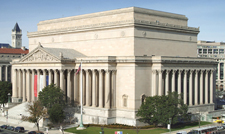
The actual document of the Magna Carta joins the U.S. Declaration of Independence and the U.S. Constitution on public display in the National Archives. The Declaration of Independence is generally considered the most influential document in United States history. Its opening sentence has been claimed to be one of the best known in the English language. The United States Constitution is the oldest written constitution still in use, and has been used as a model by many other nations.

I would suggest that these three documents be nominated by the United States for the Memory of the World Register as part of the U.S. participation in the 20th anniversary of the program.


Tuesday, February 09, 2010

Int'l Symposium on Heritage Recording & Information Management in the Digital Age (SMARTDoc Heritage)


The Graduate Program in Historic Preservation/School of Design at the University of Pennsylvania in collaboration with the R. Lemaire International Centre for Conservation (University of Leuven) are organizing an International Symposium on Heritage Recording and Information Management in the Digital Age (SMARTDoc Heritage), March 26-27, 2010 in Philadelphia, USA.

Beginning in 2006 Robin Letelier brought his vision of an integrated graduate level course in heritage recording, documentation and information management to the Program in Historic Preservation at the University of Pennsylvania. Today that course curriculum, now under the direction of Mario Santana, represents the synthesis of principles and practices considered fundamental knowledge for all heritage professionals. This symposium, initially planned by Robin at UPenn, is dedicated to that vision and his tireless effort to promote heritag e conservation through research, teaching, and public service.


More information about the symposium: http://www.smartdocheritage.org

Wednesday, February 18, 2009

Memory of the World Program Survey


UNESCO's Memory of the World Program was created to encourage the preservation of the valuable archival holdings and library collections all over the world and to help ensure wide access to their contents. These U.S. contributions have been registered:
The program is currently conducting a survey and is seeking information from library, archives and museum specialists on awareness of the program and how that awareness could be increased.

Sunday, February 15, 2009

Memory of the World logo competition

Image source: UNESCO

UNESCO has decided to launch an international competition for a new the logo for the Memory of the World Program. The logo should reflect the mandate of the Program which is "to promote, protect and preserve the world’s documentary heritage".

Since the logo will often be shown alongside of the UNESCO logo, the new logo should not repeat elements of the UNESCO logo. The two logos should look good side by side.

Proposals should be sent by 31 May 2009. The winner of the contest will be announced by July 2009 and will receive a monetary award of US $2,000. He/she will also be featured in a special news item on the Memory of the World website.

All rights for the selected logo will be held exclusively by UNESCO.

Friday, October 03, 2008

Add the Eleanor Roosevelt Papers Project to the Memory of the World

Eleanor Roosevelt and United Nations 'Universal Declaration of Human Rights'

Eleanor Roosevelt was a great American in her own right as well as in the role of spokesperson for her husband. Among her greatest accomplishment was the Universal Declaration of Human Rights. She chaired the United Nations Committee that drafted the Declaration. Her enormous prestige, in my opinion, made the Declaration possible. Her skill in the chair brought people together who were otherwise seldom able to negotiate successfully. It was her recognition that, while cultures differ as to why people have these rights, they can agree on a fundamental set of rights which must be regarded as universal.
"Once more we are in a period of uncertainty, of danger, in which not only our own safety but that of all mankind is threatened. Once more we need the qualities that inspired the development of the democratic way of life. We need imagination and integrity, courage and a high heart."
Eleanor Roosevelt
Eleanor Roosevelt was a lifelong supporter of the United Nations and of UNESCO. Not only did she chair the U.N. Human Rights Committee from 1946 to 1952, but she wrote a book to encourage people to support the United Nations, and contributed to the UNESCO Courier. (see "The Children Fight for Life" and "Partners: The United Nations and Youth")

UNESCO's Memory of the World Program seeks to guard against collective amnesia, calling upon the preservation of the valuable archive holdings and library collections all over the world ensuring their wide dissemination. The Memory of the World Register lists documentary heritage which has been recommended by the International Advisory Committee, and endorsed by the Director-General of UNESCO, as of world significance and outstanding universal value. Currently, the only U.S. contribution included in the Register is The Wizard of Oz.

The Eleanor Roosevelt Papers
is a project, hosted at George Washington University, dedicated to bringing Eleanor Roosevelt's writings (and radio and television appearances) on democracy and human rights before an audience as diverse as the ones she addressed. Thus there is not only an organization responsible for maintaining the documentary legacy of this great woman, but one that is actively promoting the dissemination of her works and their use in education.

I can think of no more appropriate collection for the United States to nominate for inclusion in UNESCO Memory of the World Register. Not only do they qualify as of outstanding universal value, there is no better collection that would symbolize the U.S. efforts to create UNESCO as a means for international cooperation to advance peace and human rights.

If you agree, contact the U.S. National Commission for UNESCO and second this suggestion.

John Daly
(This is my opinion, and does not necessarily represent that of Americans for UNESCO.)
Eleanor Roosevelt hosting UNESCO visit to Val-Kill in Hyde Park, NY, 1948

Thursday, August 02, 2007

A tribute to Ingmar Bergman

UNESCO paid a tribute to Swedish movie director Ingmar Bergman this year by including the Ingmar Bergman Archives in its Memory of the World Register.

The Ingmar Bergman Archives originate from the donation to the Swedish Film Institute in 2002 by the director of his entire personal collection which covers some 65 years of activity.
The holdings reflect his entire career.

Ingmar Bergman directed and produced close to 60 movies including "The Seventh Seal" (1957), "Wild Strawberries" (1957), "Persona" (1966) and “Cries and Whispers” (1973). He was nominated for nine Oscars and three of his productions -"The Virgin Spring" (1960), "Through a Glass Darkly" (1961), and, "Fanny and Alexander" (1982), - won Oscars for best foreign film. He was awarded the “Palm of Palms” at the Cannes Film Festival in 1997.

Bergman died on 30 July 2007, at the age of 89, in his home on Faro Island, Sweden.

Thursday, July 05, 2007

New inscriptions for Memory of the World Register

Thirty-eight items of documentary heritage of exceptional value have just been added to UNESCO’s Memory of the World Register, bringing the total number of inscriptions since 1997 to 158.

From the United States of America - The Wizard of Oz (Victor Fleming 1939), produced by Metro-Goldwyn-Mayer: a film celebrating kindness, charity, friendship, courage, fortitude, love and generosity, released in 1939, as the Second World War was spreading across the world. It remains one of the most popular and memorable films in the history of cinema.

UNESCO launched the Memory of the World Program some years ago to encourage the preservation of the valuable archive holdings and library collections all over the world ensuring their wide dissemination.

Editorial Comment: This is an indication of how poorly the U.S. National Commission for UNESCO is doing its job. The Wizard of Oz is a nice picture, but it is far from the best the United States has to offer. The American Film Institute recently listed its considered list of the ten best American films of all time, which are:
1 CITIZEN KANE
2 THE GODFATHER
3 CASABLANCA
4 RAGING BULL
5 SINGIN' IN THE RAIN
6 GONE WITH THE WIND
7 LAWRENCE OF ARABIA
8 SCHINDLER'S LIST
9 VERTIGO
10 THE WIZARD OF OZ
Citizen Kane has consistently ranked as the best American film for many years. The Godfather
also is widely considered a much better and more important film than The Wizard of Oz.

The United States should put its best foot forward when UNESCO is identifying the most important elements of world heritage. The National Commission for UNESCO should be sure that we do so. It failed on this occassion. John Daly

Sunday, June 17, 2007

International Memory of the World Conference

Mabo case manuscripts
© National Library of Australia

"Communities and memories: a global perspective" is the theme of the Conference to take place in Australia next year.

In association with the Australian Memory of the World Committee and under the auspices of the Australian National Commission for UNESCO, the National Library of Australia will organize the Third International Memory of the World Conference from 19 to 22 February 2008 in Canberra, Australia.

Saturday, June 16, 2007

Call for Moderators

UNESCO is the lead agency in the United Nations system for a number of aspects of the follow-up of the World Conference on the Information Society. A multi-stakeholders meeting on the follow-up efforts was held on 24 May 2007 in Geneva at the ITU Headquarters.


As Action Line C8 facilitator (
Cultural diversity and identity, linguistic diversity and local content), UNESCO is looking for Moderators for the following C8 sub-themes:
  • Memory and heritage
  • Local content and contemporary cultural expressions
  • Linguistic diversity
  • Traditional knowledge
  • Indigenous peoples
  • Gender
  • Disabled persons
If interested, contact:
m.rosi@unesco.org

U.S. citizens interested in serving as a moderator should also contact the U.S. National Commission for UNESCO or the U.S. Permanent Delegation to UNESCO.

Friday, June 15, 2007

Memory of the World

The vision of the Memory of the World Programme is that the world's documentary heritage belongs to all, should be fully preserved and protected for all and, with due recognition of cultural mores and practicalities, should be permanently accessible to all without hindrance.

The 8th Meeting of the Memory of the World International Advisory Committee (IAC) has been held in Pretoria, South Africa from 11-15 June 2007. It has been reviewing review 50 new requests for inclusion in the Memory of the World Register, submitted by 38 countries.

The United States has only one entry in the register now:

Universalis cosmographia secundum Ptholomaei traditionem et Americi Vespucii aliorumque Lustrationes (2005)* (The 1507 printed world map, prepared by the Gymnasium Vosagense, St. Dié, France under the direction of Martin Waldseemüller, is the first map on which the name America appears. The Library of Congress possesses the only known surviving copy of this map.)

The last date for submission of new nomination proposals for inscription on the Memory of the World Register will be March 31, 2007. New proposals submitted by that date will be examined during the 2008/2009 session. Click here for more information on nominations.

Editorial Comment: I believe that the United States should pledge to the world to keep safe those documents created here that are part of the world heritage. I think some suitable candidates might be:

Political documents:
  • The Declaration of Independence, which has served as a model for so many other nations since it was signed.
  • The U.S. Constitution, which is the oldest written national constitution of a major nation (only San Marino may be considered to have an earlier written constitution).
Culture:
  • Edward S. Curtis's The North American Indian: Photographic Images at the Library of Congress;
Technology: A great gift of the United States to the world has been American technology, and it could be commemorated through the papers of our most distinguished inventors:
  • Alexander Graham Bell Family Papers at the Library of Congress
  • Thomas A. Edison Papers at Rutgers University
  • Samuel F. B. Morse Papers at the Library of Congress, 1793-1919
  • Eli Whitney Papers at Yale University
  • The Wilbur and Orville Wright Papers at the Library of Congress
Incidentally, the Gayanashagowa or the Great Law of Peace of the Iroquois (or Haudenosaunee) Six Nations, the oral constitution that created the Iroquois Confederacy, might be considered as a nomination for the Masterpieces of Oral and Intangible Cultural Heritage of Humanity. The Gayanashagowa is said to have provided significant inspiration to Benjamin Franklin and James Madison in the writing of the United States Constitution, and thus to have inspired political thought in many nations.