Tuesday, October 31, 2006

Knowledge Societies


The world is moving towards knowledge societies. Today, a nation’s wealth depends more on the production, exchange and transformation of knowledge than on natural wealth or industry.

* Towards Knowledge Societies (The First UNESCO World Report)

* "Communication: from information society to knowledge societies" (The UNESCO Courier, Oct. 2003)

* Knowledge Societies and Culture

* Infosheet (PDF Format)

Providing Access to Preventive Commodities at UNESCO Headquarters


While attending the 28th Meeting of the Committee of Cosponsoring Organisations (CCO) of UNAIDS in New York, UNESCO’s Director-General Mr. Koïchiro Matsuura announced his decision to accept a recommendation of UNESCO’s Workplace Committee on HIV and AIDS to install preventive commodity dispensers in the premises of UNESCO Headquarters.

The announcement comes as part of UNESCO’s commitment to strengthen knowledge on HIV and AIDS among all of its employees, ensure staff is familiar with the United Nation’s HIV and AIDS workplace policies, and implement a policy of zero tolerance for stigma and discrimination in the workplace.

The Director-General also reported at the CCO meeting on progress made to date on training staff in order to give them knowledge and skills for responding to HIV and AIDS in their professional and private lives. Since the launch of the campaign to sensitize UNESCO personnel on HIV and AIDS, eleven percent of HQ staff have attended the orientation sessions.

UNESCO has an explicit program against HIV/AIDS.

Comment: Like the search for peace, the battle against this epidemic must begin in the minds of men and women. It is important that members of UNESCO's focus sectors -- education, science, culture and communications -- be sensitized to the magnitude of the problem and their role in its solution. Thus it is important that UNESCO itself begin by sensitizing its own staff. JAD

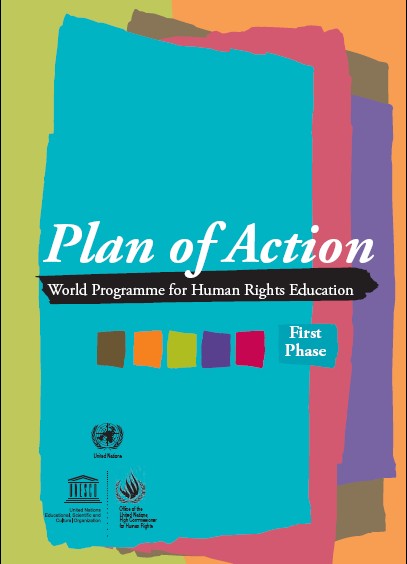
World Program of Human Rights Education - Plan of Action -

"The World Program for Human Rights Education (from 2005 onwards) aims at encouraging the development of sustainable national strategies and programs in human rights education.

This international trend highlights a consensus that the education system plays a vital role in fostering respect, participation, equality and non-discrimination in our societies.

It is important to bear in mind, however, that international programs can only support – and not substitute for – committed, vigorous and concerted national action. United Nations programs acquire real value only if national and local actors take responsibility for implementing them in their communities, and use them as mobilization and advocacy tools.

The Plan of Action for the first phase (2005-2007) of the World Program was adopted by all United Nations Member States in July 2005. It proposes a concrete strategy and practical guidance for implementing human rights education in primary and secondary schools." - Louise Arbour, Koїchiro Matsuura

The U.S. Announces Two New International Exchange Programs

©Permament Delegation of the U.S. to UNESCO

At the Closing Plenary Session of the Fulbright New Century Scholar (NCS) Symposium at UNESCO in Paris, Assistant Secretary of State for Educational and Cultural Affairs, Dina Habib Powell announced the creation of two new U.S. initiatives: an International Fulbright Science and Technology Award, and an International Fusion Arts Exchange Program. Both programs will enable young people from different countries to come together for academic exchange at American universities.

The closing plenary session was hosted by the U.S. Department of State's Bureau of Educational and Cultural Affairs and the U.S. Permanent Mission to UNESCO. The Fulbright New Century Scholars program is sponsored by the Bureau of Educational and Cultural Affairs of the United States Department of State.

Dina Powell reminded her audience that:

“The U.S. recently worked within UNESCO and the OECD to develop guidelines for quality provision in cross border higher education, helping to share information and build capacity to promote international educational exchanges”,

before announcing:

“So we decided to create a new International Fulbright Science and Technology Award, which will bring outstanding international students to our country to study for Ph.D.'s in science and technology. "

She added:

“The arts create common understanding that transcends language and borders. Music is especially effective in this role and speaks very powerfully to young people. Since one of our primary goals is to reach young people internationally, what better way to do this, we thought, than through an exchange in music?

So I am absolutely delighted today to announce, here at UNESCO, the creation of a new international exchange, the Fusion Arts Exchange, that will allow young people from different countries to learn about, compose and perform popular music together. We will bring university students from countries with especially rich musical traditions-such India, South Africa, Mali, Brazil, and Ireland just to name a few-with American students, to study and work together at a U.S. university with a world-renowned music study program and facilities. They will look at international and U.S. musical traditions and composition, learn about careers and economic development opportunities for their societies in music-related fields, and have the chance to compose and perform together and develop on-going collaborations.”

Visit the Council for International Exchange of Scholars to find out more on Fulbright New Century Scholars Programs

Report by the Director-General on the Implementation of the Program and Budget (32 C/5) and on Results Achieved in the Biennium 2004-2005


"This Report on the implementation of the program and budget during the 2004-2005 biennium represents an important milestone in the ongoing reform of the Organization. Firstly, it is the first biennial report after my re-election as Director-General, and I see it as setting a baseline for reporting during my second term. Secondly, the report provides answers to several issues concerning reporting raised by the Executive Board in the last few years."

Results Achieved for the Individual Main Lines of Action (MLA) of the Education Sector

Results Acheived for the Individual Main Lines of Action (MLA) of the Culture Sector

Monday, October 30, 2006

Learning through UNESCO Education Newsletters, Briefs and Journals

Check out the series of UNESCO thematic publication on education! The objective of these newsletters, briefs, journals, and bulletins is to provide a forum for disseminating newsworthy information on Education activities, experiences, best practices, etc… to facilitate the work of practitioners and education advocates. Reports marked by (*) are also available in selected languages.


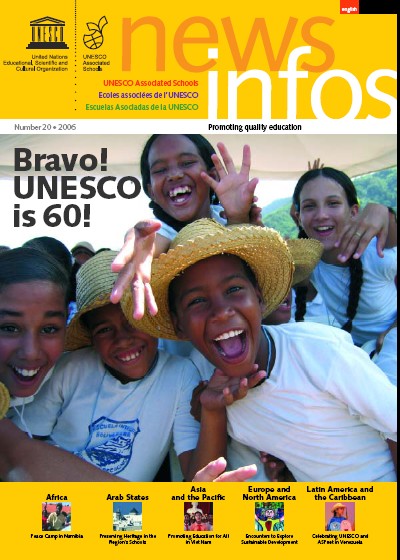
Associated School Project Network Newsletter


Adolescence Education Newsletter

Highlights country (Thailand) and regional news on Adolescent Reproductive and Sexual Health (ARSH) resources.


International Review of Education

International journal on the comparative theory and practice of formal and non-formal education.


Information and Communication Technologies in Education Newsletter:
Infoshare

Bulletin providing the latest trends and developments on the application of information and communication technologies in UNESCO programs and projects in the Asia-Pacific region.


International Institute for Education Planning (IIEP) Newsletter
(* also in French, and Spanish )

Provides the latest information on educational planning and management.


Education for All (EFA) Newsletter

Disseminates information on Education for All (EFA) activities, experiences and events as well as e-mail alert about new developments related to Education for All, new resources in the website and new additions to the growing list of network of experts and practitioners.


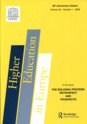
A scholarly publication dealing with major problems and trends in contemporary higher education.


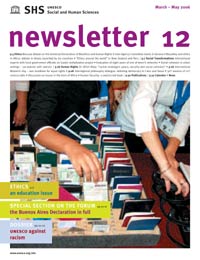
SHS issue on Ethics and Education (* also in French)

Provides information on the work of UNESCO in the field of social and human sciences. It is available both in printed and electronic form.


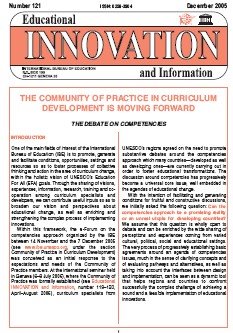
Provides short articles on current educational research and activities being conducted at the IBE and news from the field of comparative education.


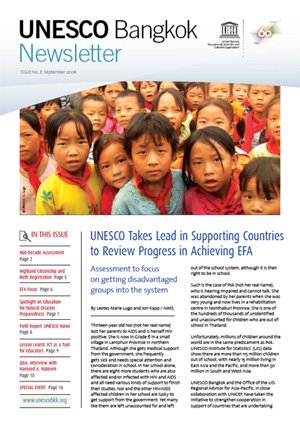
Listening to Africa (*also in French)


International Bureau of Education's Newsletter:
Prospects
(* also in French and Spanish)


Informative newsletter of the UNESCO Office for Education in Latin America and the Caribbean.


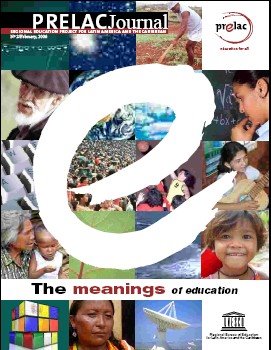
PRELAC Journal
(*also in Spanish)

A journal detailing the challenges of PRELAC (El Proyecto Regional de Educacion para América Latina y el Caribe/Regional Education Project of Latin America and the Caribbean) and its contributions to the objectives of the global movement of Education for All (EFA).


Want to know more?
*Newsletter on EDUCAIDS
*Policy Briefs on Early Childhood
*UNESCO Institute for Education - Nexus (*also in German)
*The UNESCO Courier (*also in French, Arabic, Spanish, Chinese, and Russian)
*Education Today (* also in French) - Newsletter on trends and innovations in education, on worldwide efforts towards Education for All and on UNESCO's own education activities.
*Connect - UNESCO International Science, Technology and Environmental Education Newsletter.
*Asia-Pacific Program of Education for All (APPEAL) - Reports on progress of on-going projects and activities of APPEAL.

Sunday, October 29, 2006

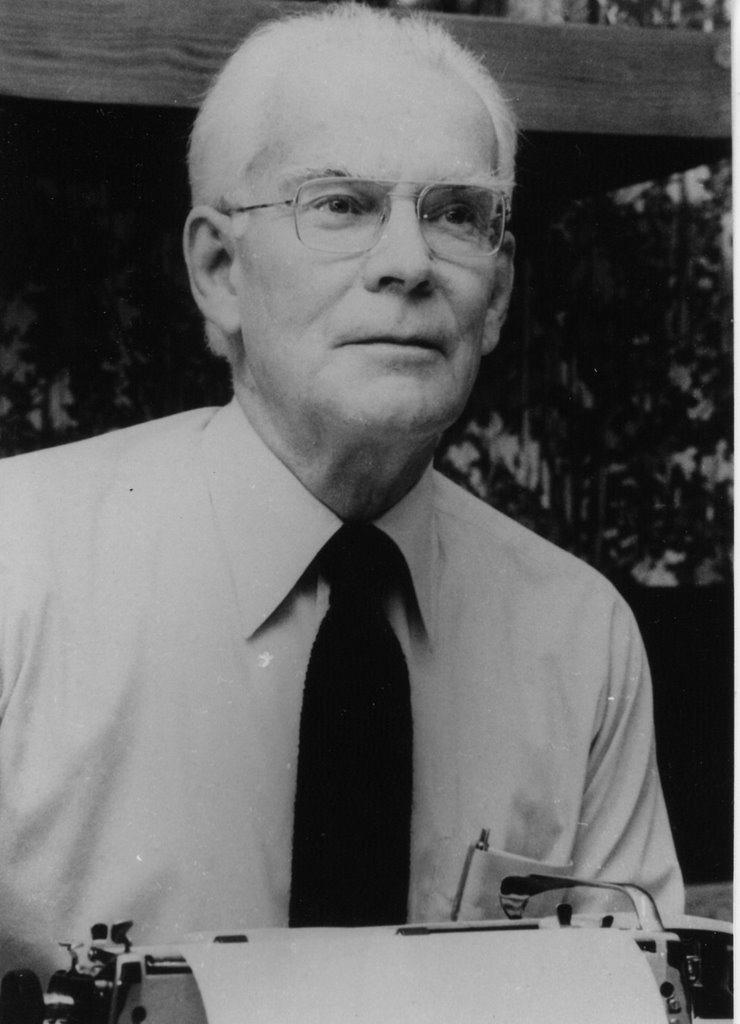
Remembering Jack Fobes


John Edwin Fobes died at his home at the age of 86 on Jan. 20, 2005. A distinguished diplomat, he served as Deputy Director-General of UNESCO from 1971 to 1977 -- the organization's chief operating officer. He served as Chair of the U.S. National Commission for UNESCO on his return from Paris. When the United States withdrew from UNESCO, Jack Fobes immediately founded Americans for the Universality of UNESCO (which subsequently became Americans for UNESCO). From 1985-2002, he headed AUU; through the organization's network and its Newsletter, he virtually single-handedly kept the idea of UNESCO alive in the American mind. In 2002, he assumed the Chair of the Advisory Council of Americans for UNESCO.

We have posted the following the following on the Internet in his honor:
* Remembering Jack Fobes

* Tributes to John Fobes by Koïchiro Matsuura and Paul Schafer

* Jack Fobes: Lien-Link Memorial Articles

Friday, October 27, 2006

Challenging Multiculturalism and the Prospects of Environmental Education and Technology Integration

CARDET - UNESCO Chair, Intercollege
January 13, 2007
Nicosia – Cyprus


The aim of this conference is to provide a venue for discussing issues relating to sustainable development, environmental education, technology integration, and peace education. Internationally speakers and local experts will present their ideas and engage in discussion with the audience. The conference will be held in English.

The conference is organized by the Center for the Advancement of Research and Development in Educational Technology (CARDET) and the UNESCO Chair on Cultural Diversity and Intercultural Dialogue for a Culture of Peace at Intercollege.

Keynote Speakers
* Dr. Zvi Bekerman, Truman Institute and Melton Center, Hebrew University
Some things on integration and its pedagogies: Research findings in the Palestinian Jewish bilingual integrated schools in Israel

* Dr. Gabriel Salomon, Center for Research on Peace Education, University of Haifa
The challenge facing environmental and peace education: Sustaining the change
Comment: This event, organized by a UNESCO chair, illustrates how UNESCO can catalyze action to promote peace with very little expense drawn from its own budget.

Cyprus is a good location for discussing peace in the Middle East, since Israelis and Arabs can meet there in a neutral environment.
JAD

Thursday, October 26, 2006

UNESCO: Peace in the Minds of Men

The Governments of the States Parties to this Constitution on behalf of their peoples declare:

That since wars begin in the minds of men, it is in the minds of men that the defenses of peace must be constructed;

That ignorance of each other's ways and lives has been a common cause, throughout the history of mankind, of that suspicion and mistrust between the peoples of the world through which their differences have all too often broken into war;


UNESCO Constitution


UNESCO mainstreams the Culture of Peace as a theme that runs through everything it does.

Check out UNESCO activities in the field of the culture of peace.

The International Congress on Peace in the Minds of Men was held on the initiative of UNESCO in Yamoussoukro in the heart of Africa. Its final declaration included this statement:
* Peace is reverence for life.

* Peace is the most precious possession of humanity.

* Peace is more than the end of armed conflict.

* Peace is a mode of behaviour.

* Peace is a deep-rooted commitment to the principles of liberty, justice, equality and solidarity among all human beings.

* Peace is also a harmonious partnership of humankind with the environment.

* Today, on the eve of the twenty-first century, peace is within our reach.


The first book ever published on the organization, UNESCO: Peace in the Minds of Men by Theodore Besterman, is now available on line. It provides a great look at the early history of the organization, and emphasizes the importance of the search for peace in the minds of men.

Sunday, October 22, 2006

"Work on UNESCO’s ICT Competency Standards for Teachers enters final phase"


Read the full UNESCO news story.

"A groundbreaking international standard for integrating ICTs in teaching, will soon be available as the extensive work on the “ICT Competency Standards for Teachers” that UNESCO is preparing together with several partners from academia and the private sector including Microsoft, Intel and Cisco, enters its final phase.

"'The new standard is designed to contribute to the professional development of teachers, mainly on primary and secondary levels, and we expect that it will considerably improve teachers’ practice' says UNESCO’s project manager Tarek G. Shawki. 'The standard combines methods for improving ICT skills with emergent views in pedagogy, curriculum and school organization', he says."

Thursday, October 19, 2006

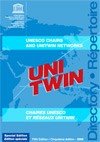
2006 UNITWIN Directory Now Online

The 2006 UNIVERSITY TWINNING and networking scheme “UNITWIN” directory is now available online. It is an important networking tool for one of UNESCO’s major education networks.

Over the last fourteen years the UNITWIN Program has developed into a truly worldwide, inter-university co-operation scheme based on interdisciplinarity, intersectoriality and networking. It has since become one of the major intersectorial Programs and an integral part of activities developed by UNESCO various Sectors, services and Field Offices.

Today 584 UNESCO Chairs and 66 UNITWIN Networks have been in the Program involving over 700 institutions in 124 countries. It contains full information on each of reporting Chairs and Networks covering 70 disciplines and identifies the contact persons, partners, events and publications for each one.


Download
UNITWIN/UNESCO Chairs Program, Ten Years of Action: Case studies (2005)
Procedures for the UNITWIN/UNESCO Chairs Program
Guidelines for Submission of Project Proposals

UNESCO: A Partner in the 5th World Forum on Sport, Education and Culture

The International Convention against Doping in Sport; safeguarding traditional sports and games; boosting physical education and sport at school; and sport and human values are among topics that UNESCO will present at the 5th World Forum on Sport, Education and Culture, 22 to 24 October at the International Conference Centre in Beijing. Organized by the International Olympic Committee (IOC) and the Beijing Organizing Committee for the Games (BOCOG) in partnership with UNESCO, the Forum will elaborate on the theme of “Sport and a World of Harmony.” About 800 participants coming from every continent are expected to attend.


Serhiy Bubka, UNESCO Champion for Sport, will address the first plenary session on “Cultural and educational perspectives of the Olympic Games.”
Olympism and multiculturalism, sport and social harmony and the future of the Olympic movement are some of the issues that participants will debate during the sessions. They will also review the preparation of the Beijing 2008 Olympic Games and visit Olympic sites.

The conference is open to representatives of organizations, both governmental and non-governmental, concerned with sport, education and culture, representatives of the United Nations system and universities as well as of the Olympic family, particularly National Olympic Committees, International Sports Federations, Olympic Games Organizing Committees, Applicant Cities and Olympic sponsors. Cultural organizations and the media are also invited.

This Forum follows on the one held in June 2004 in Barcelona (Spain) as part of the 2004 Universal Forum of Cultures.

Photo © IOC 2006

New Executive Director of the NatCom

Susanna Connaughton has been appointer Executive Director of the U.S. National Commission for UNESCO. She started on Monday, October 16, 2006.

The State Department announcement state that Ms. Connaughton has an MBA from Northwestern (Kellogg) in public and non-profit management and marketing and an undergraduate degree in government. She most recently served at the National Association of Homebuilders and has had various private and public sector experiences, including serving as a Commissioner on the DC Commission on National and Community Service.

I believe she is married to James Connaughton, Chairman of the Council on Environmental Quality.

Wednesday, October 18, 2006

Final Report of the Invitational Workshop on the Comparative Analysis of National Research Systems


Read the full final report (PDF, 24 pages.)

The Forum on Higher Education, Research and Knowledge examines how research and knowledge are generated, how they are organized and how they play a central role in national development.

The workshop reported in this document aimed toward some type of matrix which may help comparative analysis of different research systems and notably to help strengthen those in developing countries. The workshop was held in Paris on 6-7 April 2006.

Tuesday, October 17, 2006

New Edition of the UNESCO Courier


Click here to read the full October 2006 edition of The UNESCO Courier.

Special Edition on Early Childhood Care and Education

The first years of children’s lives strongly influence their future and particularly their performance in school. Numerous studies show that investing in early childhood care and education pays off, notably in developing countries. Nonetheless, efforts made to meet early childhood care needs are generally insufficient.

UNESCO and Indigenous Peoples: Partnership to Promote Cultural Diversity

Check out UNESCO and Indigenous Peoples: Partnership to Promote Cultural Diversity!

The information booklet, released in June 2004, explains UNESCO’s vision, strategy, programs and mechanisms regarding intercultural dialogue and partnerships with indigenous peoples. The booklet includes lessons learned from the First International Decade of the World’s Indigenous People and illustrates the kinds of actions that UNESCO will pursue during the Second International Decade on the World’s Indigenous People (2005-2014) in its areas of competence: education, social and natural science, culture and communication.
It thus bears witness to UNESCO’s commitment to take into account the proposals of indigenous peoples with a view to elaborating specific programs to enhance their cultural identity and to encourage intercultural dialogue.

For more information on UNESCO's initiatives to promote intercultural dialogue, please refer to our previous posting Dialogue Among Civilizations to Build Peace in The Minds of Men

UNESCO Job Vacancies

Current jobs listed on UNESCO’s website include:

DIRECTOR, DIVISION OF CREATIVITY AND CULTURAL INDUSTRIES, Culture Sector, CLT 079 - (D1) (Paris, France) (Closing Date: 31 October 2006)

SENIOR PROGRAM SPECIALIST, Education Sector, LA/RP/BRA/ED/0009 - (P5) (Brasilia, Brazil) (Closing Date: 19 November 2006)

PROGRAM SPECIALIST (HIGHER EDUCATION), UNESCO International Institute for Higher Education in Latin America and the Caribbean (IESALC), LA/RP/VEN/ED/0003 - (P4) (Caracas, Venezuela) (Closing Date: 4 October 2006)

SENIOR CLASSIFICATION OFFICER, Central Services, Bureau of Human Resources Management, HRM 189 - (P4) (Paris, France) (Closing Date: 29 October 2006)

International Day for the Eradication of Poverty

The Faces of Poverty: Ethiopian Refugees at Korem Camp, 1984
Image by B. Bisson, © UNESCO

Today, October 17, has been declared by the United Nations as the International Day for the Eradication of Poverty.

UNESCO, like other UN agencies, commemorates the occasion. Check out:
* UNESCO's Antipoverty Portal

* Commemorative Activities at UNESCO

* Interview with Monique Ilboudo (Burkina Faso): "Poverty is disregard for human rights"

* Poverty in SHS Views 14 [ PDF ]

United Nations Day

October 24, 2006


The anniversary of the entry into force of the United Nations Charter -- 24 October 1945 -- has been celebrated as United Nations Day since 1948. It is marked throughout the world each year by meetings, discussions and exhibits on the achievements and goals of the Organization.

Check out the United Nations Association of the USA for a history of UN Day.

The National Capital Area Chapter of UNA-USA is organizing a week of activities to celebrate the occassion.

Monday, October 16, 2006

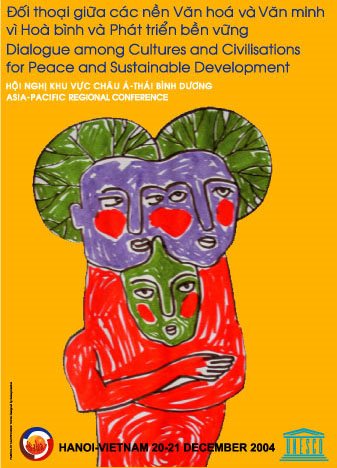
Dialogue Among Civilizations To Build “Peace in the Minds of Men”

In our increasingly diverse societies, it is essential to ensure harmonious interaction among people and groups with plural and varied cultural identities as well as their willingness to live together. Therefore the fostering of dialogue among cultures and peoples, can only occur on the basis of the recognition of and respect for cultural diversity. In this context, UNESCO advocates for inclusive and participatory policies as a guarantee of social cohesion, the vitality of civil society and peace.

Roads of Dialogue

The concept of “roads” or “routes” has been at the heart of many of the Organizations’s intercultural dialogue projects. Roads are itineraries by which individual travelers or communities have conveyed their ideas and customs across continents and oceans. From the Silk Route to the Slave Route to the Iron Roads in Africa, history has shown us that routes are venues for the exchange of cultural experience, ideas, values and goods through art, trade and migrations.

A principal objective of a dialogue is to bridge the gap in knowledge about other civilizations, cultures and societies to undertake concrete activities, inspired and driven by dialogue, especially in the areas of education, cultural diversity and heritage, the sciences and communication and media.

For more information, please visit:
*Dialogue Among Cultures, Civilizations and Peoples Infosheet
*Youth and Creativity
*
Promoting multilingualism
*Inter-religious dialogue
*
The Rabat Commitment: Conclusions and Recommendations of the Rabat Conference on Dialogue among Cultures and Civilizations through Concrete and Sustained Initiatives, June 2005
*
Convention on the Promotion and Protection of the Diversity of Cultural Expressions
*
Global Alliance for Cultural Diversity
*
Creation for a Global Center for Cultural Enterprise and Entrepreneurship in Santa Fe, NM
*
Check out the UNESCO-Courier special issue on the Dialogue among Civilizations!
*Activities by National Commissions for the Promotion of a Dialogue Among Civilizations