The Frederick-based UNESCO Center for Peace is receiving students from around the world for its International Model United Nations Summer Camp running through July 30. The Center for Peace expects between 65 and 70 students ages 13 to 21 from China, India, Brazil, Egypt, Kenya, Ghana, Canada and the United States, according to Lola Bokini, special director for the summer camp.
The camp will feature meditation sessions by Sahaja Meditation, swimming and a mini Olympics at the Hagerstown Pool and Community College grounds, shopping in Baltimore's Inner Harbor, and trips to the National Mall and museums, the U.S. Institute of Peace, the Johns Hopkins University in Baltimore and the U.N. headquarters in New York.
Thursday, July 14, 2011


Monday, July 11, 2011
Congratulations to the UNESCO Youth Forum Finalists
Every other year, before UNESCO holds its General Conference, the organization also hosts a youth forum, where delegates from around the world identify common concerns and shared experiences. The delegates, all of whom are under 24 years old, then deliver their suggestions directly to the UNESCO General Conference. Two delegates from the United States will be designated from the following group of finalists:
The U.S. Had Great Hopes for UNESCO When UNESCO Was Founded
President Harry Truman believed UNESCO could make "the greatest contribution in the history of the world to the welfare of the world as a whole", as quoted in the Miami News article covering the meeting of the U.S. National Commission on Educational, Scientific and Cultural Co-operation (now known as the U.S. National Commission for UNESCO) on September 27, 1946.
According to that article, the National Commission made several recommendations:

According to that article, the National Commission made several recommendations:

Sunday, July 10, 2011
Jazzman Herbie Hancock named UNESCO Goodwill Ambassador

Recognizing Herbie Hancock’s “dedication to the promotion of peace through dialogue, culture and the arts,” the Director-General has asked the celebrated jazz musician “to contribute to UNESCO’s efforts to promote mutual understanding among cultures, with a particular emphasis on fostering the emergence of new and creative ideas amongst youth, to find solutions to global problems, as well as on ensuring equal access to the diversity of artistic expressions.”
Read:
Wednesday, June 29, 2011
Crooks Use UNESCO in Scam in the United States
Approaches were made to the Oglala Sioux, the Colusa and perhaps other tribes by a person purporting to represent an organization affiliated with UNESCO. Tribal councils were apparently offered large sums of money to support tribal development. UNESCO's total budget is much less than the amount that was mentioned to the Oglala Sioux. While UNESCO does support native populations in areas such as preservation of endangered languages, it would not make large grants for general development.
Brian O’Dwyer appointed to UNESCO commission

O’Dwyer, managing partner of the renowned Manhattan-based law firm of O’Dwyer and Bernstien, regularly commentates on legal issues for Fox TV, Court TV, CNBC, New York 1 and CNN en Español.
Widely known for his advocacy in support of the rights of labor unions and immigrants, he presently serves as chairman of New York’s Emerald Isle Immigration Center and Asociacion Tepeyac, which serves the city’s Mexican immigrant community.
Tuesday, June 21, 2011
American film star Forest Whitaker's new role: UNESCO Goodwill Ambassador
 |
| Forest Whitaker with UNESCO Director General Irina Bokova |
The designation comes in recognition of Mr Whitaker’s humanitarian and artistic commitment. This is most visible in his projects, such as “Better Angels”, a film about Ugandan child soldiers or “Common Destiny”, a documentary about the common goals of achieving peace and mutual understanding, and the power of education in promoting peace and reconciliation between and within communities.
Forest Whitaker was born in 1961 in Texas, USA. He studied opera in California to become a tenor singer but decided to focus on film acting eventually and moved to study in London. Since his film debut in “Fast Times at Ridgemont High” in 1982, he has been one of Hollywood’s most accomplished figures. His best known performances include his roles as jazzman Charlie Parker in “Bird”, for which he was awarded the Palme d’Or in Cannes for best actor in 1989, and as Ugandan leader Idi Amin in “Last King of Scotland”, for which he received an Academy Award in 2006.
China Moses for US UNESCO
American jazz singer, China Moses, performs with pianist, Alain Jean-Marie, at a U.S. Mission to UNESCO dinner. The dinner was held in honor of the High-Level Panel on Girls Education, created as part of the Global Partnership for Girls' and Women's Education.
Interview with George Papagiannis
The U.S. Mission to UNESCO sat down with George Papagiannis, the Officer in charge of the UNESCO Office in Baghdad, to find out how he ended up in Iraq, what work he is doing there with UNESCO, and why UNESCO matters. This is one of a series of interviews with Americans working in UNESCO.
Sunday, March 20, 2011
Israel, UNESCO to Promote Holocaust Education
According to the Embassy of Israel in Washington:
An agreement was signed today (March 7) in Paris between the State of Israel and UNESCO on the establishment of a center within the organization devoted entirely to developing and promoting Holocaust education and combating its denial worldwide. The new center will function in accordance with the resolutions adopted at the UN General Assembly in New York and UNESCO.
The agreement is the outcome of an Israel Foreign Ministry initiative, according to which Israel will fund part of the project, after reaching understandings with UNESCO regarding its treatment of political issues on the agenda. The agreement was signed by UNESCO Director-General Irina Bokova and Ambassador Nimrod Barkan, Permanent Delegate of Israel to UNESCO.
Saturday, March 19, 2011
Tuesday, March 15, 2011
Friday, March 04, 2011
UNESCO suspends cooperation with Libya
Source: The Associated Press via the Washington Post.
UNESCO's chief says the organization is stopping all cooperation with Libya's government and suspending a partnership with a charity group headed by Moammar Gadhafi's son.
The Paris-based United Nations Educational, Scientific and Cultural Organization says director-general Irina Bokova took the measures after recent U.N. actions critical of Libya's human rights record.
Thursday, March 03, 2011
Education for All Global Monitoring Report 2011
The report cautions that the world is not on track to achieve by 2015 the six Education for All goals that over 160 countries signed up to in 2000. Although there has been progress in many areas, most of the goals will be missed by a wide margin – especially in regions riven by conflict.
“Armed conflict remains a major roadblock to human development in many parts of the world, yet its impact on education is widely neglected,” said UNESCO Director-General Irina Bokova. “This groundbreaking report documents the scale of this hidden crisis, identifies its root causes and offers solid proposals for change.”

Tuesday, March 01, 2011
UNESCO does not fare well in UK review
The Department for International Development of the United Kingdom has just completed a review of the multilateral agencies it has been funding. Here is the summary table:

DfID also provided a comparison chart among the multilateral agencies that were evaluated:
 The development objectives of the United Kingdom are very similar to those of the United States. The top graph indicates that. in the opinion of the evaluators, the organization has considerable room for improvement, The lower graph indicates that UNESCO was judged almost uniquely weak among a wide variety of development agencies.
The Government of the United Kingdom decided on the basis of this information to continue funding UNESCO, but to impose "special measures". Here is the statement it provided in its document "Taking Forward the Findings of the UK Multilateral Aid Review":

DfID also provided a comparison chart among the multilateral agencies that were evaluated:

The Government of the United Kingdom decided on the basis of this information to continue funding UNESCO, but to impose "special measures". Here is the statement it provided in its document "Taking Forward the Findings of the UK Multilateral Aid Review":
UNESCO contributes to a range of UK government objectives, including monitoring progress on Education for All. The UK’s membership of UNESCO also brings broader benefits to the UK, in Culture, Heritage, Education and Science. UNESCO’s new leadership team is committed to reform. DFID will continue to support UNESCO, including by funding the core assessed contribution, which will be about £16m in each of the next two years. DFID will reassess progress towards improved effectiveness, with other government departments, in autumn 2012. DFID is discussing with UNESCO, and its member states, what measures need to be taken to urgently improve its performance.
Priorities include:-
If these measures are not implemented satisfactorily and performance does not improve, then the UK will consider whether it should continue to be a member of UNESCO, or whether there are more effective ways of supporting our objectives on education, culture and heritage.
- Greater transparency
- A more focused, evidence based programme
- A focus on controlling transaction, administration and other costs
- A major improvement in results based management.
Tuesday, February 22, 2011
Wednesday, January 19, 2011

2011 is the International Year of Forests

The World Heritage Forest network is diverse and rich. Home to the largest remaining populations of Bengal tigers, vast mangrove forests are protected in the Sundarbans (India, Bangladesh). In Peru, Manu National Park is home to 10% of all of the world's bird species. The endangered Eastern (Mountain) Gorillas survive almost exclusively in three WH Forest sites: Virunga and Kahuzi-Biega National Parks (Democratic Republic of the Congo) and Bwindi Impenetrable National Park (Uganda).
Friday, December 31, 2010
The United Nations recognizes the role of culture for development

For more information:
Thursday, December 23, 2010
UNESCO Promotes "Work to Ride"
UNESCO has highlighted this video of a Philadelphia program that gives city kids the opportunity to play polo. It is part of its effort to show how sports can bring cultures together. Click here to check out the Work to Ride website.
Wednesday, December 22, 2010
Tuesday, December 21, 2010

Thursday, December 16, 2010
Quotation
The House of UNESCO is a place. But it is also an idea that lies at the heart of our quest for a better world.UN Secretary-General Ban Ki-moonOn the sixty-fifth anniversary of the United Nations Educational, Scientific and Cultural Organization (UNESCO), in Paris, 14 December 2010

Wednesday, December 15, 2010
Introduction to the Economic Crisis and Education website
Introduction of the Economic Crisis and Education website by Mr Qian Tang, UNESCO Assistant Director-General for Education. Click here to go to the website.
The Government wants comments on future U.S. World Heritage Nominations
The National Park Service is seeking public comment on possible future U.S. nominations to the UNESCO World Heritage List, as well as on potential additions to the U.S. World Heritage Tentative List (the official list of potential nominations to the World Heritage List).

The Federal Register Notice seeking public comment is available on-line here:
Comments are due by January 12, 2011.
This past July, the World Heritage Committee inscribed the first new U.S. site to the World Heritage List in 15 years - the Papahanaumokuakea Marine National Monument in Hawaii."
For more information on World Heritage in the United States, see:


Jefferson's Poplar Forest
on the U.S. Tentative List
The Federal Register Notice seeking public comment is available on-line here:
Comments are due by January 12, 2011.
This past July, the World Heritage Committee inscribed the first new U.S. site to the World Heritage List in 15 years - the Papahanaumokuakea Marine National Monument in Hawaii."
For more information on World Heritage in the United States, see:

Undersea life at Papahanaumokuakea MNM
Tuesday, December 14, 2010
Nazareth to be proposed as World Heritage Site

Omar Massalah, Muslim secretary of the Mediterranean Peace Forum and author of the proposal that UNESCO declare Nazareth patrimony of humanity, explained that this “would be the best way to protect the city, to avoid transformation and modernization putting an end to Nazareth’s soul.”
Massalah said, “The preparation of the dossier for UNESCO of Nazareth’s candidature is a technical aspect being carried out in collaboration with the municipality of the city and the national Israeli commission concerned.”
He expressed his intention to speak with the Arab countries “to support the petition, as it is not an initiative with a political connotation, but a cultural issue.”…Read more....
Friday, December 10, 2010
Promoting Mother Tongue-based Multilingual Education
This video is a part of the UNESCO Bangkok Advocacy Kit for Promoting Multilingual Education: Including the Excluded.
December 10 = Human Rights Day

When Eleanor Roosevelt presented the Universal Declaration of Human Rights to the UN General Assembly, she proclaimed: "We stand today at the threshold of a great event, both in the life of the United Nations and in the life of mankind." On December 10, 1948, the world moved to recognize and protect the equal and inalienable rights of all people, inspiring individuals around the globe to claim the rights that are our common heritage.
Hillary Rodham Clinton

Saturday, December 04, 2010
American Candidates for the UNESCO Intangible Heritage List
Nicholas DeRenzo, noting that no aspects of American cultural heritage have yet been added to the UNESCO list of Representative Intangible Cultural Heritage elements, suggests the following candidates:

- Baseball
- Pacific Northwest totem poles
- The Halloween tradition—trick-or-treating and pumpkin carving
- Jazz and/or blues music
- The Thanksgiving feast—turkey and all the fixings
- Break dancing
- Amish barn raising
- Outlandish Christmas light displays
- Cowboy poetry
- Cajun cuisine
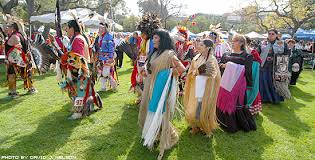
Comment: In the area of sport, Baseball does seem the obvious candidate. In music and dance there would seem to be many alternatives in addition to those Mr. DiRenzo has put forward, such as Dixieland, the American popular song, Rock and Roll, and Hip-Hop. So too there are numerous Native American traditions that could be proposed such as the Pow Wow or Navajo weaving. There are other cuisines that might be considered such as Tex-Mex, or specific dishes (Maryland crab cakes, New England clam chowder, Buffalo wings) not to mention the fast-food franchise hamburger, fries and milk shake. The community non-profit organization or the charitable foundation also are typically American.
John Daly
The comment represents my personal opinions and not that of Americans for UNESCO.
Thursday, December 02, 2010
Tuesday, November 23, 2010
Recommended: Sites of Transformation

“Sites of transformations? Glocal perspectives on UNESCO’s mixed World Heritage Sites” is her PhD project, currently undertaken at the University of Oslo. The PhD project is part of a research project entitled “Cultural Transformations in the Age of Globalization (KULTRANS). In short KULTRANS is to conduct research that is transdisciplinary, transnational and transhistorical. The blog is to function as a means to disseminate and discuss the on-going research as well as to be an online field diary. It is also to discuss heritage tourism and World Heritage more generally.
Monday, November 22, 2010
CULTURE, HERITAGE, SPORTS, AND EDUCATION

The State Department has published a brief statement titled "U.S. Multilateral Engagement: Benefits to American Citizens". I quote the section relating to UNESCO:
The UN Educational, Scientific, and Cultural Organization (UNESCO) helps to protect our cultural and natural property and landmarks, strives to keep sports doping-free, and promotes educational exchanges around the world. UNESCO’s World Heritage Convention attracts international visitors to our national parks and monuments, and helps ensure that those sites are protected for future generations. The International Convention Against Doping in Sport helps keep performance enhancing drugs out of sports, and ensure that only participants can bid to host the Olympic Games. The UNESCO Associated Schools Project Network, which includes more than 8,500 educational institutions in 180 countries, provides U.S. schools with opportunities to engage with their peers all over the world, including through programs on international understanding, intercultural dialogue, human rights education, and sustainable development.The State Department limited its statement to four pages, and thus its discussion of UNESCO to one paragraph. Let me add a second paragraph to that statement.
UNESCO seeks to promote peace by building the defenses of peace in the minds of men and thus protects American security, it does this through its worldwide education programs and by its support for a culture of peace. It plays a key role in improving education worldwide, providing American firms with educated foreign consumers and all our citizens with educated foreign partners in solving a host of global problems. UNESCO helps Americans to express their generosity helping the poorest people and the poorest nations in the world. It helps Americans promote democracy abroad by standing as a firm defender of freedom of the press. Not only does UNESCO help "to protect our cultural and natural property and landmarks," it helps to assure that those things are protected everywhere so that we Americans can see them when we travel and so that we can rest assured that those foreign sites will be there for our children and their children to know and enjoy. UNESCO has certified a global system of university chairs and networks which helps to enrich higher education worldwide, linking American universities with those in other continents. UNESCO helps American scientists to network with their colleagues worldwide, providing benefits from better prediction of tsunamis and earthquakes that might endanger our citizens, to developing a global network of bioreserves to help understand how to protect against environmental threats.
Saturday, November 20, 2010
The U.S. Delegation Brings World Heritage Photo Exhibit to UNESCO
“World Heritage Sites around the World,” is a U.S. sponsored photographic exhibition by award-winning U.S. photographer Tom Till that was recently installed at UNESCO. The exhibit included breathtaking photographs of 32 World Heritage sites taken in 23 different countries, reflecting both the natural and manmade beauty and grandeur found in countries around the world and highlighted by the World Heritage program.
Among the photos were six American sites – including the Grand Canyon and five of the other most visited landmarks and natural wonders found in the U.S. Also on display during the exhibition was a short video about the United States’ most recent addition to the World Heritage list, Papahanaumokuakea Marine National Monument, inscribed at the World Heritage Committee meeting in Brasilia, in July 2010. Read more....
You can purchase original prints of Mr. Till's photos online from his website.

Among the photos were six American sites – including the Grand Canyon and five of the other most visited landmarks and natural wonders found in the U.S. Also on display during the exhibition was a short video about the United States’ most recent addition to the World Heritage list, Papahanaumokuakea Marine National Monument, inscribed at the World Heritage Committee meeting in Brasilia, in July 2010. Read more....
You can purchase original prints of Mr. Till's photos online from his website.
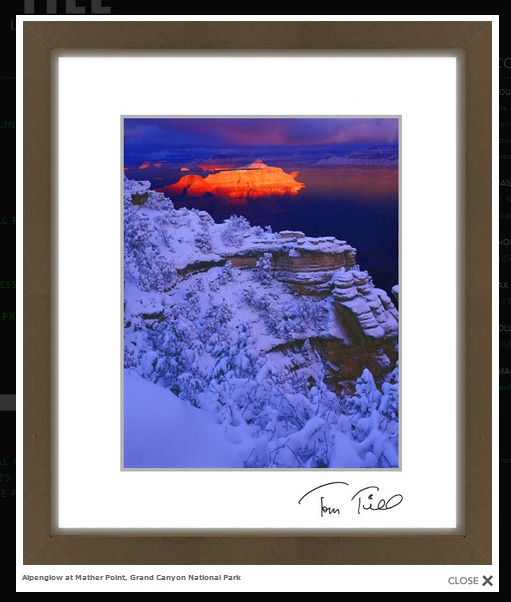
Tom Till photograph
Alpenglow at Mather Point,
Grand Canyon National Park
U.S. Secretary of Education Speaks at UNESCO; Highlights Education Reform Agenda

Secretary of the U.S. Department of Education Arne Duncan delivered a keynote speech at UNESCO headquarters on November 4th. Speaking to an audience of members of UNESCO’s permanent delegations, the UNESCO Secretariat, university leaders and representatives from NGOs devoted to education, Secretary Duncan outlined his vision of education reform and discussed the role of education in economic competitiveness and global prosperity.
In his speech, Secretary Duncan said he rejected the assumption that improving economic conditions in the United States is a zero sum game. Read more.....
Thursday, November 18, 2010
World Philosophy Day 2010

Celebrated at UNESCO’s initiative every third Thursday of November since 2002, World Philosophy Day takes place this year on 18 November 2010.
The events organized by UNESCO, or by its partners, provide an opportunity to make philosophical reflection accessible to all (professors and students, scholars and the general public, the young and the less young), thereby enlarging the opportunities and spaces for the stimulation of critical thinking and debate.
This year the day contributes to to the celebration of the International Year for the Rapprochement of Cultures (2010).
Monday, November 15, 2010
Sunday, November 14, 2010
Check out Treasures from the Past

Treasures from the Past is a TV series that includes programs on a number of World Heritage sites. If interested you might check out:
Saturday, November 06, 2010
UNESCO Related Twitter Feeds
As you probably know, Twitter is a new service which allows one to post short messages to the Internet. While the messages are limited to 140 characters, they can convey a surprising amount of information. Frequently a tweet consists of a topic statement and a link (usually utilizing a reduced Internet address) to a website or report. A number of Twitter feeds have come online dealing with UNESCO. These include:
Friday, November 05, 2010
NOVA Ancient Worlds

The great PBS series, NOVA, this season is broadcasting a series of programs on ancient worlds. The series may be of considerable interest to those interested in UNESCO's World Heritage program, and indeed the NOVA website for the series includes a link to the UNESCO World Heritage list. You can watch programs that have already been screened on television online and you can watch previews of coming programs online on the Ancient World website, which also includes supplementary materials.
Thursday, November 04, 2010
A major World Heritage Report by a U.S. Foundation

The Global Heritage Fund, headquartered in Palo Alto California, has published a report titled Safeguarding Endangered Cultural Heritage Sites in the Developing World.
Vanishing surveys over 500 global heritage sites and highlights the accelerating threats facing these cultural treasures. Many have survived thousands of years, only to be lost in this generation—on our watch.Read articles based on the report:
Vanishing was conceived by Global Heritage Fund, an international conservancy that has worked for nearly a decade to protect and preserve the most significant and endangered cultural heritage sites in the developing world.
With the critical review of 24 leading experts working in heritage conservation and international development, this report surveys hundreds of endangered global heritage sites and strives to identify those most in need of immediate intervention, and what the global community can do to save them.
- "The World's Vanishing History" from the Wall Street Journal (More than 200 heritage sites are in a state of irreversible disrepair and will be lost unless communities, governments and international groups act to prevent their destruction, said the Global Heritage Fund, a nongovernmental organization that focuses on historical preservation.)
- "Heritage sites at risk, study finds: Endangered areas could cost $100 billion in lost revenue" in the Victoria Times Colonist of British Columbia (Haiti's Palace of Sans Souci, known as the "Versailles of the Caribbean," and Mirador, a massive pre-Columbian city in Guatemala, are among the 20 sites listed in the report as on the verge of irreparable loss and destruction due to mismanagement, looting, neglect, conflict and unsustainable tourism.)
Thursday, October 28, 2010
The Future of UNESCO is Being Planned Now!
Last year there was a comprehensive evaluation of UNESCO conducted by an independent committee of external evaluators. The purpose of the evaluation was "to provide actionable and timely recommendations to the Governing Bodies of the Organization and the Director-General in order to position the Organization for meeting future needs and challenges."
The Executive Board of UNESCO has decided to create a working group of 18 member states to follow up on the report of the Independent External Evaluation of UNESCO. The working group is to hold open ended meetings to allow all member states to participate in the follow up process. The first of those meetings is to be scheduled for December 19, 2010.
A general staff meeting is to be held in UNESCO on November 9, 2010 which according to Director General Bokova is "to pursue our reflection on the future of UNESCO."
This would seem an important time to provide information and suggestions to the governments of Member States and to UNESCO itself to help in the deliberations of the future of the Organization!

The Executive Board of UNESCO has decided to create a working group of 18 member states to follow up on the report of the Independent External Evaluation of UNESCO. The working group is to hold open ended meetings to allow all member states to participate in the follow up process. The first of those meetings is to be scheduled for December 19, 2010.
A general staff meeting is to be held in UNESCO on November 9, 2010 which according to Director General Bokova is "to pursue our reflection on the future of UNESCO."
This would seem an important time to provide information and suggestions to the governments of Member States and to UNESCO itself to help in the deliberations of the future of the Organization!
Wednesday, October 27, 2010
Evaluation of the Jordan Education Initiative Synthesis Report

A Tribute to the Krityanand UNESCO Club
Since the first UNESCO Club was founded in Japan, in 1947, UNESCO Clubs, Centres and Associations have been very valuable partners for the Organization. According to the most recent count, there were some 3.700 associations, centres and UNESCO clubs in more than 100 countries throughout the world.

Of course, these groups varied greatly one from another in the number and vigor of the activities that they conduct. I recently came across information on a club in India, the Krityanand UNESCO Club in Jamshedpur. Jamshedpur is an industrial city with a population of over one million people in eastern India.
I came across the following description of the club's activities:

The club maintains a Facebook site. Here are links to descriptions of some of its projects and activities.

Of course, these groups varied greatly one from another in the number and vigor of the activities that they conduct. I recently came across information on a club in India, the Krityanand UNESCO Club in Jamshedpur. Jamshedpur is an industrial city with a population of over one million people in eastern India.
I came across the following description of the club's activities:
The Krityanand UNESCO Club was established in 1992. Since then the organization has been expanding continuously in terms of its social development service. It has worked for the promotion of sustainable, equitable and participatory development, social welfare and social justice through:
Over the years, the organization has made a significant contribution to planning, action strategies and Human Resource Development in several areas, ranging from sustainable rural and urban development to education, health, agriculture, and Human Rights. In all cases the focus has been on the disadvantaged and marginalized sections of societies, such as women, children and tribal groups.
- A Program for social work,
- Human Resources Management
- Health service and other human service
- Through social research and dissemination of socially relevant knowledge
- Social intervention through training and field action
- Contribution to social and welfare policy and programs at state, National and International levels
The Krityanand UNESCO Club has earned recognition as an institution (Organization) of repute from state Government of Jharkhand, India International agencies or organization such as the United Nations and its system, and various International NGOs. The organization contributing relevant education and Research work.

The club maintains a Facebook site. Here are links to descriptions of some of its projects and activities.
- The KRITYANAND UNESCO CLUB Rural Development Project
- The KRITYANAND UNESCO CLUB ICT Project for Rural Development
- An International Law Overview by Mukesh Kumar Mishra, the Secretary General of the club
- KRITYANAND UNESCO CLUB Human Rights Information and Documentation Center
Tuesday, October 26, 2010
Mary Futrell Elected President of Americans for UNESCO

Mary Hatwood Futrell has been elected President of Americans for UNESCO. She has served for some years on the Board of Directors of AU. Dr. Futrell specializes in reform policy, professional development, and diversity issues in education.
Andre Varchaver now joins Richard Arndt as Presidents Emeritus of the organization.
Dr. Futrell has recently stepped down from the post of Dean of the School of Education and Human Resource Development of George Washington University. She is a recipient of the Jan Amos Comenius Medal, one of UNESCO’s most prestigious awards honouring outstanding achievements in the fields of education research and innovation.
Dr. Futrell has been president of the National Education Association (NEA). In 2004, she completed her term as president of Education International (EI), a global federation of 30 million educators from 152 countries that works with governmental and non-governmental organizations in advocating education for all. She also is the former president of the World Confederation of Organization of the Teaching Profession.
Wednesday, October 20, 2010
The Girls Up Campaign

Girl Up, a new campaign of the United Nations Foundation, gives American girls the opportunity to channel their energy and compassion to raise awareness and funds for programs of the United Nations that help some of the world’s hardest-to-reach adolescent girls. Through Girl Up’s support, girls have the opportunity to become educated, healthy, safe, counted, and positioned to be the next generation of leaders.
The UN Foundation works with a number of agencies of the United Nations system to support programs for adolescent girls as part of the UN Adolescent Girls Task Force. UNESCO is an important part of the Task Force.
The United States Reengages with Multilateral Development Institutions
As President, I have made it clear that the United States will do our part. My national security strategy recognizes development not only as a moral imperative, but a strategic and economic imperative. Secretary of State Clinton is leading a review to strengthen and better coordinate our diplomacy and our development efforts. We’ve reengaged with multilateral development institutions. And we are rebuilding the United States Agency for International Development as the world’s premier development agency. In short, we’re making sure that the United States will be a global leader in international development in the 21st century.President Barack Obama
Remarks by the President at the United Nations Millennium Development Goals Summit
September 22, 2010
Tuesday, October 19, 2010
Leveraging innovation, investing in sustainability, tracking development outcomes, and enhancing mutual accountability
I’d like to take a moment and talk a little bit more, specifically, about the Millennium Development Goals...........Now, as you know, the next week’s session begins with a high-level plenary meeting on the MDGs, the Millennium Development Goals, which will occur during the first three days of next week. This will be an important opportunity for the United States to elaborate the President’s development agenda as well as our approach to the Millennium Development Goals. We will focus on core principles of leveraging innovation, investing in sustainability, tracking development outcomes, and enhancing mutual accountability.Esther Brimmer
Assistant Secretary of State for International Organization Affairs
"U.S. Goals and Priorities at the United Nations General Assembly"
September 17, 2010
(W)hile the world has made strides in meeting some of the MDGs, including significant reductions in rates of extreme poverty and improved access to primary education, that progress has been uneven. The remaining MDG challenges will require a determined, strategic, and analytically-grounded approach, guided by four imperatives:Esther Brimmer
- Leverage innovation
- Invest in sustainability
- Track development outcomes, not just dollars; and
- Enhance the principle and practice of mutual accountability, including transparent and effective management of development resources.
"The U.S. at the U.N. and Beyond: A World of Transnational Challenges"
Remarks delivered at the Johns Hopkins School of International Studies
September 15, 2010
Building the Defenses of Peace in the Minds of Men
It has been said before, but it needs to be said again: “While UNESCO has several mandates, it has but one mission – that of constructing peace”. When discussing detailed questions relating to the programmes, activities and functioning of our Organization, it is right that we set aside a moment to reflect on UNESCO’s fundamental purposes so as to focus on the goal that must shape and inform our particular policies and projects.Irina Bokova
On the occasion of the 185th Session of the Executive Board Thematic Debate "Intercultural Dialogue in the 2010s: Revisiting policies within the context of culture of peace"

Monday, October 11, 2010
The New Issue of the UNESCO Courier is Out

Rebirth for Haiti
World Sky Race event is launched in Times Square
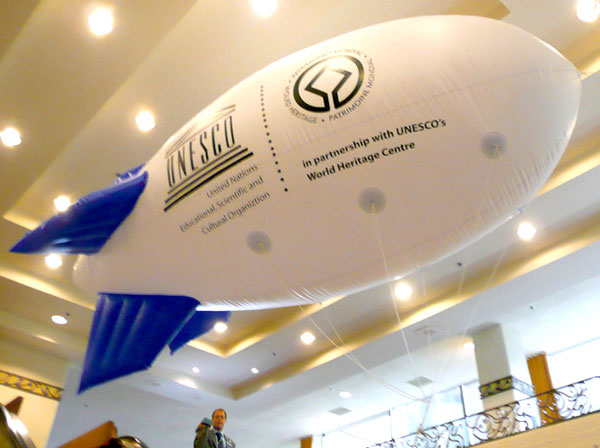
Promotion of the World Sky Race, an unprecedented race among skyships, blimps and zeppelins to begin in September 2011, was launched on two giant screens in Times Square, New York City on September 30 and October 1, 2010. Scheduled to begin next year in London, the race involves competing teams that will fly around the world in 180 days and return to London. The team with the best cumulative time will be named World Sky Champion.
The UNESCO World Heritage Centre is a partner to the World Sky Race which will fly over more than 130 World Heritage sites, including Versailles Palace in France, the Pyramids of Egypt, the Taj Mahal in India and the Statute of Liberty in the USA. The initiative will help educate people of all ages about World Heritage sites and raise funds for their conservation through the World Sky Race and associated activities.
What Does UNESCO Do?
Every Day UNESCO
- PROMOTES EDUCATIN FORALL, now impacting 1.5 billion children, youth and adults
- Monitors World Heritage properties in 151 countries and intangible heritage in 130 countries
- Fosters sustainable development through 564 biosphere reserves in 109 countries
- Combats violations of press freedom and condemns harassment, imprisonment and killings of journalists
- Monitors some 2500 endangered languages and tracks some four million translated works in over 1000 languages.
- Leads 26 UN agencies in assessing freshwater resources leads 121 countries in developing Tsunami warning systems
- Runs the only global database on bioethics, environmental ethics, and science and technology ethics.
- Fights discrimination through sic regional coalitions of 4858 "Cities Against Racism."
- Promotes conservation of documentary heritage with items from 84 countries on the Memory of the World Register.
- Supports the efforts of 75 million teachers to provide quality education.
Monday, October 04, 2010
Friday, October 01, 2010
UNESCO and the Smithsonian sign a Memorandum of Understanding for cultural and natural heritage
On 17 September, UNESCO Assistant Director General for Culture Francesco Bandarin signed a three-year Memorandum of Understanding with Francine C. Berkowitz, Director of International Relations of the Smithsonian Institution. This is an unprecedented agreement between the two institutions for cooperation on cultural and natural heritage programs.
Together the Smithsonian and UNESCO will develop programs and work together on a wide range of projects, including a travelling exhibition and an international conference on the 40th anniversary of the UNESCO World Heritage Convention in 2012. Other initiatives will be directed to conserving natural World Heritage sites, developing outreach on World Heritage and indigenous issues, conducting research on the means of preserving the world's languages, activities for the dissemination of traditional music, and aiding in the recovery of Haiti's cultural heritage following January 12 earthquake.
The Smithsonian Institution with its 19 museums and 137 million objects, artworks and specimens in its collections is not only "America's attic" but one of the great scientific and curatorial institutions in the world.

Together the Smithsonian and UNESCO will develop programs and work together on a wide range of projects, including a travelling exhibition and an international conference on the 40th anniversary of the UNESCO World Heritage Convention in 2012. Other initiatives will be directed to conserving natural World Heritage sites, developing outreach on World Heritage and indigenous issues, conducting research on the means of preserving the world's languages, activities for the dissemination of traditional music, and aiding in the recovery of Haiti's cultural heritage following January 12 earthquake.
The Smithsonian Institution with its 19 museums and 137 million objects, artworks and specimens in its collections is not only "America's attic" but one of the great scientific and curatorial institutions in the world.

Francesco Bandarin and Francine C. Berkowitz
Thursday, September 30, 2010
Rita Colwell Named Science Envoy
Dr. Rita Colwell, a member of the Board of Directors of Americans for UNESCO, has been named a U.S. Science Envoy. The Science Envoy program, announced by President Obama in Cairo in June 2009, is a centerpiece program to implement U.S. global engagement in science and technology. Dr. Colwell is one of six distinguished scientists to have been appointed to this prestigious as well as important position.

Dr. Colwell is a Distinguished Professor at both the University of Maryland at College Park and Johns Hopkins University Bloomberg School of Public Health. She has focused her research on global infectious diseases, water and health, and is currently developing an international network to address emerging infectious diseases and safe drinking water for both the developed and developing world. Dr. Colwell served as the 11th Director of the National Science Foundation from 1998-2004. She is recipient of the 2010 Stockholm Water Prize awarded on September 9, 2010 by the King of Sweden.
Dr. Colwell is a Distinguished Professor at both the University of Maryland at College Park and Johns Hopkins University Bloomberg School of Public Health. She has focused her research on global infectious diseases, water and health, and is currently developing an international network to address emerging infectious diseases and safe drinking water for both the developed and developing world. Dr. Colwell served as the 11th Director of the National Science Foundation from 1998-2004. She is recipient of the 2010 Stockholm Water Prize awarded on September 9, 2010 by the King of Sweden.
Wednesday, September 29, 2010
World Teacher's Day, 5 October

Recovery begins with Teachers
Live testimonies from teachers supporting recovery worldwide and a photo exhibition which shows teachers in demanding situations are among the high points of the World Teachers’ Day celebrations on 5 October in UNESCO’s headquarters in Paris.
Membership in the ILO as a Precedent for Membership in UNESCO
Frances Perkins was an interesting person. She was the first woman to hold a cabinet post in the Federal Government, serving for the entire period that Franklin Delano Roosevelt was president. After FDR died, Perkins wrote a book titled The Roosevelt I Knew which includes a discussion of the decision in the 1930s for the United States to join the International Labor Organization (ILO). I found that decision shed light on the likely intent of the United States in the creation of UNESCO, and especially the U.S. National Commission for UNESCO.

The legislation which enabled the United States to create the U.S. National Commission cites the Constitution of UNESCO in defining the duties of the NatCom. That Constitution allows but does not require that national commissions both associate the nation's "principal bodies interested in educational, scientific and cultural matters with the work of" UNESCO and "act in an advisory capacity to their respective delegations to the General Conference and to their Governments in matters relating to" UNESCO. People associated with the NatCom in the period prior to the departure of the United States from UNESCO membership have told me that the NatCom was both energetic and influential in that time. This is confirmed by Howard E. Wilson in his book, The United States National Commission for UNESCO, published in 1948.
Perkins worked with President Roosevelt to support the entry of the United States into the ILO. The ILO existed before the creation of the League of Nations, but was formally affiliated with the League after the League was created. Of course, the United States never joined the League. Perkins and Roosevelt agreed with State Department personnel and eventually the Congress that the ILO and the League of Nations were distinct entities, and that the United States might appropriately join the ILO. They did so in large part because the ILO had a separate governance structure in which member nations were represented by persons representing employers and workers as well as government; the participation of citizens outside of government of member states in the governance of the ILO made all the difference.
John A. Daly
The opinions expressed in this posting are those of the author and do not necessarily represent those of Americans for UNESCO.

The legislation which enabled the United States to create the U.S. National Commission cites the Constitution of UNESCO in defining the duties of the NatCom. That Constitution allows but does not require that national commissions both associate the nation's "principal bodies interested in educational, scientific and cultural matters with the work of" UNESCO and "act in an advisory capacity to their respective delegations to the General Conference and to their Governments in matters relating to" UNESCO. People associated with the NatCom in the period prior to the departure of the United States from UNESCO membership have told me that the NatCom was both energetic and influential in that time. This is confirmed by Howard E. Wilson in his book, The United States National Commission for UNESCO, published in 1948.
Perkins worked with President Roosevelt to support the entry of the United States into the ILO. The ILO existed before the creation of the League of Nations, but was formally affiliated with the League after the League was created. Of course, the United States never joined the League. Perkins and Roosevelt agreed with State Department personnel and eventually the Congress that the ILO and the League of Nations were distinct entities, and that the United States might appropriately join the ILO. They did so in large part because the ILO had a separate governance structure in which member nations were represented by persons representing employers and workers as well as government; the participation of citizens outside of government of member states in the governance of the ILO made all the difference.
John A. Daly
The opinions expressed in this posting are those of the author and do not necessarily represent those of Americans for UNESCO.
Thursday, September 16, 2010
Va. colonial sites seek world heritage designation

Colonial Williamsburg is seeking the designation of the Historic Triangle as a World Heritage Site.
The historic area says it is partnering with Preservation Virginia and working with the National Park Service to seek the designation. The Historic Triangle is comprised of Jamestown, Williamsburg and Yorktown.
Colonial Williamsburg says there are 20 sites in the U.S. on the World Heritage Committee list, but none that relate specifically to the establishment of English society in America.
The move comes as Colonial Williamsburg and Preservation Virginia are partnering to enhance visitor experience through compelling stories of discovery, diversity and democracy. It also will work to give visitors a glimpse at archaeological discoveries found in the area.

Subscribe to:
Posts (Atom)